Maxiscoot

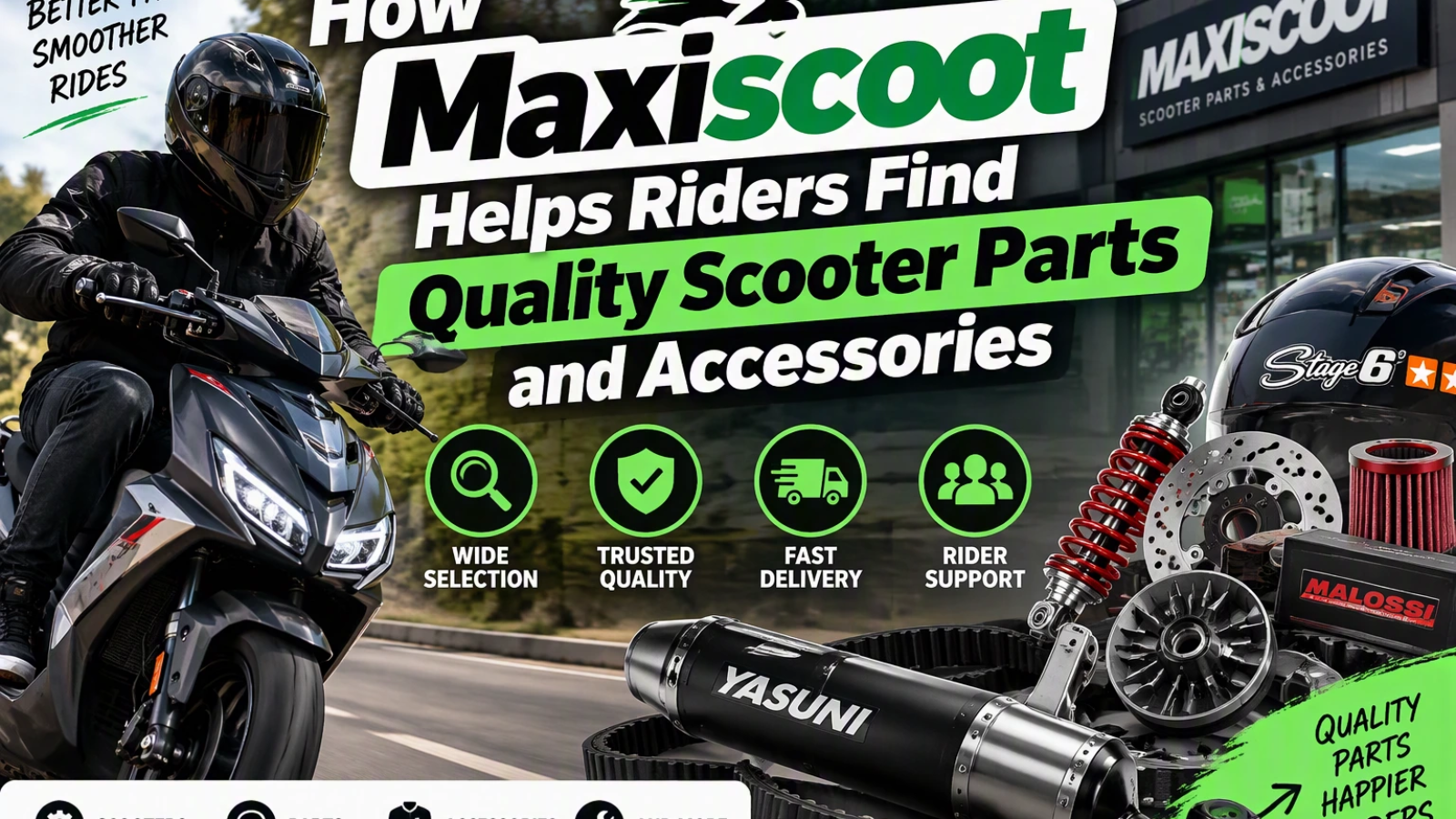
How Maxiscoot Helps Riders Find Quality Scooter Parts and Accessories
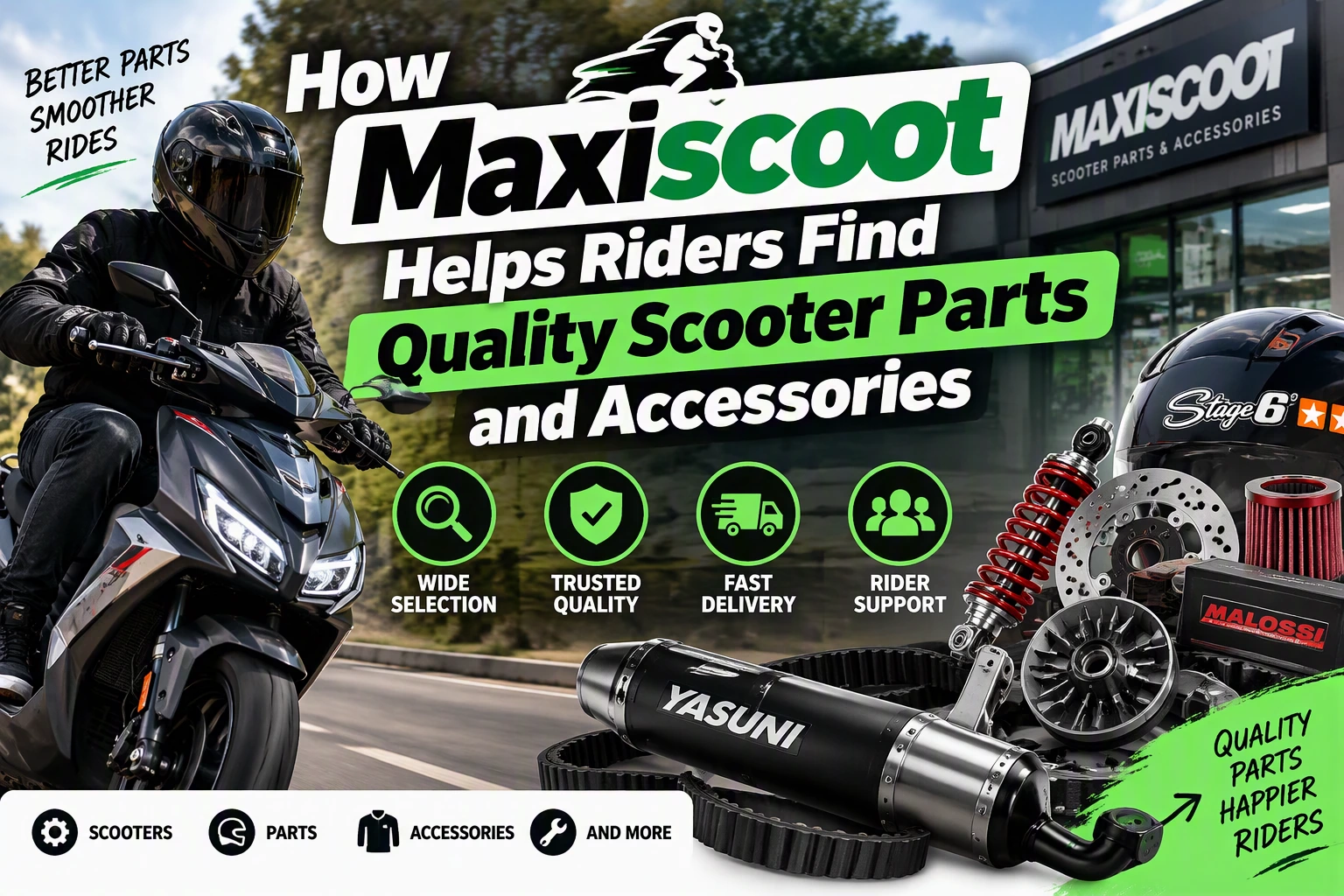
How Maxiscoot Helps Riders Find Quality Scooter Parts and Accessories

Maxiscoot

Keeping a scooter in excellent condition involves more than filling the fuel tank and checking the tyres occasionally. Over time, components wear out, routine servicing becomes necessary, and riders may want to upgrade their vehicles for improved comfort, appearance, or performance. Finding the right replacement part can be challenging, particularly when different scooter models use different components and specifications. A specialist store can facilitate the process in this situation. Maxiscoot is an online retailer focused on scooter parts, moped components, tuning products, rider equipment, and workshop supplies. Its catalogue covers a broad range of two-wheelers and includes products from established names in the scooter industry.

For riders, the main advantage of shopping through a specialist website is the ability to explore related products in one place instead of searching across numerous general marketplaces. Whether you need a replacement belt, an electrical component, a brake part, a mirror, or equipment for a personal customization project, an organized catalogue can help narrow the options. However, finding a suitable product still requires careful attention to vehicle compatibility, product descriptions, and installation requirements. This guide explains how Maxiscoot can help riders navigate the parts-buying process, what its product range offers, and which checks are worth completing before placing an order.

Table of Contents

Introduction to Maxiscoot

Maxiscoot focuses on parts and accessories for scooters, mopeds, 50cc geared bikes, maxi-scooters, and certain other two-wheelers. Its website features a range of categories designed for both routine maintenance and more specialized projects. These include engine components, exhaust systems, carburettors, transmission parts, ignition systems, brakes, wheels, lighting, customization accessories, and workshop equipment. The retailer also lists products for different manufacturers, including Yamaha, Peugeot, Piaggio, Aprilia, Gilera, Kymco, Derbi, and Vespa. This variety makes the website relevant to riders who want to maintain an existing scooter as well as enthusiasts who enjoy modifying their machines.

A specialist catalogue is particularly helpful when a rider already knows which system needs attention but is unsure where to begin searching. For example, someone experiencing a transmission issue can explore drive belts, variators, clutch components, and related parts rather than browsing unrelated motorcycle accessories. Likewise, a rider repairing an electrical problem can investigate batteries, switches, relays, ignition components, and lighting products. The important point is that Maxiscoot brings many related product types together in one online destination. Buyers should still confirm that the retailer serves their location and that a particular item fits their vehicle, but its specialized focus gives scooter owners a useful starting point for research and purchasing.

A Wide Selection of Scooter Parts

One of the most practical benefits of Maxiscoot is the breadth of its catalogue. A scooter contains several interconnected systems, and a repair may require more than one component. A worn transmission belt, for instance, may prompt a rider to inspect associated drive components, while an engine repair could require compatible gaskets, bearings, or other small parts. Having these categories available through one specialist retailer can make it easier to research the complete repair rather than treating every component as a separate shopping project. Maxiscoot offers a variety of accessories and replacement and tuning goods for various two-wheeler models.

The selection also supports different levels of ownership experience. A commuter might primarily need maintenance items and replacement parts, while an experienced enthusiast could be searching for components for a restoration or performance build. Riders who enjoy changing the appearance of their scooters can explore mirrors, handlebars, grips, fairings, lighting, and other customization products. Meanwhile, people who prefer to perform basic servicing themselves may benefit from browsing workshop supplies and maintenance tools. A broad selection does not guarantee that every product is suitable for every scooter, so buyers should use vehicle specifications and product details to narrow the choices. When used carefully, the catalogue can turn an overwhelming search into a more structured shopping process.

Engine, Transmission, and Performance Components

Engine and transmission components are essential to the operation of many scooters, making correct selection especially important. Maxiscoot lists products such as cylinder kits, pistons, crankshafts, bearings, exhausts, carburettors, intake components, variators, drive belts, clutches, and ignition parts. Each component performs a specific role, and its suitability depends on the scooter’s design, engine configuration, and intended use. A component designed for one engine family may not fit another, even when the two scooters look similar. Riders should therefore verify model information and technical specifications before purchasing anything related to the engine or drivetrain.

Reliable operation and suitable replacement components are typically the top priorities for regular riders. Performance enthusiasts may instead be interested in upgrades that alter engine response, transmission behaviour, or other characteristics. A deeper comprehension of component interaction is necessary for these initiatives. Changing one part can affect heat, reliability, fuel requirements, noise, or the wear experienced by other components. A product that appears attractive because of its specifications or price may not be the best choice for a particular setup. Consulting a qualified mechanic or experienced technician is sensible when an upgrade involves internal engine work, braking systems, or other safety-critical areas. The goal should be a compatible and well-maintained scooter, not simply a collection of high-performance parts.

Accessories for Comfort, Safety, and Style

Scooter ownership is not only about engine performance. Comfort, visibility, convenience, and rider protection all contribute to the overall experience. Maxiscoot‘s catalogue includes accessories such as mirrors, grips, handlebars, indicators, lights, rims, fairings, and other customization components. It also lists rider equipment, including helmets, jackets, gloves, trousers, boots, and related gear. This range gives riders an opportunity to explore both vehicle accessories and personal equipment through the same specialist website.

When selecting accessories, think about how you actually use your scooter. A daily commuter may value comfortable grips, reliable lighting, practical storage, and weather-appropriate protective clothing. Someone who rides longer distances may prioritize well-fitting protective gear and accessories that improve convenience without interfering with control of the vehicle. Appearance matters too, and a carefully chosen mirror, fairing, or handlebar accessory can personalize a scooter. Nevertheless, style should never take priority over safety. Check that an accessory is compatible with the scooter, does not obstruct visibility or steering, and meets applicable safety requirements. For helmets and protective equipment, pay close attention to the relevant safety certification, correct sizing, and the manufacturer’s fitting guidance.

Finding Parts for Different Scooter Brands

Parts compatibility is one of the biggest challenges when buying scooter components online. Two scooters from the same manufacturer may have different engines, model years, brake assemblies, electrical connectors, or transmission systems. Even a part that looks almost identical to the original may differ in dimensions or mounting points. Maxiscoot serves a broad range of two-wheelers and lists products associated with manufacturers such as Yamaha, MBK, Peugeot, Piaggio, Kymco, Gilera, Aprilia, Derbi, Beta, Rieju, and Vespa. That range can help riders begin their search around the make and type of vehicle they own.

Before ordering, gather the exact details of your scooter, including its make, model, year, engine size, and engine code where available. If the original component has a part number, compare it with the listing rather than relying only on a photograph. Measurements and connector types can also be important for components such as belts, bearings, brake parts, and electrical equipment. If the product page does not clearly establish compatibility, ask the retailer for clarification before purchasing. This extra step can prevent avoidable returns, delays, and installation problems. It is also wise to avoid assuming that every product shown on a specialist website is road-legal for every scooter or jurisdiction. Compatibility and legal approval are separate questions, and both deserve attention.

Exploring Trusted Brands and Product Options

Choosing a scooter part becomes easier when you can compare products from recognizable manufacturers and specialist brands. Maxiscoot lists products from brands such as Stage6, Malossi, Polini, Dell’Orto, Yasuni, Bidalot, Doppler, Airsal, and MXS Racing. These names cover different areas of the scooter market, from engine and transmission components to exhausts, intake systems, and tuning equipment. The website also offers products from other manufacturers, giving buyers options for different budgets and repair requirements.

However, a familiar brand name should be only one part of your buying decision. A quality product must also match your scooter, suit your intended use, and meet the technical requirements of the repair. For example, an enthusiast building a modified scooter may need different components from someone restoring an everyday commuter to its original condition. Read product descriptions carefully, examine dimensions and specifications, and check whether the item is an original replacement, an aftermarket alternative, or a performance upgrade. If you are uncertain about the difference, ask a qualified mechanic for guidance. Comparing the product’s purpose, compatibility, expected durability, and total cost can help you make a more informed decision than choosing solely on brand reputation or price.

How Online Product Categories Simplify Shopping

A large online catalogue is most useful when its products are organized into meaningful categories. Maxiscoot groups many of its products by component type, allowing riders to investigate specific areas such as brakes, electrical equipment, ignition, exhausts, transmission, wheels, and workshop supplies. This structure helps users move from a general problem to a more focused search. Someone looking for a replacement headlight, for instance, can start with lighting products instead of searching through hundreds of unrelated listings. Similarly, someone planning transmission maintenance can explore belts, variators, clutches, and associated components.

To make the most of this approach, begin with the problem you want to solve. Identify the system involved, note the original component’s details, and then narrow the results by scooter compatibility and technical specifications. Once you have a shortlist, compare product descriptions, prices, stock information, and any installation requirements. Avoid adding products to your cart simply because they appear in the same category; related parts are not automatically compatible with one another. A little preparation can save time and make the buying process more efficient. If you are carrying out a larger repair, prepare a parts checklist before ordering so you can identify everything required for the job and reduce the risk of leaving an essential component out.

Understanding Compatibility Before Buying

Compatibility deserves special attention because an incorrectly selected scooter part can cause wasted money, delays, or mechanical problems. Product images alone are rarely enough to confirm a match. Different versions of a scooter can use different component dimensions, electrical connections, mounting arrangements, or engine specifications. Even when a listing names your scooter’s manufacturer, you should confirm the exact model and version supported by the product. This is especially important for parts connected to braking, steering, suspension, ignition, and engine operation.

A useful method is to check the original part number against the listing whenever possible. You can also consult the vehicle manual, manufacturer documentation, an authorized dealer, or a mechanic who knows your model. If a product description lists measurements, compare them with the original component’s specifications. For electrical parts, check voltage, connector type, and other relevant requirements. For performance components, confirm that the rest of the setup supports the intended modification. If the information is unclear, contact the retailer before placing the order instead of relying on assumptions. The best scooter part is not simply the one with the best advertised features; it is the one that fits correctly and performs its intended job safely.

Maintenance Parts for Everyday Riding

Routine maintenance helps a scooter remain dependable, particularly when it is used for commuting or frequent short trips. Items such as brake pads, tyres, batteries, spark plugs, belts, filters, oils, and other service components may need inspection or replacement as part of the manufacturer’s recommended maintenance schedule. Maxiscoot lists a variety of maintenance-related products alongside its wider range of spare parts and workshop supplies.

The right maintenance schedule depends on the scooter model, mileage, age, operating conditions, and manufacturer’s instructions. Rather than waiting for a problem to become obvious, inspect your scooter regularly and keep a record of completed maintenance. A worn tyre, for example, can affect grip and handling, while neglected brake components can compromise stopping performance. Using the correct replacement part and installing it properly are both essential. Riders who perform their own servicing should use the correct tools and follow the vehicle’s service manual. When a repair involves safety-critical components or requires specialist knowledge, professional assistance is the sensible choice. Keeping maintenance records also makes it easier to identify recurring issues and plan future servicing expenses.

Performance Upgrades and Customization

For some riders, scooter ownership is a hobby as well as a practical way to travel. They may enjoy changing the vehicle’s appearance, improving its response, or building a personalized setup. Maxiscoot offers customization and tuning products that include exhaust systems, engine components, intake parts, transmission components, handlebars, grips, mirrors, fairings, and other accessories. Its related MXS Racing brand focuses on performance-oriented products for scooters and mopeds, including components developed for specialized builds.

Before starting a modification project, decide what you want to achieve and set a realistic budget. Visual changes, routine replacement work, and engine tuning involve different costs and technical requirements. Performance upgrades can also affect reliability, fuel consumption, heat management, noise, emissions, and the lifespan of other components. A collection of individually compatible parts does not necessarily create a balanced or reliable setup when combined. Research the complete system and seek professional advice if the work involves major mechanical changes. You should also check local road regulations and the vehicle’s approval requirements before purchasing tuning parts. Some components may be intended for competition or off-road use rather than public-road riding, so never assume that an advertised upgrade is legal for everyday transport.

Workshop Tools and Maintenance Supplies

Having the correct tools can make scooter maintenance more organized and help prevent damage during repairs. Depending on the job, a workshop may need suitable spanners, sockets, torque tools, pullers, measuring equipment, cleaning supplies, lubricants, and other specialist equipment. Maxiscoot lists workshop products and maintenance supplies alongside its replacement parts, making it possible to investigate tools and components in the same shopping session.

Buying a tool should begin with an understanding of the work you intend to perform. Basic inspections may require only a small selection of standard tools, while transmission or engine repairs can call for model-specific equipment. Using an unsuitable tool may damage fasteners, bearings, threads, or surrounding components. Torque specifications are particularly important when tightening critical fasteners, and a suitable torque wrench can help prevent under-tightening or over-tightening. Keep tools clean, store them properly, and follow the instructions supplied with any specialist equipment. If a repair requires experience you do not have, compare the cost and risk of attempting it yourself with the price of professional servicing. Sometimes the most economical choice is to let a qualified mechanic complete the job.

Comparing Prices and Product Value

Price is naturally an important consideration when buying scooter parts, but the lowest advertised figure does not always represent the best overall value. A replacement component should be assessed according to its compatibility, quality, expected service life, warranty or return conditions, and total purchase cost. Maxiscoot displays a range of products at different price points, and its website may feature promotional pricing on selected items. Prices, discounts, stock status, and delivery charges can change, so shoppers should check the current product page and checkout details before deciding.

The following table provides a practical way to compare options without assuming that a particular brand or price is automatically best.

Buying factor

What to check

Why it matters

Compatibility

Model, year, engine code, dimensions, part number

Reduces the risk of ordering the wrong component

Product quality

Manufacturer, materials, specifications, intended use

Helps you assess suitability and durability

Total price

Item cost, delivery, taxes, and other applicable fees

Shows the likely overall expense

Availability

Current stock and estimated dispatch or delivery

Helps you plan repairs realistically

Returns

Eligibility, time limits, condition requirements, and costs

Clarifies your options if a product is unsuitable

Installation

Tools, skill level, and workshop charges

Helps you estimate the complete repair cost

It is also worth comparing the cost of a complete repair rather than the price of one item. A cheaper component may require additional parts, special tools, or more frequent replacement, while a more expensive option might offer features better suited to your needs. Neither outcome should be assumed without evidence. Compare the specifications of genuinely compatible alternatives and consider the consequences of component failure. For brakes, steering, tyres, and other safety-related parts, prioritize correct specifications and reliable installation over minor savings. For less critical cosmetic accessories, price and appearance may reasonably carry more weight.

Technical Guidance and Helpful Resources

Technical information can be just as important as the product itself. Maxiscoot highlights technical advice and provides a range of website resources, including product categories, brand information, frequently asked questions, and technical tips or tutorials. These resources can help riders learn more about parts, investigate maintenance tasks, and understand the products they are considering. The usefulness of any guide depends on the specific repair, so readers should check whether the information applies to their scooter and its configuration.

If you are new to scooter maintenance, use technical resources to build your understanding before buying components. Learn the names of the relevant parts, identify the symptoms you have noticed, and consult your scooter’s official service documentation. If a tutorial covers a different engine or model, do not assume that its instructions transfer directly to your vehicle. Product descriptions and general online guides may not provide all the information needed for a complicated repair. For unclear specifications, contact the retailer or a qualified mechanic. Good technical guidance helps you ask better questions, make more informed purchases, and recognize when a task is beyond your current skill level. It should support safe decision-making rather than replace professional training where that is necessary.

Ordering, Payment, and Delivery Considerations

Online shopping can save time by allowing riders to compare products without visiting multiple physical stores. Maxiscoot provides an online ordering process and lists payment methods and delivery information on its website. Its homepage describes options that include card payments, bank transfers, and PayPal, while available delivery services and shipping choices may depend on the order and destination. Buyers should verify the current options on the official website before checking out because payment methods, carriers, and delivery conditions can change.

Before placing an order, review the product description, selected quantity, delivery address, total price, estimated delivery time, and return conditions. If the repair is urgent, do not rely on an unverified assumption about dispatch or arrival. Check whether the part is in stock and whether the shipping service covers your location. Once the order is placed, keep the confirmation and any tracking information available. When the parcel arrives, inspect the packaging and compare the received product with your order before installation. If something appears incorrect or damaged, document the issue and contact customer support promptly. These simple steps make it easier to resolve order problems and reduce the chance of discovering a mismatch only after the scooter has been dismantled.

Safety, Legal Compliance, and Responsible Tuning

A scooter upgrade should never come at the expense of rider safety. Some components directly affect braking, steering, suspension, tyre performance, lighting, or engine operation, meaning that incorrect selection or installation can have serious consequences. Use parts that meet the scooter’s technical requirements, follow the manufacturer’s installation instructions, and have safety-critical work completed or inspected by a qualified professional when needed. Riders should also verify that replacement components and modifications comply with the laws applicable to their vehicle and location.

This is particularly important for tuning products. Maxiscoot notes that items listed on its website are generally supplied without homologation unless otherwise specified. That qualification means buyers should check the approval status of each relevant product rather than assuming that everything in the catalogue is authorized for public-road use.

Before buying a modified exhaust, engine upgrade, lighting component, or other regulated item, check the product documentation and local requirements. Depending on the jurisdiction, modifications may affect noise limits, emissions, insurance, vehicle registration, or roadworthiness. A part advertised for racing may be appropriate for a closed-course build but unsuitable for a road-going scooter. Keep safety equipment in good condition and do not test an unverified modification in traffic. Responsible customization means understanding not only whether a component fits but also whether it is appropriate for the intended riding environment.

Common Shopping Mistakes to Avoid

Even an organized specialist website cannot eliminate every shopping mistake. One common error is ordering a component based on appearance alone. A belt, mirror, electrical connector, or brake component can look similar to another item while differing in dimensions or technical specifications. Another mistake is overlooking the model year or engine version, particularly when a manufacturer has released several variations under a similar name. Taking a few minutes to verify these details can prevent avoidable returns and repair delays.

Buyers should also avoid choosing parts solely because they are discounted. A promotional price is useful only when the item is suitable for the job. Read the product description, check the current stock information, and confirm whether the component includes the fittings or accessories required for installation. Review the return policy before opening or fitting a part, especially if compatibility remains uncertain. For tuning projects, avoid purchasing multiple upgrades before understanding how they work together. Finally, do not attempt complicated repairs without the correct equipment or experience. A careful approach to compatibility, quality, budgeting, and installation helps riders get more value from Maxiscoot and other specialist retailers.

Who Can Benefit From Maxiscoot?

Maxiscoot may be useful to a variety of two-wheeler owners because its catalogue covers both routine replacement parts and more specialized equipment. Everyday commuters can investigate maintenance items and accessories intended to keep their scooters practical and dependable. Home mechanics may appreciate being able to browse spare parts, tools, and workshop supplies in one place. Enthusiasts who enjoy customization can explore appearance-related accessories and tuning components, while restorers may use the catalogue to research replacement parts for particular scooter or moped models. Its range also extends to other categories of two-wheelers, including certain geared mopeds, motocross bikes, and maxi-scooters.

The retailer will not necessarily be the right choice for every rider or every purchase. Someone who needs a component immediately may prefer a local supplier with confirmed same-day availability. A rider with a rare or unusual model may need to contact a specialist dealer to verify compatibility. Others may prioritize a local warranty provider or an authorized service centre. The best option depends on the part required, the urgency of the repair, the delivery destination, and the support available. Comparing these factors helps you decide whether an online specialist, a local shop, or an authorized dealer is the most appropriate source for your particular needs.

Maxiscoot Compared With General Online Marketplaces

General online marketplaces can offer a wide range of products, including inexpensive accessories and parts from many different sellers. Their broad selection can be useful when you want to compare several product types, but finding technically suitable scooter components may require careful filtering and closer inspection of individual listings. A specialist retailer such as Maxiscoot focuses on scooters and related two-wheelers, organizing products into categories that reflect the systems and components riders commonly need. It also features products from specialist brands and offers technical resources related to its catalogue.

Feature

Maxiscoot

General online marketplace

Main focus

Specialist scooter and two-wheeler parts and equipment

Products across many categories

Product discovery

Categories organized around vehicle components

Depends on the marketplace’s search and filtering tools

Specialist brands

Lists several scooter and tuning brands

Brand availability varies by seller and platform

Technical information

Product details and selected technical resources

Quality and depth vary between listings

Seller options

Depends on the retailer’s catalogue

May include multiple independent sellers

Best approach

Verify fitment, price, availability, and terms

Compare sellers, specifications, authenticity, and terms

Neither option is automatically better for every purchase. The important difference is the shopping experience and the evidence available to support your decision. With any retailer, check whether the product is appropriate for your scooter, whether the seller provides clear specifications, and whether delivery and returns suit your needs. A specialist catalogue can make product discovery easier, while a wider marketplace may offer more alternatives for certain items. Comparing both can be sensible when a part is difficult to find or when price differences are significant. The final choice should be based on verified compatibility, product suitability, service terms, and total cost rather than the website’s size alone.

Conclusion

Finding quality scooter parts does not have to involve endless searching or guesswork. A specialist retailer like Maxiscoot gives riders a starting point for exploring replacement components, maintenance supplies, performance products, customization accessories, protective equipment, and workshop tools. Its catalogue covers a range of scooter and two-wheeler brands, while its organized product categories help shoppers focus on the systems and parts relevant to their needs. For commuters, home mechanics, restoration enthusiasts, and riders interested in customization, this variety can make researching possible solutions more convenient.

The key to a successful purchase, however, is choosing carefully. Check your scooter’s exact model and specifications, compare compatible products, calculate the full cost, and review delivery and return conditions before placing an order. Pay particular attention to safety-critical parts and confirm that any performance modification meets the legal requirements for your intended use. When technical details are unclear, use the available support resources or consult a qualified mechanic. Maxiscoot can help riders discover a wide range of scooter parts and accessories, but informed selection and correct installation are what turn a convenient purchase into a worthwhile one.

Frequently Asked Questions

Q. What is Maxiscoot used for?

Maxiscoot is an online retailer specializing in scooter and two-wheeler parts, accessories, tuning components, rider equipment, and workshop supplies. Riders can explore products for maintenance, repairs, customization, and certain performance projects. The exact products available depend on the catalogue and current stock. Visit the official website at Maxiscoot.com to check current listings and product information.

Q. Does Maxiscoot sell parts for different scooter brands?

Yes. Its catalogue covers a range of manufacturers, including Yamaha, Peugeot, Piaggio, Aprilia, Gilera, Kymco, Derbi, and Vespa, among others. However, the availability of a specific part depends on the scooter model and the current product selection. Always confirm compatibility using the exact model details, technical specifications, and part number where available.

Q. How can I make sure a Maxiscoot part fits my scooter?

Start by identifying your scooter’s manufacturer, model, year, engine version, and original part number if available. Compare these details with the product description and any measurements or compatibility information provided. Do not rely on photographs or general brand names alone. If the listing does not clearly confirm a match, ask the retailer or a qualified mechanic before ordering.

Q. Does Maxiscoot offer performance tuning parts?

Yes. Its catalogue includes tuning products such as exhausts, engine components, intake parts, and transmission upgrades. Suitability depends on the scooter’s configuration and the purpose of the modification. Check compatibility, installation requirements, and the legal status of the product before purchasing. Some parts may be intended for racing or other restricted uses rather than ordinary public-road riding.

Q. What should I check before ordering from Maxiscoot?

Confirm that the part matches your scooter, review its specifications and current price, and check stock status, delivery options, and return conditions. Include shipping and any applicable taxes or fees when comparing prices. For complex repairs, consider installation costs and whether specialist tools or professional assistance will be needed. Before installing the delivered part, inspect it and verify that it matches your order.

Table of Contents

Klarmobil

Your Guide to Understanding Klarmobil Offers and Mobile Services

Your Guide to Understanding Klarmobil Offers and Mobile Services

Klarmobil

Choosing a mobile phone plan can feel like trying to solve a puzzle. You want reliable network coverage, enough mobile data, affordable monthly payments, and the freedom to change your plan when your needs change. Yet mobile providers often advertise attractive discounts that can make it difficult to understand what you will actually pay. This is where learning about Klarmobil offers and mobile services can help you make a more informed decision.

Klarmobil is a German mobile communications provider that offers smartphone tariffs, SIM-only contracts, mobile internet, and smartphone deals. Its plans include options with 5G connectivity, unlimited calls and SMS within the included flat rate, and different amounts of mobile data. According to its official website, available offers include both contracts with a 24-month term and plans that can be cancelled monthly. Prices and included benefits vary by offer.

Whether you are comparing affordable SIM-only deals or considering a new smartphone with a mobile contract, understanding the details is essential. A low advertised price might be attractive, but the data allowance, maximum internet speed, contract duration, activation fee, and standard price after a promotion matter just as much. This article describes Klarmobil’s primary features, how its offers operate, and what to look for before selecting a plan.

Table of Contents

What Is Klarmobil?

Klarmobil is a German mobile service brand focused on providing mobile phone plans and smartphone offers at competitive prices. The company leverages partner networks and offers prices through its own product line rather than requiring clients to buy all services directly from a traditional mobile network operator. Its official website identifies Telekom Deutschland and Vodafone as network partners. This arrangement gives customers access to tariffs operating on established German mobile networks, although the specific network available depends on the selected offer.

The company offers different plans to suit different usage habits. Some customers mainly use their phones for calls and messaging, while others depend on mobile data for video streaming, online gaming, navigation, social media, and remote work. A single tariff will not be ideal for everyone, so comparing the available options is a practical first step. Klarmobil’s range includes mobile plans without a handset, contracts bundled with smartphones, and options with different contract lengths.

How Klarmobil Works as a Mobile Provider

When you purchase a Klarmobil tariff, you choose a plan that specifies your monthly data allowance, calling and messaging benefits, internet speed, and contractual conditions. You then receive the SIM or other activation instructions associated with your chosen offer. After activation, you can use your phone according to the plan’s included services and any applicable restrictions.

It is important to distinguish between the provider and the mobile network. Klarmobil sells the tariff, while the partner network supplies the underlying mobile connectivity. Your experience will therefore depend on factors such as network coverage in your area, the phone you use, indoor signal strength, and network congestion. A plan advertised as offering 5G does not automatically guarantee the fastest possible connection everywhere. Before signing up, check the specific tariff details and the network coverage where you live, work, and travel.

Understanding Klarmobil Mobile Plans

The various mixes of data, calls, SMS, pricing, and contract flexibility are the foundation of Klarmobil‘s mobile plans. Understanding these differences is more useful than selecting an offer simply because it has a large discount or a low starting price. A plan that suits someone who mainly uses Wi-Fi may not provide enough data for a person who watches videos and streams music while travelling.

Most importantly, identify your typical monthly data consumption. If you use messaging applications, browse websites, and check email, a modest data allowance might be enough. If you regularly stream high-resolution videos, download large files, use your phone as a hotspot, or work remotely, a larger allowance may provide more convenience. Look at your current phone’s mobile-data statistics to estimate your needs instead of guessing.

Allnet Flat Plans and Their Benefits

An Allnet Flat is a mobile tariff that generally includes flat-rate domestic calls and SMS, together with a specified mobile-data allowance. Klarmobil offers plans in this category with different data limits and monthly prices. For example, its official tariff listings have featured plans with 20 GB, 40 GB, and 100 GB of data, while other listings include larger allowances. The precise offers available can change over time, so the provider’s live tariff pages should be checked before purchasing.

The main advantage of an Allnet Flat is predictability. Instead of paying separately for every included domestic call, you can use the included calling and SMS benefits within the plan’s terms. You also receive a defined amount of mobile data each billing period. However, the word “flat” does not necessarily mean unlimited internet. A 40 GB tariff, for example, has a finite data allowance even if calls and SMS are included without a separate per-message charge.

Before selecting an Allnet Flat, read the product information carefully. Check whether international calls are included, whether roaming has separate conditions, what happens after you use your data allowance, and whether the advertised speed is capped. Your experience may be significantly impacted by these specifics.

SIM-Only Plans for Existing Smartphones

A SIM-only plan provides mobile service without requiring you to buy a new smartphone as part of the deal. This can be an economical choice if your existing phone works properly and supports the network technologies offered by the tariff. Instead of paying for a handset through a bundled contract, you pay for the mobile service you actually need.

Klarmobil maintains a dedicated section for tariffs without a phone. Its listings have included plans with different data allowances, including offers with 75 GB, 150 GB, and 200 GB, alongside smaller-data options elsewhere in its tariff range. These are examples of advertised product categories, not a guarantee that every plan will remain available at the same price.

SIM-only offers can be particularly useful for people who prefer to buy a smartphone outright, keep using a reliable older device, or separate the cost of their handset from their monthly mobile bill. However, you should confirm device compatibility before ordering. Check whether your phone supports the required network bands, 5G where applicable, and the SIM format supplied. If you want to retain your existing phone number, also review the provider’s number-porting instructions.

Klarmobil 5G and Mobile Internet Services

Mobile internet is one of the most important features to consider when comparing modern phone tariffs. Klarmobil advertises 5G access on selected offers, alongside defined data allowances and maximum download speeds. Its tariff pages show that different plans can have different speed limits, so customers should not assume every 5G plan offers identical performance.

5G is designed to support faster data transmission and improved network capacity under suitable conditions. Depending on the network, device, location, and congestion, it can make large downloads quicker and improve the experience of using data-intensive applications. However, the 5G label alone is not enough to judge the quality of a mobile tariff. A plan with a speed cap may perform differently from a more expensive tariff with a higher permitted speed.

Network Coverage and Internet Speeds

Coverage is just as important as speed. A theoretically fast connection is of little use if your home, workplace, or regular travel route has a weak signal. Since Klarmobil uses partner networks, you should identify which network your specific tariff uses and consult the relevant coverage information before ordering. The provider also directs customers to a network-check option on its tariff pages.

Consider three practical factors when evaluating a mobile internet plan. First, check whether 5G coverage is available where you use your phone most frequently. Second, look at the maximum advertised speed, because the allowance of a particular tariff may be capped even when 5G is available. Third, consider your actual usage: browsing and messaging rarely require the same performance as frequent large downloads or high-quality video streaming.

It is also worth remembering that advertised maximum speeds are not guaranteed speeds at every moment. Building materials, distance from a cell tower, network congestion, and your phone’s capabilities can affect performance. If possible, ask people who use the relevant network in your area about their everyday experience. Their feedback can provide useful context alongside official coverage maps.

Klarmobil Offers and Pricing

Klarmobil‘s offers can include promotional monthly prices, reduced or waived connection fees, and tariffs with different contract lengths. The official website has displayed examples such as a 20 GB Allnet Flat for €9.99 per month and a 40 GB option for €12.99 per month under particular advertised terms. Other offers and SIM-only pages show different data allowances and prices. These figures are examples of listed deals and may change; always verify the current checkout price and tariff documentation.

A good comparison should focus on the total cost, not just the headline discount. A tariff advertised at €9.99 per month may have an activation fee, a different price after a promotional period, or a commitment that makes switching providers less convenient. Another tariff with a slightly higher monthly price might provide a larger data allowance or greater flexibility. The best offer is the one that delivers the features you need at an acceptable total cost.

Promotional Deals and Contract Lengths

Mobile promotions are designed to make offers more attractive, but the advertised discount needs context. Some Klarmobil plans are offered with a 24-month contract, while others have a one-month term and can be cancelled monthly. The flexible offers may have a separate connection fee, so it is important to compare all charges before deciding.

Use the following table as a starting point when evaluating an offer:

Feature

What to check

Why it matters

Monthly price

Promotional price and standard price

Helps you estimate ongoing expenses

Contract term

24 months or one-month term

Determines how easily you can leave

Connection fee

One-time activation charge

Affects your initial cost

Data allowance

GB included each month

Helps avoid running out of data

Maximum speed

Advertised download-speed limit

Influences performance

Calls and SMS

Included destinations and conditions

Clarifies what the flat rate covers

Roaming

Countries, allowances, and restrictions

Matters when travelling

Cancellation rules

Notice period and contract end date

Helps you avoid unwanted renewals

To compare costs fairly, calculate the full amount you expect to pay over the period you intend to keep the tariff. For a simple example, a €9.99 monthly plan over 24 months costs €239.76 before any additional charges. If a one-time fee applies, add it to that total. If the plan’s monthly price changes during the contract, calculate each period separately. This approach helps you see whether a discount genuinely represents good value.

Choosing the Right Klarmobil Plan

Choosing the right mobile tariff starts with understanding how you use your phone. Rather than automatically selecting the plan with the largest data allowance, consider your daily habits, budget, and need for flexibility. Someone who spends most of the day connected to home or office Wi-Fi might be perfectly comfortable with a smaller data package. On the other hand, someone who travels frequently, uses navigation throughout the day, and streams videos during long journeys may benefit from a larger allowance.

Think about how important contract flexibility is to you. If you expect to keep the same plan and phone for two years, a 24-month offer could be worth considering, provided its overall cost and conditions suit you. If you are testing a new provider or expect your requirements to change, a monthly cancellable option may be more convenient. Remember to compare any activation fees and differences in monthly pricing before making your choice.

You should also consider whether you need a new smartphone. If your current device is reliable, a SIM-only plan may be the simpler and more economical option. If you already intend to purchase a new phone, compare the bundled offer with the cost of buying the device separately and choosing a SIM-only tariff. This comparison helps you understand the actual value of the package instead of focusing solely on its monthly payment.

Smartphones, SIM Cards, and Number Portability

Klarmobil offers mobile tariffs alongside smartphone deals, allowing customers to compare service plans and devices through the same provider. Its official website has featured combinations involving smartphones such as Samsung Galaxy and Apple iPhone models. The exact devices, upfront prices, monthly payments, and included data allowances depend on the offer available at the time of purchase.

When comparing a phone-and-plan bundle, calculate the combined cost across the entire contract. Include the upfront payment for the handset, the monthly tariff, any connection fee, and any other compulsory charges. Then compare that figure with buying the same or a comparable smartphone separately and choosing a SIM-only plan. A bundled offer may be attractive, but the numbers should support the decision.

Keeping Your Existing Phone Number

If you are changing mobile providers, you may want to keep your current phone number. This process is known as number portability. Klarmobil provides information and guidance for customers who want to transfer their existing number, including instructions associated with eligible tariff offers.

Before starting the transfer, check the requirements with your current provider and Klarmobil. Your personal details should match the information associated with your existing number, and you may need to follow the applicable release or transfer process. Do not cancel your existing service prematurely unless the providers’ instructions specifically tell you to do so. Following the correct process helps reduce the risk of disruption and makes the transition easier.

Also, make sure your new phone supports the SIM or eSIM format offered with your selected tariff. Not every phone supports every activation method, and older devices may not support all available network technologies. Checking compatibility in advance can save time when your new service is ready to activate.

Managing Your Account and Customer Service

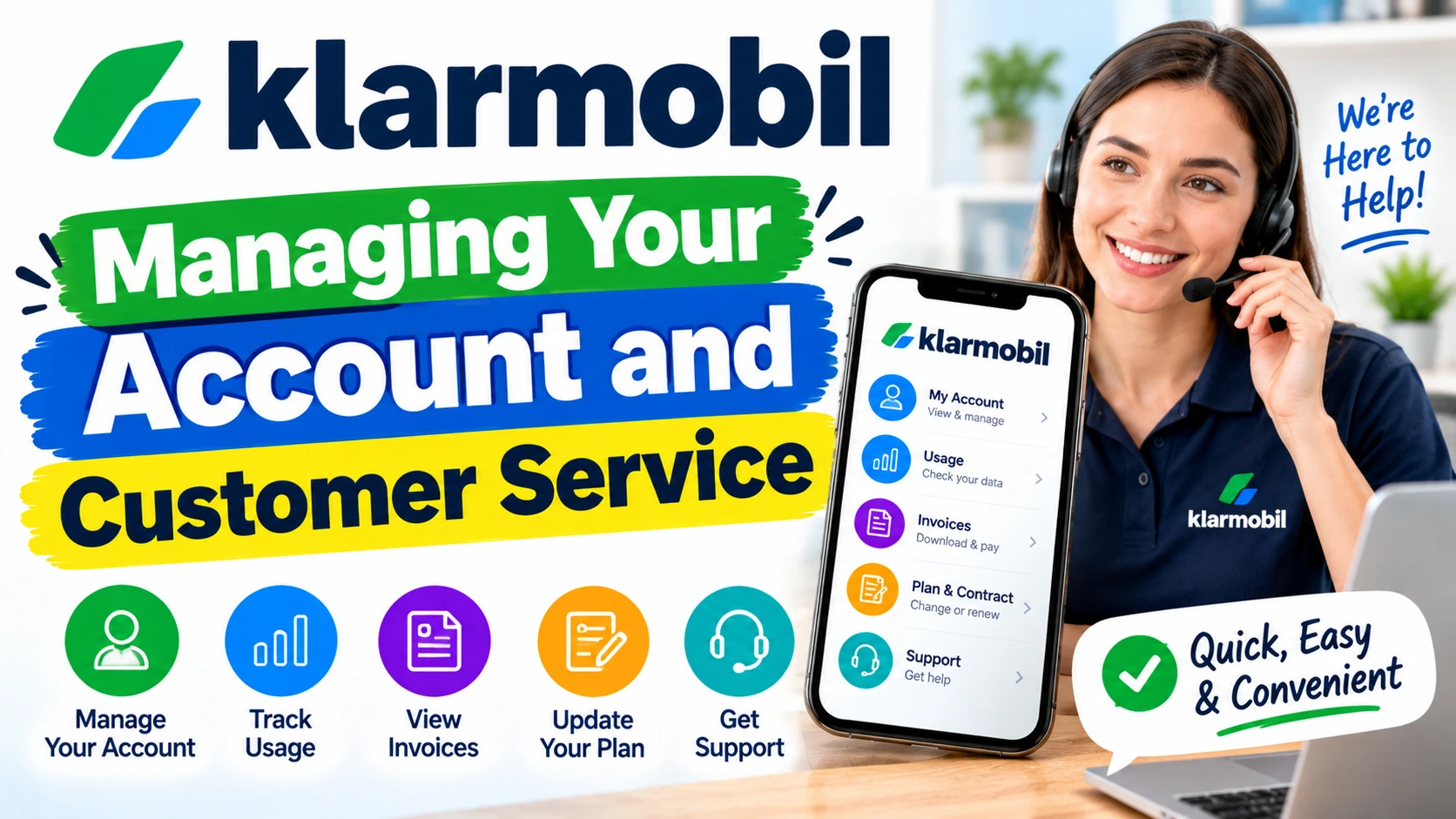
Signing up for a mobile tariff is only one part of the experience. You will also need a convenient way to monitor your data usage, review invoices, manage contract information, and get help when something goes wrong. Klarmobil offers a customer app and online service options for managing account information and viewing mobile usage. Its website also provides support resources covering subjects such as number portability and ending a contract.

Keeping an eye on your data consumption can help you decide whether your current tariff still suits you. If you regularly use almost all your allowance before the billing period ends, a larger package might be worthwhile. If you consistently use only a small portion, you may be paying for data you do not need. Reviewing usage over several months gives you a more reliable picture than basing your decision on a single unusually busy week.

When contacting customer support, keep your contract information, recent bills, and a clear description of the issue available. If you have a network problem, note where and when it occurs and whether it affects calls, mobile data, or both. These details make it easier to distinguish a coverage issue from a device problem or an account-related restriction.

Customers should also keep track of important contract dates and cancellation conditions. Save confirmation emails and review the terms of any tariff change. A little organisation can prevent misunderstandings about charges, renewals, or the timing of a provider switch.

Pros and Cons of Klarmobil Services

Klarmobil may be a useful option for customers looking for a choice of mobile tariffs without necessarily buying a phone. Its range includes plans with different data allowances, 5G access on selected offers, and alternatives with different contract durations. Having both smartphone bundles and SIM-only tariffs available can make it easier to compare options according to your priorities.

However, no mobile provider is automatically the best choice for every customer. A tariff may offer excellent value on paper but be less suitable if the network has weak coverage in your area. A low promotional price may also be less appealing once you account for the connection fee, contract duration, or standard monthly price. The important question is whether the particular tariff fits your circumstances.

Advantages

Potential drawbacks

Different data allowances for different usage needs

Available offers and prices can change

Selected plans include 5G access

5G performance depends on coverage and tariff limits

SIM-only options for existing phones

Not every phone supports every network feature

Smartphone bundles are available

The handset and tariff must be compared as a combined cost

Some plans allow monthly cancellation

Flexible plans may have one-time connection fees

Online account management and app support

Customers still need to monitor contract terms and usage

The most sensible approach is to evaluate the specific offer rather than relying on general claims about the brand. Review the product information sheet, confirm the applicable network, and calculate the total cost. If you compare these details with offers from other German mobile providers, you will have a clearer basis for deciding whether Klarmobil is right for you.

Conclusion

Understanding Klarmobil offers and mobile services can help you choose a mobile plan that balances price, data allowance, connectivity, and flexibility. The provider offers a range of tariffs, including Allnet Flat plans, SIM-only options, selected 5G packages, and smartphone bundles. Its use of partner networks gives customers access to established German mobile infrastructure, but the actual network and tariff conditions should always be checked for the specific offer.

The best plan is not necessarily the cheapest one or the one with the most gigabytes. It is the plan that matches your everyday data usage, provides suitable coverage, and fits your budget over the full period you expect to use it. Compare promotional and standard prices, account for one-time fees, and understand the cancellation rules before signing up. With these steps, you can evaluate Klarmobil deals more confidently and choose a mobile service that works for your needs.

Frequently Asked Questions

Q. Is Klarmobil a mobile network operator?

Klarmobil is a German mobile service provider that offers mobile tariffs and smartphone deals using partner networks. Its official website identifies Telekom Deutschland and Vodafone as network partners. The specific network depends on the tariff you choose, so check the product details before placing an order.

Q. Does Klarmobil offer 5G mobile internet?

Yes, Klarmobil advertises 5G access on selected mobile plans. However, actual speeds depend on coverage, your device, network conditions, and the maximum speed permitted by your tariff. Check the plan details and local network coverage to determine whether it meets your expectations.

Q. Can I use Klarmobil without buying a new smartphone?

Yes. Klarmobil offers SIM-only tariffs for customers who want mobile service without purchasing a new handset through the provider. Before ordering, check that your existing phone is compatible with the selected SIM format and the network features included in your plan.

Q. Can I cancel a Klarmobil contract every month?

Some Klarmobil tariffs are advertised with a one-month contract term and monthly cancellation, while others have a 24-month commitment. Flexible plans may also have a one-time connection fee. Always review the specific tariff’s cancellation terms, fees, and notice requirements before signing up.

Q. How can I find the best Klarmobil offer for my needs?

Start by estimating your monthly data usage and checking which partner network provides suitable coverage in your area. Compare the monthly price, data allowance, maximum speed, connection fee, contract duration, and any promotional pricing conditions. Finally, calculate the total cost over your expected usage period and compare it with alternative tariffs before making a decision.

Table of Contents

Amstar DMC (US & Canada)

Top Reasons to Consider Amstar DMC (US & Canada) for Your Next Trip

Top Reasons to Consider Amstar DMC (US & Canada) for Your Next Trip

Amstar DMC (US & Canada)

Discover the top reasons to consider Amstar DMC (US & Canada) for your next trip. Explore its travel services, airport transfers, exciting excursions, personalized experiences, and convenient vacation planning options. Learn about its destinations, booking flexibility, family-friendly activities, and premium travel experiences to help you plan a memorable holiday. Find useful tips to compare services, check availability, and choose the right travel solutions for a smooth and enjoyable journey.

Table of Contents

Understanding Amstar DMC and Its Travel Services

A destination management company helps travelers organize experiences and practical arrangements at their holiday destination. Instead of researching every excursion, transportation provider, and local activity separately, travelers can explore a collection of services through one provider. Amstar DMC offers airport-to-hotel transfers, excursions, activities, and customized services for meetings and events. Its official platform also features destination guides and experiences designed around sightseeing, outdoor adventures, and local culture.

This approach can be useful when visiting a destination for the first time because visitors may not know which attractions are worth prioritizing, how to get to them, or how much time to allow for each activity.

The company’s value is not simply about arranging transportation from one location to another. It is also about helping travelers coordinate different parts of their trip so they can spend less time managing logistics and more time enjoying their surroundings. For example, someone visiting Cancun might want an airport transfer, a day trip to a historic attraction, and a sailing excursion during the same holiday. Having these options available through a single travel-services provider can make comparison and planning easier. However, travelers should still review each service’s inclusions, meeting arrangements, and cancellation terms individually. For US and Canadian customers, the first step is to confirm that the desired service is available in their actual destination.

Personalized Travel Experiences

Every traveler has a different idea of the perfect holiday. Some people want adventurous excursions filled with outdoor activities, while others prefer relaxing beach days, cultural tours, or private sightseeing. A major reason to consider Amstar DMC is its emphasis on curated experiences and personalized service.With options ranging from private VIP itineraries to carefully chosen destination trips, the organization characterizes its approach as concentrating on the needs of guests.

Instead of selecting activities based only on popularity, this variety can assist travelers in comparing experiences that fit their interests.

Personalization is particularly helpful when a trip includes people with different preferences. Imagine a family where one person enjoys nature, another prefers historical landmarks, and the children want an activity involving water or wildlife. Rather than filling every day with similar excursions, the family can select a mix of experiences that provides something for everyone. Couples might prefer quieter outings or premium transportation, while groups of friends may be more interested in sailing, sightseeing, or active adventures. The best approach is to identify your priorities before booking and ask questions about the experience’s pace, duration, accessibility, and inclusions. Although curated options can simplify the decision, the suitability of each experience depends on the destination and the specific package selected.

Tailored Adventures for Different Travel Styles

A well-planned vacation should reflect how you like to travel, not force you into an itinerary that feels uncomfortable or rushed. Amstar’s published offerings include cultural excursions, catamaran trips, nature experiences, and private transportation options, giving travelers several categories to consider.

Adventure lovers may enjoy water-based activities or guided nature tours, while visitors who prefer a slower pace might choose scenic sightseeing and cultural experiences. The important thing is to match an activity with your available time, physical comfort, budget, and expectations.

Before choosing an excursion, read the description carefully and check whether meals, equipment, entrance fees, transportation, or refreshments are included. A tour that initially looks inexpensive may have additional expenses, while a higher-priced package may include several services that would otherwise need to be purchased separately. If you are traveling with children, older relatives, or someone with mobility requirements, confirm suitability directly with the provider. This small amount of preparation can prevent disappointment and help you build a balanced itinerary. The goal is not to book as many activities as possible; it is to choose the experiences that will make your trip meaningful.

Convenient Airport Transfers

Airport transportation can shape the first impression of an entire holiday. Most passengers want to get to their hotel without needless complication, find their driver, and retrieve their luggage after a lengthy flight. In the locations where it operates, Amstar DMC provides private, shared, and deluxe airport-to-hotel transportation services.

Booking transportation in advance can help visitors understand where to meet, what type of vehicle to expect, and how the journey to their accommodation will be arranged. It can also reduce the need to negotiate transport immediately after arriving in an unfamiliar place.

Pre-arranged transfers may be particularly useful for families carrying luggage, couples arriving late, and groups traveling together. However, convenience depends on the service selected. A shared shuttle may stop at multiple hotels, while a private transfer generally provides a more direct journey for the booked party. Travelers should confirm the pickup location, waiting arrangements, luggage allowance, flight-delay procedure, and final drop-off point before departure. It is also wise to keep the booking confirmation accessible on a phone and save any emergency contact details. These practical steps help make arrival and departure days more predictable, although no transportation provider can eliminate every possible delay.

Private, Shared, and Deluxe Transportation

Amstar’s transportation categories provide different ways to balance comfort, convenience, and price. The following comparison explains the general differences travelers should consider; exact features, availability, and rates depend on the destination and booking.

Transportation type

Main advantage

Best suited for

What to check

Shared transfer

May cost less per traveler

Budget-conscious visitors

Stops, waiting time, and passenger capacity

Private transfer

More direct and personal transportation

Families, couples, and small groups

Vehicle size, luggage allowance, and total fare

Deluxe transfer

A more premium arrival experience

Travelers prioritizing comfort and convenience

Included extras, pickup arrangements, and price

Amstar advertises these categories on its official website, including private transportation for direct travel and deluxe services with additional arrival conveniences.

What matters most to you will determine the best option. A solo traveler who wants to keep costs down may find a shared shuttle practical, whereas a family arriving with several suitcases might appreciate a private vehicle. Before paying, compare the complete price rather than relying on a headline rate, and confirm that the transfer covers your exact airport and accommodation.

Exciting Tours and Local Experiences

One of the best parts of traveling is discovering places that you might never encounter during an ordinary day at home. Beautiful beaches, historic sites, local markets, marine adventures, and scenic landscapes can turn a standard vacation into a collection of lasting memories. Amstar DMC offers excursions designed to help visitors explore destinations beyond their hotels and resorts. Examples on its official website include the Chichen Itza cultural excursion, Isla Mujeres sailing experiences, and nature activities around Costa Rica.

These offerings give travelers a starting point for planning activities around their interests.

Choosing a guided excursion can also reduce the work involved in researching routes, transportation, and activity providers independently. Instead of spending hours comparing unfamiliar options, you can review available experiences and select those that fit your schedule. Guided activities may offer useful context about local history, traditions, and natural environments, helping visitors understand more than just what they see. Nevertheless, every excursion has its own schedule and requirements, so check the duration, physical demands, group size, and inclusions before making a decision. A thoughtfully chosen tour can add variety to a relaxing holiday without filling every moment of your itinerary.

Professional Destination Support

Travel becomes easier when you know where to turn if you have a question or need help understanding local arrangements. Destination support can be especially valuable when visiting an unfamiliar country, arriving at a busy airport, or coordinating several activities during a short stay. Amstar’s published information describes local destination assistance and personalized service as part of its approach to helping travelers.

This type of support can give visitors a clearer point of contact for questions about booked services, pickup instructions, or scheduled experiences.

Before traveling, it is sensible to save the provider’s official contact information, booking references, and any relevant instructions. Ask whether support is available during your planned arrival time and which communication channels are appropriate for urgent issues. Travelers should also understand the distinction between assistance with an Amstar booking and help with unrelated matters such as airline cancellations, passport problems, or hotel disputes. Knowing who is responsible for each part of your trip makes problem-solving more straightforward. Good planning does not guarantee that nothing will go wrong, but it can make unexpected situations easier to manage.

Travel Flexibility and Booking Convenience

Sometimes uncontrollable circumstances cause your travel plans to change. A flight may be rescheduled, weather conditions may affect an outdoor activity, or you may simply decide to spend an extra morning relaxing at the resort. Flexible booking terms can therefore be an important factor when choosing tours and transfers. The possibility to modify or cancel qualified services by 4 p.m. is advertized on Amstar’s official website on the day before service.

This is a useful policy to investigate, but travelers should read the applicable terms for their specific booking rather than assume every service has identical conditions.

Convenient online booking can also make trip preparation more manageable. Before reaching their place, visitors can plan activities, compare descriptions, and assess available experiences. However, a smooth booking process should always be accompanied by careful checking. Verify the date, local time, number of passengers, pickup point, payment currency, and cancellation deadline before confirming. If your itinerary involves several excursions, avoid scheduling them so tightly that a delay in one activity could affect the next. A little breathing room gives you more freedom to enjoy the holiday instead of watching the clock.

Family-Friendly Vacation Options

Family holidays require a different kind of planning because adults and children may have different interests, energy levels, and practical needs. Parents often need to consider travel time, restroom access, meal arrangements, child-friendly activities, and whether an excursion is suitable for younger participants. When making travel plans, families can look into Amstar’s variety of destination experiences, which include sailing, sightseeing, and outdoor activities.

Making the appropriate choice can prevent an arduous itinerary while allowing family members to share special moments.

Before booking, check minimum age requirements, child pricing, safety equipment, supervision arrangements, and any restrictions for water-based or physically demanding activities. A long sightseeing tour may be enjoyable for older children but tiring for toddlers, while a boat excursion may require particular precautions for younger passengers. Families should also ask whether child seats are available for transfers and whether a stroller can be accommodated. These details are more important than simply choosing an activity with an attractive description. You may concentrate on enjoying the destination with your family when the practical arrangements meet their demands.

Romantic Getaways and Premium Experiences

Couples often look for experiences that feel special without requiring them to organize every detail themselves. A wonderful honeymoon or anniversary excursion, a private transfer, a leisurely day exploring local sites, or a picturesque sailing cruise could all be considered romantic getaways.  Amstar offers selected experiences and private VIP itineraries that may appeal to travelers seeking a more personalized holiday.

Depending on the destination, these options can help couples build a trip around shared interests and the kind of atmosphere they want.

Premium travel does not necessarily mean spending money on every available upgrade. It means identifying which details will genuinely improve your experience. A private transfer may be worthwhile if you value a direct journey, while a shared shuttle may leave more room in the budget for a special dinner or another activity. Couples should compare the inclusions of premium excursions carefully and confirm whether private guides, meals, drinks, or exclusive access are actually provided. You can make your trip unforgettable without spending money on unnecessary extras by focusing on what really important.

Cultural Discovery and Nature Adventures

A destination becomes more interesting when you explore its identity as well as its scenery. Cultural experiences can introduce visitors to regional history, architecture, food traditions, and local ways of life. Nature excursions, meanwhile, may provide opportunities to appreciate coastlines, forests, marine environments, and wildlife. Amstar’s published experiences span several of these categories, including cultural visits in Mexico, marine activities in the Caribbean, and nature-focused adventures in Costa Rica.

When choosing these activities, consider both the experience you want and its impact on the destination. Follow local guidance, respect cultural customs, avoid disturbing wildlife, and check whether a nature-based excursion follows appropriate environmental practices. If a tour includes wildlife encounters, ask about the conditions under which animals are observed and whether interactions are conducted responsibly. Travelers who are interested in learning can also research the history and environment of a destination before the excursion. Even a short guided outing can become much more rewarding when you understand the significance of what you are seeing.

Digital Tools for a Smoother Journey

Digital tools can reduce uncertainty by putting essential travel information within easy reach. Amstar’s Amstar Connect service provides airport-transfer information, email notifications with pickup instructions and driver details, and features for tracking a transfer and viewing its estimated arrival time.

These features can be particularly useful when arriving in an unfamiliar destination, as travelers can consult the relevant information instead of relying entirely on printed documents or trying to locate a representative without instructions.

To get the most from digital travel tools, check your confirmation before departure and ensure that your phone has sufficient battery power and internet access. Important information should be saved in a fashion that can still be accessed in the event that your connection is unstable. It is also helpful to keep screenshots of booking references and pickup instructions. Remember that live tracking and estimated arrival times are tools for planning, not guarantees that traffic or operational conditions will remain unchanged. Digital convenience works best when combined with clear instructions and a backup plan.

Group Travel and Corporate Events

Organizing a group trip involves more coordination than planning a holiday for one or two people. Participants may arrive on different flights, stay at different hotels, or have varying preferences for activities and free time. Corporate groups have additional requirements, including meeting schedules, transportation coordination, and events that need to run according to a defined program. Amstar lists personalized meetings and events among its services, including tailored arrangements for corporate retreats and incentive travel.

A destination management provider can be useful when a group needs help coordinating multiple travel components. For example, a company planning an incentive trip may need airport pickups, group excursions, and event-related transportation. Families celebrating a reunion may want shared activities while preserving some flexibility for individual travelers. Before booking, request a clear proposal that specifies group size, transport capacity, schedules, inclusions, payment terms, and cancellation conditions. Larger groups should also identify a primary organizer who can communicate changes to everyone. Clear responsibilities help avoid confusion and allow participants to focus on the experience rather than the logistics.

Comparing Amstar DMC With Independent Travel Planning

Should you book through a destination management company or organize everything yourself? The answer depends on your travel style, destination knowledge, budget, and willingness to manage the details. Independent planning gives you greater freedom to research different suppliers, change your itinerary, and select individual activities. A company such as Amstar DMC offers a more consolidated way to explore available excursions and transportation services in the destinations it serves.

Here is a practical comparison to help you decide which approach suits your next holiday.

Factor

Amstar DMC

Independent planning

Excursion selection

Browse available curated experiences

Research and compare separate providers

Airport transfers

Book from available transfer options

Arrange a taxi, shuttle, rental car, or other service

Local assistance

Check the support offered for your booking

Contact individual providers yourself

Customization

Choose available options and ask about tailored services

Build your itinerary around your own preferences

Price comparison

Review the quoted package or service price

Compare multiple providers and individual costs

Flexibility

Depends on booking terms and service availability

Depends on each supplier’s policies and your arrangements

Neither option is automatically better for everyone. If you enjoy researching destinations and are comfortable handling logistics, independent planning may be satisfying and cost-effective. If you prefer having transfers and selected excursions arranged ahead of time, a destination management company may be more convenient. You can also combine the two approaches by booking certain services through Amstar and arranging other activities independently. The most sensible choice is the one that balances convenience, cost, flexibility, and confidence.

Important Factors to Check Before Booking

Even an established travel-services provider deserves careful evaluation before you make a payment. The first consideration is geographical coverage. Although the keyword Amstar DMC (US & Canada) may appear in travel searches, Amstar’s official destination listings emphasize Mexico, Caribbean destinations, Costa Rica, and Hawaii rather than comprehensive coverage across the United States and Canada.

If you are planning a trip within mainland USA or Canada, confirm directly whether the particular service you need is available in your destination.

Price is another important consideration. Compare the complete cost of each service, including taxes, extra fees, entrance tickets, meals, equipment, and transportation where applicable. Check the cancellation policy, refund eligibility, and deadline for changes before making a non-refundable commitment.Evaluating independent traveler feedback is just as crucial as depending solely on promotional descriptions. For example, Amstar’s Trustpilot page displays mixed customer experiences and a low overall TrustScore in the currently surfaced results.Read Customer Service Reviews of amstardmc.com Review the most recent comments, look for recurring concerns, and consider how the company responds to problems. Customer reviews represent individual experiences, not guaranteed outcomes, but they can help you ask better questions before booking.

How to Make the Most of Your Amstar DMC Experience

A rewarding trip starts with a clear idea of what you want to experience. Before browsing tours, identify your priorities: perhaps you want comfortable airport transportation, one memorable outdoor excursion, a cultural visit, and plenty of free time. Next, weigh your selections against your spending limit and timetable. Amstar’s official website allows travelers to explore its destinations, transportation categories, and excursion offerings, making it a useful starting point when the company operates in the place you intend to visit.

Once you have shortlisted your options, read the full descriptions and confirm any details that could affect your plans. Ask about pickup times, meeting locations, age restrictions, accessibility, weather-related changes, and what happens if your flight is delayed. Keep confirmation emails and receipts together, and leave sufficient time between scheduled activities. Avoid booking a demanding full-day excursion immediately after a long international flight if you know you will need rest. Finally, leave some unplanned time in your itinerary. The best holidays combine a little preparation with enough freedom to enjoy unexpected discoveries, take a slower morning, or revisit a place you particularly love.

Is Amstar DMC the Best Option for Your Upcoming Vacation?

Amstar DMC may be worth considering if you are visiting one of its operating destinations and want to arrange airport transportation, guided excursions, or selected premium experiences through a destination-focused provider. Its published service categories offer options for couples, families, individual travelers, and groups, while its digital transfer features can help travelers stay informed about their transportation arrangements.

Those features may be especially useful if you prefer to organize important parts of a vacation before arriving.

The best option, however, will depend on your expectations and real destination. Subject to availability, travelers planning to visit Mexico, Jamaica, the Dominican Republic, Costa Rica, or Hawaii can look through pertinent listings.  People planning a trip elsewhere in the United States or Canada should verify service coverage before assuming Amstar can manage their transportation or activities. It is also wise to compare prices, read independent reviews, and understand cancellation terms. By checking these details carefully, you can make an informed decision about whether Amstar fits your travel plans instead of choosing a provider based on its name alone.

Conclusion

Organizing and enjoying a vacation can be enhanced by selecting the best travel agency. Airport transfers, carefully planned trips, customized experiences, and assistance for specific group and business travel requirements are all provided by Amstar DMC. Its published track record, range of activities, and digital transfer features make it an option worth researching for travelers visiting its supported destinations.

The most important step is to match the company’s actual services with your travel requirements. Confirm destination coverage, compare prices, check recent independent reviews, and read the booking terms before paying. Important aspects of your vacation may be made simpler if Amstar operates in your destination and its offers suit your interests and budget. If your trip is specifically within the United States or Canada, verify local availability first. A successful vacation does not depend on booking the most expensive package; it depends on making informed choices that let you spend more time enjoying the journey.

Frequently Asked Questions

Q. What is Amstar DMC?

Amstar DMC is a destination management company that offers services such as airport transfers, excursions, tours, and personalized travel experiences. It also lists services for meetings, events, and group travel. Its published destinations include Mexico, Jamaica, the Dominican Republic, Costa Rica, several Caribbean islands, and Hawaii.

Q. Does Amstar DMC operate throughout the United States and Canada?

Do not assume that it does. Amstar’s published destination listings include the United States, particularly Hawaii, but do not establish comprehensive service coverage throughout mainland USA or Canada. Check the official website or contact the company to confirm availability for your exact destination and required service.

Q. What types of airport transfers does Amstar DMC offer?

Amstar advertises shared, private, and deluxe transportation options in its supported destinations. Features vary by service, so review the pickup instructions, route, vehicle arrangements, luggage allowance, and included extras before booking.

Q. Can I change or cancel an Amstar DMC booking?

Amstar’s official website states that eligible services can generally be changed or canceled by 4 p.m. on the day before service. Specific conditions may apply, so check the terms associated with your booking for the correct deadline, eligibility, and refund details.

Q. Is Amstar DMC a good option for families and couples?

It may be suitable for both, depending on the destination and the experience selected. Families can compare sightseeing, nature, and water-based activities, while couples can investigate private transfers and selected premium experiences. Always verify age requirements, activity suitability, pricing, and inclusions before confirming a reservation.

Table of Contents

Helcim (US)

Why Businesses Choose Helcim (US) for Secure Payment Processing

Why Businesses Choose Helcim (US) for Secure Payment Processing

Helcim (US)

Why Businesses Choose Helcim (US) for Secure Payment Processing explores how Helcim (US) helps businesses manage secure and reliable payment processing. Discover its transparent pricing, PCI-compliant security, flexible payment options, and merchant-friendly features that make it a strong choice for U.S. businesses.

Table of Contents

Introduction: Why Secure Payment Processing Matters More Than Ever

For a modern business, accepting payments is no longer just a matter of swiping a card or entering a number into a checkout screen. Payment processing sits at the heart of revenue collection, customer experience, cash flow, and trust. When a customer enters card information, they are effectively handing a business one of their most sensitive pieces of financial information, and businesses have a responsibility to handle that information carefully. At the same time, merchants have to worry about processing costs, fraud, chargebacks, compliance requirements, payment failures, integrations, and whether their processor will actually provide useful support when something goes wrong. This is why the choice of a payment processor can have consequences far beyond the checkout counter. Helcim has attracted attention in the United States by combining payment processing with transparent pricing, merchant tools, security controls, and an emphasis on helping businesses understand what they are actually paying. Helcim (US) currently describes itself as a PCI Level 1 compliant payment processor, while its U.S. pricing model uses Interchange Plus rather than hiding processing costs inside a single bundled rate. For a business owner, that combination can feel less like handing the keys to an opaque financial machine and more like having a clear dashboard showing where money is going.

What Is Helcim (US) and Who Is It Designed For?

Helcim is a payment processing and merchant services company that provides businesses with tools for accepting payments through multiple channels. Instead of limiting merchants to one checkout method, its platform supports in-person payments, online payments, invoices, payment links, virtual terminal functionality, recurring payments, and integrations. That broad approach matters because businesses rarely operate through a single sales channel anymore. A retailer might accept payments at a physical location while also selling through a website, a professional service provider may invoice customers remotely, and a subscription-based company may need recurring billing. Helcim aims to bring these activities into one merchant account rather than forcing the business to stitch together multiple unrelated payment systems. Its current payment-processing pages also emphasize that merchants can manage invoices, sell online, accept payments in person, and integrate payment functionality from one account. The platform is particularly interesting for small and midsize businesses that want professional payment infrastructure without necessarily signing a long-term contract or paying recurring platform fees simply to keep an account open. The bigger idea is straightforward: payment processing should support the business rather than become another complicated system the owner has to constantly manage.

Why U.S. Businesses Look for Alternatives to Traditional Processors

Traditional payment processing can sometimes feel like trying to read a restaurant bill written in a foreign language. A merchant sees percentages, transaction charges, assessment fees, interchange categories, monthly charges, statement fees, PCI-related charges, equipment costs, and possibly contract terms, but may struggle to understand which portion actually belongs to the processor. This lack of clarity can make it difficult to calculate the true cost of accepting payments. For a small business, even a fraction of a percentage point can matter when thousands or hundreds of thousands of dollars move through the payment system every month. Helcim approaches this problem with Interchange Plus pricing, where the underlying card-network and interchange costs are passed through and Helcim (US) adds a stated processing margin. The company says its pricing model is designed to show merchants both the wholesale component and its own margin instead of combining everything into one opaque rate. That transparency is one reason businesses evaluating processors may put Helcim on their shortlist. The attraction is not simply that a percentage looks low; it is that merchants can better understand what drives the final bill and how transaction type, card type, and processing volume influence costs.

Helcim's Interchange Plus Pricing Model

Interchange Plus pricing is one of the most important reasons businesses consider Helcim. Think of a payment transaction as a taxi ride: the card networks and issuing banks determine part of the underlying fare, while the payment processor adds its own charge for providing the service. Under a bundled pricing model, those pieces can be combined into one number, making it difficult to determine exactly how much the processor is earning. Under Interchange Plus, the underlying interchange cost is separated from the processor’s margin. Helcim currently lists a U.S. starting margin of Interchange + 0.40% + 8¢ for in-person transactions and Interchange + 0.50% + 25¢ for keyed and online transactions, with lower margins available as processing volume increases. The actual total rate still varies because interchange itself depends on factors such as card type and transaction method, so businesses should not interpret the published margin as a universal all-in processing rate. What matters is that the merchant has a clearer way to separate unavoidable network costs from the processor’s markup. For businesses with meaningful transaction volume, that distinction can make payment expenses easier to audit, forecast, and potentially reduce.

Automatic Volume Discounts Can Reward Growth

One feature that can appeal to growing businesses is Helcim’s automatic volume-discount structure. Instead of requiring merchants to call sales representatives and negotiate a new processing rate every time their business becomes larger, Helcim calculates a merchant’s recent processing volume and automatically assigns the appropriate pricing tier. Its current U.S. fee disclosure describes five tiers based on a three-month rolling average, with in-person processing margins declining from 0.40% + 8¢ at the lowest tier to 0.15% + 6¢ for businesses processing more than $1 million per month. Keyed and online margins also decline as volume rises. This structure can be valuable for businesses that expect payment volume to increase because the economics can improve without renegotiating an entire contract. Imagine a small service company that starts with $20,000 in monthly card volume and eventually grows into a $150,000-a-month operation. Under a pricing structure where the processor’s margin automatically falls with increased volume, growth itself can trigger better pricing. Of course, merchants should still evaluate their actual transaction mix and effective rate, because interchange costs vary by card and transaction category. But the principle is attractive: the more a business grows, the less processor margin it may pay per transaction.

PCI Compliance and Payment Security

Security is where payment processing becomes much more serious than simply comparing percentages. Businesses handling card payments operate within a complex security environment designed to protect cardholder data and reduce the risk of unauthorized access. Helcim states that it is a Level 1 PCI-DSS compliant payment processor, which represents the highest merchant-service-provider level under the PCI framework. For a business owner, this does not mean that every security responsibility magically disappears. Merchant security still depends on how employees use the system, how devices are configured, how credentials are protected, and how the business handles customer information. However, choosing a processor with mature security infrastructure can reduce the amount of sensitive payment technology a business has to build and maintain independently. Helcim also says that customer sensitive information does not touch an unencrypted server when its systems are used appropriately and that data migration is handled through secure, encrypted vaults. That is important because secure payment processing is ultimately about reducing the number of places where valuable financial data can be exposed. The fewer unnecessary points of exposure a business creates, the easier it becomes to build a sensible security strategy.

Protecting Customer Trust at Checkout

Payment security has a direct connection to customer confidence. Customers may never know which processor is behind a website or card terminal, but they notice when a checkout experience feels unreliable, confusing, or suspicious. A failed payment, an unexpected error, or uncertainty about whether their card details are protected can make a customer hesitate before completing a purchase. Businesses therefore need payment infrastructure that operates quietly in the background while maintaining strong security practices. Helcim’s model is built around keeping payment information within its payment environment rather than requiring merchants to create their own card-data storage systems. Its security messaging emphasizes encrypted handling and PCI compliance as part of its merchant-services infrastructure. The practical benefit is that a business can focus on serving customers instead of trying to become a payment-security company itself. Security is a little like the foundation of a building: customers may not see it, but if it is weak, everything built on top of it becomes less trustworthy. A reliable payment processor helps make that foundation stronger.

No Monthly Fees and No Long-Term Contracts

Cost predictability is another major reason businesses investigate Helcim. According to its current U.S. pricing information, Helcim does not charge typical monthly, annual, statement, setup, or PCI compliance fees, and it does not require long-term contracts or cancellation fees. This can be particularly attractive to seasonal businesses, startups, consultants, and smaller companies that may not process payments consistently every month. Imagine paying a monthly fee simply because a payment-processing account exists, even during a slow month when the business processes almost nothing. A transaction-focused model can make more sense in that situation because the merchant’s cost is more closely connected to actual payment activity. Helcim (US) also says it does not lease its equipment and instead allows merchants to purchase hardware outright. That distinction can matter because equipment leases can create long-term obligations that are difficult to justify when technology changes quickly. Businesses should always review the complete fee schedule before signing up, especially if they have international cards, recurring payments, specialized transactions, or unusual processing requirements, but the absence of common recurring fees is a meaningful part of Helcim’s value proposition.

Payment Flexibility for Online and In-Person Businesses

Modern merchants increasingly need payment flexibility because customers do not all purchase in the same way. One customer may walk into a store and tap a card, another may purchase from a website, and another may receive an invoice and pay remotely. A payment processor that handles only one of these scenarios can force a company to maintain multiple systems, increasing administrative work and potentially creating reconciliation headaches. Helcim supports in-person, keyed, online, invoicing, recurring, and integrated payment workflows, allowing businesses to operate across different sales channels from a common platform. Its pricing also recognizes the difference between card-present and card-not-present transactions, with separate margins for each category. That makes sense because online and manually keyed transactions can carry different risk characteristics and interchange costs. For businesses transitioning from a physical-only model to omnichannel commerce, having multiple payment options under one account can simplify operations. Instead of treating every payment channel as a separate island, merchants can build one connected payment ecosystem around the same provider.

In-Person Payments and Hardware Options

Physical businesses need payment hardware that customers can use without friction. Helcim offers card readers and smart-terminal options, while also supporting contactless payments and other card-present methods. Its current U.S. fee disclosure lists the Helcim Card Reader at $199 and the Helcim Smart Terminal at $349, subject to applicable taxes. The company also supports Tap to Pay on iPhone, although its current fee disclosure lists a separate charge for approved transactions using that method. The bigger advantage for merchants is not necessarily the hardware itself but the connection between the physical payment device and the wider merchant platform. A restaurant, salon, retail shop, professional office, or service business can use card-present transactions while also having access to online and remote payment tools. Businesses should evaluate hardware based on their environment, transaction volume, connectivity needs, receipt requirements, and employee workflow. A sophisticated terminal does not automatically make a payment operation better; the best hardware is the one that customers and employees can use quickly and reliably.

Online Payments, Invoices, and Recurring Billing

A business does not always need a physical checkout counter to collect money. Contractors send invoices, consultants collect deposits, agencies bill clients, subscription businesses charge repeatedly, and online stores accept payments around the clock. Helcim provides tools designed to support these different payment situations, including online payments, invoices, recurring payments, and payment integrations. This can reduce the need for a merchant to use one provider for card processing and another for invoicing or recurring billing. Helcim’s current fee disclosure lists recurring payments at 0.4% per applicable recurring transaction, while the underlying card-network costs still depend on the transaction. For businesses using recurring billing, that transparency can help when calculating customer acquisition costs and lifetime value. It also gives merchants a clearer picture of how payment expenses change when customers move from one-time purchases to subscriptions. When a company can connect payment collection with its broader workflow, fewer manual steps are required, and fewer manual steps generally mean fewer opportunities for errors.

ACH Payments Can Expand Payment Options

Credit and debit cards are not the only way businesses can collect money. Bank-based payments can be useful for larger invoices, recurring services, professional fees, and transactions where merchants want an alternative to card payments. Helcim offers ACH payments for U.S. merchants, with its current fee disclosure listing 0.5% + 25¢ per approved transaction below $25,000, capped at $6 for transactions below that amount, with an additional 0.05% applied to amounts above $25,000. That structure can make ACH particularly interesting for larger transactions where card-processing costs could otherwise become significant. A business might, for example, give a customer the choice between paying a large invoice by card or using a bank payment. Giving customers options can improve flexibility while helping merchants manage payment economics. The important point is that payment processing is no longer just about accepting the card sitting in someone’s wallet. A modern processor can act as a bridge between several payment methods, allowing the merchant to choose the right rail for different types of transactions.

Transparent Statements Make Costs Easier to Understand

One of the less glamorous but surprisingly important aspects of payment processing is the monthly statement. A processor can offer an attractive headline rate and still leave merchants confused when the actual statement arrives. Helcim’s approach is built around showing the components of its Interchange Plus model, including the underlying card costs and its margin. The company says merchants can see the wholesale cost and Helcim’s margin on their statements, while its merchant tools are designed to help businesses understand and manage processing expenses. This matters because financial visibility allows a business owner to ask better questions. If processing costs increase, the merchant can investigate whether the change came from transaction mix, card type, international activity, interchange changes, or processor margin. Without that visibility, the business may simply notice that the monthly total is higher and have no practical way to determine why. Clear statements are therefore not just an accounting convenience; they are a management tool that can help a business protect its margins.

Chargebacks and Refund Considerations

Chargebacks are an unavoidable part of accepting electronic payments, especially for businesses operating online or serving large numbers of customers. A chargeback can involve lost revenue, administrative work, customer communication, and processing fees, so merchants need to understand how their processor handles the process. Helcim’s current U.S. fee disclosure lists chargebacks at $15 or $0 per occurrence, depending on the outcome, with the fee refunded when the chargeback is resolved in the merchant’s favor. Helcim (US) also states that it does not add a separate processing fee for refunds, although the original transaction’s processing fees remain the merchant’s responsibility. For businesses, that distinction is useful because refund economics can otherwise be misunderstood. A refund does not necessarily mean every original processing cost returns to the merchant. Understanding these details before launching a payment system helps businesses establish realistic margins and customer-service policies. It also reinforces a larger lesson: the cheapest-looking processor is not necessarily the cheapest processor once every operational fee and transaction scenario is considered.

How Helcim (US) Can Help Small and Medium-Sized Businesses

Small and medium-sized businesses often have a different relationship with technology than large corporations. A large enterprise may have dedicated payment specialists, security teams, compliance departments, accountants, and procurement professionals. A small business owner may be the person responsible for sales, payroll, customer service, inventory, and payment processing all in the same afternoon. That makes simplicity especially valuable. Helcim’s combination of payment acceptance, merchant tools, transparent pricing, and no monthly account fee is designed to reduce some of the administrative friction associated with payment processing. The company says small businesses save 25% on average compared with other processors, although actual savings vary significantly by transaction mix and existing processor pricing. Businesses should therefore treat that figure as a company-reported average rather than a guaranteed saving. The stronger takeaway is that transparent pricing gives merchants a framework for comparing their actual costs. For a small company operating on tight margins, understanding every percentage and per-transaction charge can be the difference between simply accepting payments and actively managing payment profitability.

Helcim vs. Flat-Rate Payment Processing

The choice between Helcim and a flat-rate processor often comes down to transaction volume and transaction characteristics. Flat-rate processing is attractive because it is simple: a merchant sees one headline percentage and one fixed transaction fee, making costs easy to estimate. But simplicity can sometimes come with a tradeoff because the same bundled rate may apply to transactions with very different underlying card costs. Helcim’s Interchange Plus model instead passes through the underlying interchange and network costs while applying a separate processor margin. This can become more compelling for businesses with larger average tickets or meaningful monthly volume because the processor’s margin is not simply a fixed bundled rate applied regardless of card type. However, Interchange Plus is not automatically best for every merchant. Helcim itself acknowledges that businesses with very small average transaction amounts or certain expensive rewards and corporate cards may not always benefit as much from this model. That honesty is important when evaluating payment processors. The right question is not “Which processor advertises the lowest rate?” but “Which pricing model produces the lowest realistic effective cost for my specific transaction mix?”

Feature

Helcim

Typical Flat-Rate Model

Pricing structure

Interchange Plus

Bundled flat rate

Processor margin

Separately disclosed

Generally bundled

Volume discounts

Automatic tiers

Depends on provider

Monthly account fee

$0 according to current U.S. pricing

Provider dependent

Long-term contract

No contract according to Helcim

Provider dependent

PCI compliance fee

$0 according to current pricing

Provider dependent

Online payments

Yes

Usually available

In-person payments

Yes

Usually available

ACH payments

Yes

Provider dependent

Best fit

Businesses wanting transparent, volume-based pricing

Businesses prioritizing simple rate calculations


What Businesses Should Consider Before Choosing Helcim (US)

Helcim (US) may be attractive, but a responsible payment-processing decision should never be based on marketing claims alone. Businesses should calculate their own effective rate using several months of actual processing statements and compare that number against Helcim’s estimated cost. Transaction size is particularly important because fixed per-transaction fees have a greater impact on small purchases than large ones. Card mix matters too, because rewards, commercial, international, debit, and other card categories can carry different interchange costs. Businesses should also consider whether they need specialized integrations, recurring payments, advanced reporting, specific hardware, or industry-specific functionality. Helcim’s current pricing documentation clearly states that international transactions can introduce additional card-network fees, and its recurring-payment and Level 2/3 optimization services have their own fee considerations. A merchant should therefore build a realistic model rather than comparing one advertised percentage with another. Payment processing is ultimately a business expense, and the best processor is the one whose total economics, security, features, support, and operational workflow fit the company’s actual needs.

Why Security and Pricing Work Better Together

Businesses sometimes treat payment security and payment cost as completely separate topics, but they are connected. A payment processor with strong security infrastructure can help reduce the technical burden of protecting card information, while transparent pricing helps the merchant understand the financial cost of using that infrastructure. Helcim (US) brings those two concepts together by positioning PCI compliance, secure payment handling, and transparent Interchange Plus pricing as core parts of its merchant-services offering. This is valuable because a business should not have to choose between reasonable economics and responsible security. At the same time, merchants should remember that PCI compliance is not a substitute for good internal security practices. Strong passwords, controlled user permissions, secure devices, employee awareness, software updates, and careful handling of customer information remain essential. The processor can provide the secure payment infrastructure, but the business still controls many of the doors through which an attacker might attempt to enter. The best approach is therefore layered: choose a capable processor, configure it correctly, train employees, protect accounts, and regularly review payment activity.

Conclusion

Businesses choose Helcim (US) for a combination of factors rather than one magical feature. Transparent Interchange Plus pricing, automatic volume discounts, no monthly account fees, no long-term contracts, PCI Level 1 compliance, online and in-person payment capabilities, ACH support, invoicing, recurring payments, and merchant tools create a platform that can fit a wide range of small and midsized businesses. Its strongest differentiator may be the philosophy behind the platform: merchants are given more visibility into what they pay instead of being asked to accept a single mysterious processing rate. That can make financial planning easier, particularly for businesses with meaningful payment volume. Security adds another important layer because payment processing involves sensitive customer information and requires more than simply getting a transaction approved. Helcim (US) is not necessarily the perfect choice for every company, and businesses with tiny transaction sizes, specialized requirements, unusual card mixes, or complex international needs should calculate their actual costs carefully. But for U.S. businesses looking for a combination of payment security, pricing transparency, flexible payment acceptance, and scalable merchant tools, Helcim is a strong option worth evaluating.

Frequently Asked Questions

Q. Is Helcim (US) secure for U.S. businesses?

Helcim states that it is a Level 1 PCI-DSS compliant payment processor, the highest PCI level for payment service providers. Its security information also describes encrypted handling and secure vault-based data migration. Businesses should still maintain their own security controls, including strong account credentials, employee access management, secure devices, and appropriate internal procedures. PCI compliance strengthens the payment infrastructure, but security is ultimately a shared responsibility.

Q. Does Helcim charge a monthly fee?

According to Helcim’s current U.S. pricing information, there are no monthly account fees, annual fees, statement fees, setup fees, or PCI compliance fees. Merchants generally pay processing-related charges when they process transactions. However, certain services, transaction types, hardware, and international payments can have additional fees, so businesses should review the current fee disclosure before signing up.

Q. How does Helcim's Interchange Plus pricing work?

Helcim passes through the underlying interchange and network costs associated with a transaction and adds a transparent processor margin. Its current U.S. starting margin is 0.40% + 8¢ for in-person payments and 0.50% + 25¢ for keyed and online payments, with automatic discounts available at higher processing volumes. The final effective rate varies because the underlying interchange cost depends on the card and transaction.

Q. Does Helcim support online and in-person payments?

Yes. Helcim supports both card-present and card-not-present payment processing, along with tools for online payments, invoices, recurring payments, and other merchant workflows. This makes it possible for a business to use one payment provider across several sales channels rather than maintaining completely separate payment systems.

Q. Is Helcim suitable for every type of business?

Not necessarily. Helcim can be particularly attractive to small and medium-sized businesses that value transparent pricing and process enough payment volume for Interchange Plus to make economic sense. However, businesses with very small average transaction amounts, unusual card mixes, extensive international processing, or highly specialized requirements should compare their actual transaction economics before switching. Helcim itself notes that some low-ticket businesses and businesses processing certain higher-cost rewards or corporate cards may not always save as much under Interchange Plus.

Table of Contents