5G vs Fiber Broadband: Which One Is Right for You?
Discover the key differences in this guide on 5G vs Fiber Broadband, where we compare speed, reliability, cost, and real-world performance. Learn which internet option suits your needs best—whether you prioritize flexibility with 5G or the ultra-fast, stable connection of fiber broadband.
Table of Contents
Understanding Modern Internet Technologies
What is 5G Internet?
Imagine internet without wires—sounds futuristic, right? That’s exactly what 5G internet brings to the table. It’s the fifth generation of wireless technology, designed to deliver faster speeds, lower latency, and better connectivity than previous mobile networks. Unlike traditional broadband, 5G uses cellular towers to transmit data through radio waves, meaning you don’t need physical cables running into your home.
Now here’s where things get interesting. In ideal conditions, 5G can reach extremely high speeds, even rivaling wired connections. But in real-world scenarios, speeds typically range between 100 Mbps to 300 Mbps, depending on signal strength, congestion, and distance from the tower . That variability is both its strength and its weakness. You get flexibility and portability, but performance can fluctuate.
What is Fiber Broadband?
If 5G is a highway, fiber broadband is more like a private bullet train. It uses fiber-optic cables made of glass or plastic strands to transmit data as pulses of light. Yes, light. That’s why it’s insanely fast and incredibly reliable.
Fiber doesn’t rely on shared airwaves or weather conditions. Instead, it delivers a dedicated connection directly to your home. This allows it to achieve speeds of 1 Gbps or higher, with some networks offering up to 5 Gbps or more . Even better, fiber provides symmetrical speeds, meaning your upload and download speeds are the same.
How 5G and Fiber Work
Wireless Transmission in 5G
5G works by sending data over radio waves between your device and nearby cell towers. These towers are connected to the broader internet network, allowing you to access online content without physical cables. The technology uses a mix of frequencies—from low-band for wider coverage to high-band (mmWave) for ultra-fast speeds.
But here’s the catch: high-frequency signals don’t travel far and can be blocked by buildings, trees, or even walls. That’s why 5G performance can vary significantly based on your location. If you’re close to a tower, you’ll experience blazing speeds. Move a few blocks away, and things might slow down.
This variability makes 5G both exciting and unpredictable. It’s perfect for quick deployment and mobility, but not always ideal for consistent performance.
Light-Based Transmission in Fiber
Fiber broadband takes a completely different approach. Instead of radio waves, it uses light signals transmitted through fiber-optic cables. These cables can carry massive amounts of data over long distances without losing quality.
Because the connection is physical and dedicated, fiber is not affected by weather, interference, or network congestion in the same way as 5G. It’s like having your own private lane on the internet highway. This results in extremely stable speeds and ultra-low latency, often as low as 1–5 milliseconds.
Speed Comparison
Real-World Speeds of 5G
Let’s talk numbers. In real-world usage, 5G typically delivers speeds between 25 Mbps and 1 Gbps, with most users experiencing around 100–300 Mbps . That’s more than enough for streaming, browsing, and even gaming.
However, these speeds are not guaranteed. Factors like signal strength, network congestion, and environmental interference can significantly impact performance. In India, for example, mobile internet speeds have reached around 100.78 Mbps on average , showing how strong 5G adoption is becoming.
Fiber, on the other hand, is in a different league. Typical plans offer 1 Gbps speeds, but advanced networks can go up to 5 Gbps or even higher . Some providers even push speeds beyond 10 Gbps in premium plans.
Here’s the key difference: fiber speeds are consistent. You get what you pay for, regardless of how many people are online. That makes it ideal for households with multiple users or bandwidth-heavy activities like 4K streaming and cloud computing.
Latency and Performance
Why Latency Matters
Latency is the delay between sending a request and receiving a response. It might sound technical, but it’s something you feel every day—like when a video buffers or a game lags.
Lower latency means a smoother experience. Whether you’re gaming, video conferencing, or using cloud apps, latency plays a huge role in performance.
Fiber vs 5G Latency Comparison
Fiber has a clear advantage here. It typically offers latency as low as 1–10 ms, while 5G ranges between 10–30 ms in most cases . In some scenarios, 5G latency can even go up to 40–50 ms.
That difference might seem small, but it’s noticeable in real-time applications. Gamers, for example, prefer fiber because every millisecond counts. Think of it like reaction time in a race—faster response means better performance.
Reliability and Stability
Network Congestion in 5G
5G networks are shared among users. This means that during peak hours, speeds can drop significantly. Weather conditions and physical obstacles can also affect signal quality.
Fiber Consistency Advantage
Fiber doesn’t have these issues. It provides a dedicated connection, ensuring consistent performance regardless of external factors. That’s why it’s often considered the most reliable internet option available today.
Installation and Availability
Ease of 5G Setup
One of the biggest advantages of 5G is its simplicity. You can set it up in minutes—just plug in a router and connect. No drilling, no cables, no waiting.
Fiber Infrastructure Limitations
Fiber requires physical installation, which can take time and may not be available in all areas. Rural regions often lack fiber infrastructure, making 5G a more practical choice.
5G plans are generally affordable and often come with no installation fees. This makes them attractive for budget-conscious users.
Fiber Cost Factors
Fiber can be more expensive upfront due to installation costs, but it offers better long-term value thanks to its performance and reliability.
Security Differences
Fiber is inherently more secure because it uses physical cables that are difficult to tap into. 5G, being wireless, is more susceptible to interception, although modern encryption reduces this risk significantly.
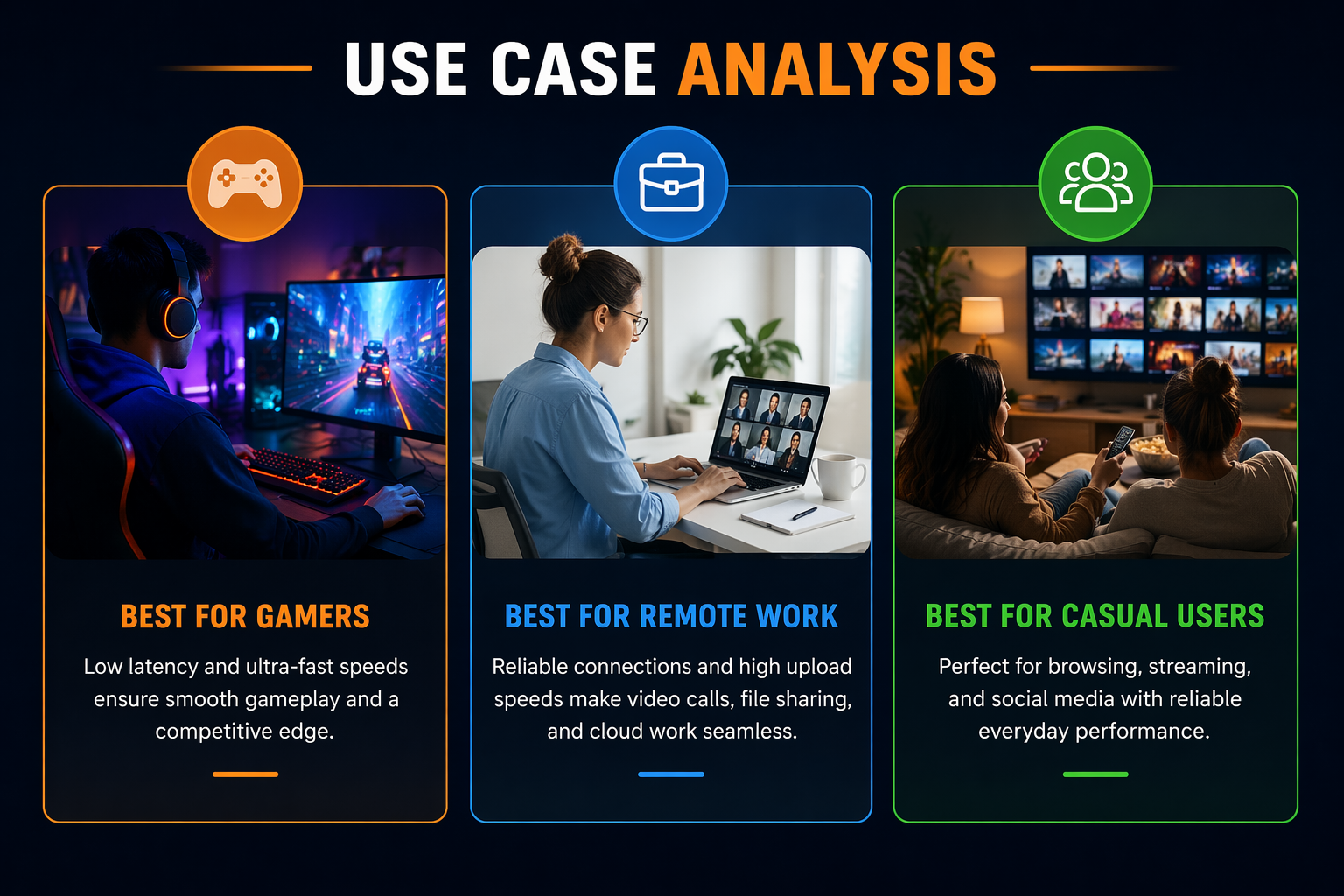
Use Case Analysis
Best for Gamers
Fiber wins hands down. Low latency and stable speeds make it perfect for competitive gaming.
Best for Remote Work
Again, fiber is the better choice due to its reliability and symmetrical upload speeds.
Best for Casual Users
If you just browse, stream, and use social media, 5G is more than enough.
Future of Internet: 5G vs Fiber
The future isn’t about choosing one over the other—it’s about coexistence. 5G will expand connectivity in underserved areas, while fiber will continue to dominate in performance. Together, they’ll shape the next generation of internet experiences.
Pros and Cons Table
Feature
5G Internet
Fiber Broadband
Speed
100–300 Mbps (variable)
1–5 Gbps (consistent)
Latency
10–30 ms
1–10 ms
Reliability
Medium
High
Installation
Easy
Complex
Availability
Widely expanding
Limited in rural areas
Cost
Lower upfront
Higher upfront
Final Verdict: Which One Should You Choose?
If you have access to fiber, it’s the clear winner. It offers unmatched speed, reliability, and performance. But if fiber isn’t available, 5G is a solid alternative that provides flexibility and decent speeds.
Conclusion
Choosing between 5G and fiber broadband isn’t just about speed—it’s about your lifestyle, location, and needs. Fiber is like a luxury sports car: fast, reliable, and built for performance. 5G is more like a versatile SUV: flexible, accessible, and good enough for most situations.
If you’re working from home, gaming, or running a business, fiber is worth the investment. But if you need quick setup, mobility, or live in an area without fiber, 5G is a practical and efficient choice.
Frequently Asked Questions
Is 5G faster than fiber broadband?
No, fiber is generally faster and more consistent than 5G, especially in real-world usage.
Can 5G replace fiber internet?
Not completely. 5G is a good alternative but lacks the consistency and reliability of fiber.
Which is better for gaming: 5G or fiber?
Fiber is better due to lower latency and stable speeds.