

Exploring How CLASS101 Connects Creative Professionals with Online Learners
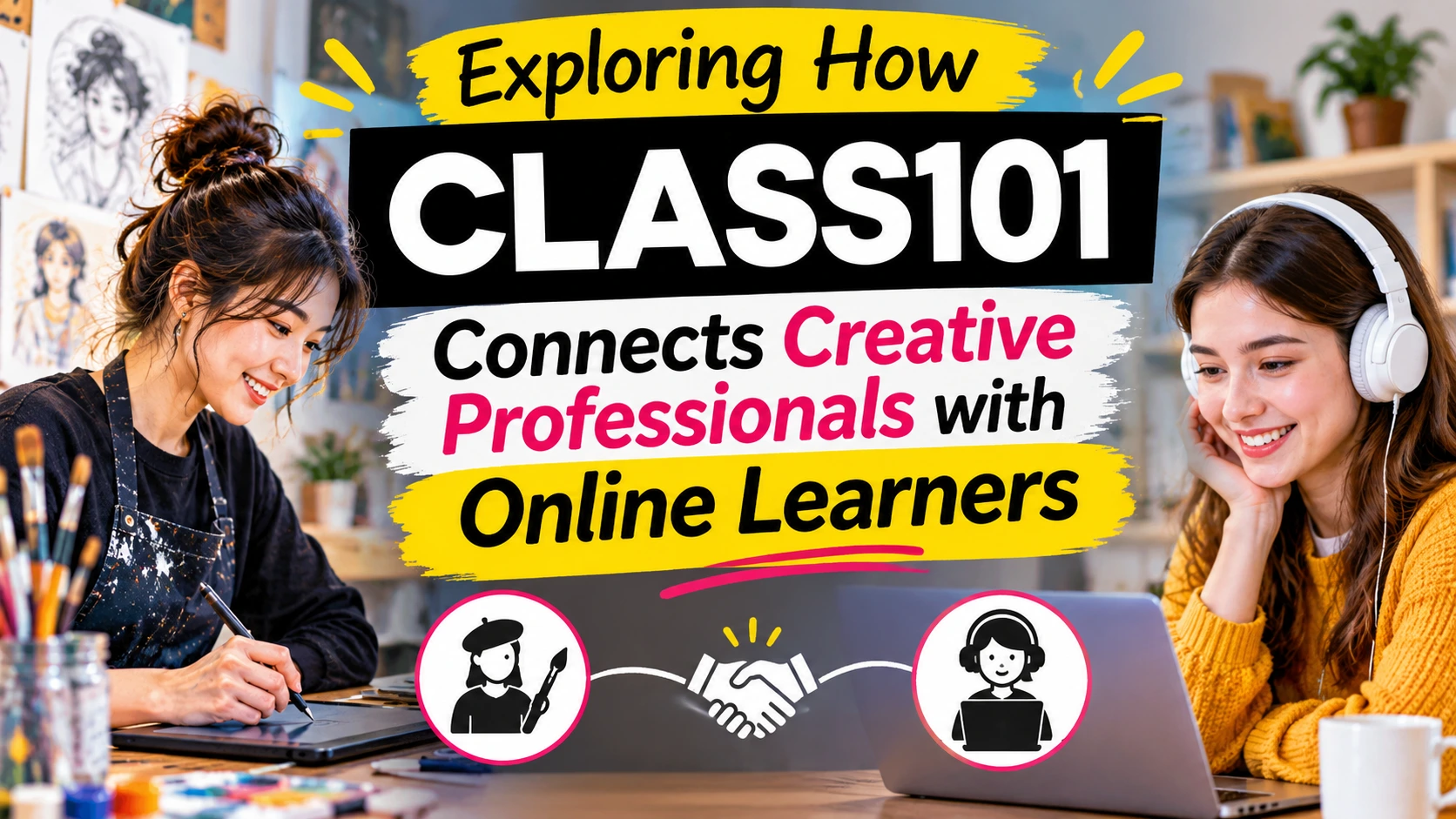
The internet has completely changed the way people learn new skills, develop hobbies, and build professional careers. In the past, anyone interested in learning illustration, photography, music production, cooking, or digital design usually had to attend physical classes, purchase expensive training materials, or find an experienced professional willing to provide personal guidance. Today, online learning platforms have made these opportunities much easier to access. One interesting example is CLASS101, a platform designed to connect creative professionals with people who want to develop their abilities through online education. Instead of limiting knowledge to traditional classrooms, CLASS101 creates an environment where experienced creators can share their expertise with learners from different backgrounds and locations. Its approach brings together professional knowledge, digital content, practical activities, and flexible learning opportunities. This creates a valuable relationship between people who have something meaningful to teach and those who are eager to learn.
CLASS101 originally developed around the idea that creative individuals should have opportunities to turn their knowledge and passions into meaningful income. Its platform has grown beyond a simple collection of video lessons, offering courses across creative, professional, lifestyle, and technology-related subjects. The current platform features categories such as digital drawing, crafts, photography, design, music, business, productivity, fitness, development, and data science. Its subscription-based CLASS101+ service also promotes access to a wide selection of classes through one subscription.
This approach makes the platform interesting for both independent professionals and everyday learners. A digital artist can teach illustration techniques, a photographer can explain professional editing workflows, and an aspiring designer can learn directly from someone with practical experience. By bringing these groups together, CLASS101 demonstrates how digital education can create opportunities that extend beyond traditional teaching environments.
Table of Contents
Understanding the CLASS101 Business Model
CLASS101 operates around a creator-focused online education model in which professionals develop learning content and make it available to interested audiences. Rather than functioning exclusively as a traditional educational institution, the platform provides a marketplace where creative knowledge becomes a valuable digital product. Creators can develop courses based on their expertise, organize lessons into structured learning experiences, and reach people who might never have discovered their work through conventional channels. Learners, meanwhile, can explore subjects according to their personal interests, professional goals, and available time. This relationship creates value on both sides because creators gain an additional way to share their knowledge, while learners receive access to practical instruction from people who understand their chosen fields. The platform’s wider ecosystem also allows creators to explore different content formats and digital products, making it more than simply a place to upload recorded lessons.
The subscription approach is another important part of CLASS101’s business model. CLASS101+ promotes access to numerous online classes through a single subscription, giving learners an opportunity to explore different subjects without purchasing every course individually. This can be particularly attractive to curious learners who enjoy experimenting with multiple interests. Someone might begin with digital illustration, move into photography, and eventually explore business or productivity lessons. The subscription structure encourages exploration and can make online education feel less restrictive. However, learners should always review the current subscription terms, regional availability, cancellation conditions, and included content before paying. For creators, the platform offers a route to reach paying audiences, although actual earnings depend on the commercial arrangement, audience demand, and platform policies. The model therefore connects content creation with education while creating a digital marketplace for specialized knowledge.
How the Platform Benefits Creators and Learners
The relationship between creators and learners is the foundation of CLASS101‘s ecosystem. Creative professionals bring experience, techniques, personal insights, and practical knowledge to the platform. Learners contribute curiosity, engagement, and demand for useful educational content. Both groups benefit when courses successfully connect the right expertise with the right audience. For example, an experienced illustrator may understand advanced drawing techniques but struggle to find students outside their local community. Through an online learning platform, that illustrator can package lessons into a structured course and make the material accessible to a much wider audience. A beginner who wants to improve drawing skills can then discover that instructor without needing personal connections or access to a local art school. This reduces the distance between professional knowledge and everyday learning opportunities.
Another important advantage is that this relationship can encourage a continuous cycle of learning and teaching. A student who develops strong illustration skills may eventually become an instructor, sharing personal techniques with the next generation of learners. CLASS101’s creator-focused approach reflects this wider idea: people who begin as students can later develop into creators themselves. This makes the platform particularly interesting because it does not treat education as a one-way process. Instead, it supports an ecosystem in which knowledge can move between professionals, beginners, hobbyists, and future instructors. The result is an environment where creativity can grow through participation rather than remaining limited to established educational institutions.
Connecting Creative Professionals with Global Audiences
One of the biggest challenges for independent creative professionals is finding an audience that appreciates their work and is willing to pay for their expertise. A talented artist might have excellent drawing abilities, but reaching potential students through personal social media accounts can take considerable time. Similarly, a photographer with years of experience may have valuable knowledge about lighting, composition, and editing but lack the resources to establish a complete online education business. CLASS101 helps address this challenge by providing an established platform where creative professionals can present educational content to interested learners. Instead of building every part of an online business independently, creators can use the platform’s existing educational environment to introduce their courses and connect with potential customers. This can reduce some of the barriers associated with launching a digital teaching business.
The platform’s international orientation also creates opportunities for creators to reach learners beyond their home markets. CLASS101’s Creator Center explains that courses can be translated into different languages to help connect instructors with international classmates. Its published creator information reports more than 3,800 live creators, over 4.27 million hours of total learning time watched, and more than 800 brand and company partnerships. These are figures displayed by the Creator Center, rather than independently audited industry statistics, but they illustrate the scale of the ecosystem described by the company.
For creative professionals, international exposure can introduce their teaching methods to audiences with different interests and cultural backgrounds. For learners, it creates opportunities to discover instructors and techniques that may not be available in their immediate surroundings.

Making Creative Knowledge Accessible Worldwide
Language and geography have traditionally limited access to specialized creative education. A learner living in a small town may have very few opportunities to study with a professional animator, fashion illustrator, or music producer. Even when excellent instructors exist in another country, attending their physical workshops may be financially or practically impossible. Digital learning changes this situation by allowing educational content to travel across geographical boundaries. CLASS101 supports this approach through online courses and multilingual accessibility initiatives, making it easier for international audiences to discover creative knowledge. A learner can explore an instructor’s course, follow demonstrations, and practice techniques without having to relocate or arrange an international trip.
This global connection can also introduce learners to different creative perspectives. For example, a student interested in illustration may benefit from studying artistic approaches developed in South Korea, Japan, Europe, or North America. Each creative community may have its own techniques, visual traditions, and professional practices. Learning from a wider selection of instructors can help students develop a more flexible understanding of their chosen subject. However, translation quality and regional course availability remain important considerations. Not every course will necessarily be available in every language or country. Even so, the opportunity to access international creative instruction represents an important development in online education, particularly for people who want to learn beyond the limitations of their local educational environment.
Supporting Creators in Monetizing Their Skills
Many creative professionals spend years developing valuable abilities, yet turning those abilities into a stable source of income can be difficult. Traditional employment is not always the ideal solution for artists, designers, photographers, musicians, and independent creators. Some prefer freelance work, while others want to build personal brands or develop additional income streams. CLASS101 provides another possible route by allowing creators to transform their knowledge into structured educational products. Instead of relying entirely on commissions, client projects, or advertising revenue, professionals can teach people how to perform specific creative tasks. An experienced digital artist, for instance, could create a course explaining character illustration, color selection, digital brushes, and professional workflow techniques. A photographer might develop lessons covering portrait lighting, camera settings, and image editing. These courses allow creators to package experience into educational content that can reach audiences over time.
CLASS101’s Creator Center describes support for individuals who want to develop and publish educational products. The company highlights professional content management, production guidance, and templates intended to help creators prepare their offerings. It also states that creators can create classes without an upfront creation fee, subject to the applicable platform conditions.
This type of support can be useful for professionals who understand their subject but have limited experience with online course production. However, monetization should not be viewed as guaranteed income. Creators still need to produce valuable material, understand audience expectations, communicate their expertise clearly, and develop lessons that learners find worth purchasing or accessing through the relevant subscription arrangement. A successful course requires both professional knowledge and thoughtful educational presentation.
Exploring the Variety of Online Courses
A major strength of CLASS101 is the range of subjects available through its learning ecosystem. Creative education is not restricted to painting, drawing, or traditional artistic activities. Modern creative professionals often work across several connected disciplines, including photography, digital media, video production, design, entrepreneurship, and technology. The platform reflects this diversity by offering categories that appeal to different interests and learning objectives. Someone who wants to develop an artistic hobby can explore drawing or crafts, while a professional looking to improve workplace skills can investigate productivity, business, or development-related classes. This broad selection gives the platform an advantage because learners are not required to focus on a single subject throughout their entire learning journey.
The official CLASS101 website also features a combination of hobby-oriented and career-oriented learning opportunities. Its course listings include creative subjects alongside business, finance, languages, marketing, and technology-related topics.
This mixture is useful because creative careers increasingly involve more than technical talent. An illustrator may need marketing knowledge to promote a portfolio, while a freelance photographer may benefit from understanding business management and client communication. By making different learning categories available within one ecosystem, CLASS101 encourages people to develop complementary abilities. Learners can build a wider skill set instead of treating artistic development and professional development as completely separate activities.
Popular Learning Categories on CLASS101
Digital drawing and illustration are among the most recognizable areas of creative online education. These subjects appeal to beginners who want to understand basic drawing principles as well as experienced artists interested in improving character design, digital painting, or professional illustration workflows. Photography is another popular learning area because it combines technical equipment knowledge with artistic decision-making. Students can explore composition, lighting, editing, and visual storytelling through structured demonstrations. Design courses provide opportunities to understand layout, typography, digital tools, and creative problem-solving. These subjects are especially useful for people interested in graphic design, branding, digital products, and visual communication.
Beyond visual creativity, CLASS101 also offers opportunities to explore music, crafts, cooking, baking, fitness, and lifestyle subjects. Its wider selection includes professional and technology-oriented topics such as data science, development, and productivity.
This diversity makes the platform relevant to people with different learning motivations. A hobbyist may want to learn baking simply for enjoyment, while an aspiring freelancer may want to develop a skill that supports a future business. Another learner might be interested in music production or improving personal productivity. The availability of different categories allows users to explore unfamiliar subjects and gradually discover new interests. Rather than treating education as something that ends after formal schooling, the platform encourages continuous learning throughout different stages of life.
How CLASS101 Makes Online Learning Convenient
Convenience is one of the strongest reasons people choose online education. Traditional courses often require students to follow fixed schedules, travel to specific locations, and adjust their personal responsibilities around class timings. These arrangements can be challenging for working professionals, parents, university students, and people living far away from educational centers. CLASS101 offers a more flexible learning environment by making recorded educational content accessible through its digital platform. Learners can explore available courses and study according to their individual schedules, subject to the access conditions of their chosen classes or subscriptions. This flexibility makes it easier to fit education into everyday life. Someone working during the day can spend an hour practicing illustration in the evening, while another learner may prefer weekend sessions devoted to photography or music production.
Digital accessibility also makes it possible to revisit lessons when necessary. Learning a practical skill often requires repetition, and a student may not understand every demonstration the first time. With recorded instruction, learners can pause a lesson, review a complicated explanation, and return to a demonstration when they are ready to practice again. This is particularly helpful for subjects involving detailed techniques or software workflows. The platform also promotes learning through its website and mobile application, giving users different ways to access educational content. However, learners should check device compatibility, course access conditions, and internet requirements before beginning. Convenience does not automatically produce better results, but it gives motivated students more control over how they organize their education.
The Importance of Practical and Project-Based Learning
Creative subjects are best understood when learners have opportunities to practice what they watch. Reading about digital illustration, photography, or music production can provide useful information, but theoretical explanations alone cannot replace actual experience. CLASS101‘s educational approach is particularly relevant to practical learning because many creative courses involve demonstrations that students can follow while developing their own projects. A drawing instructor can explain how to construct a character, select colors, and create shadows, while learners practice those techniques using their preferred digital tools. A photography instructor can demonstrate lighting arrangements, after which students can experiment with similar setups using available equipment. This connection between instruction and practice makes online courses more engaging than passive information consumption.
Some creative courses may also involve physical materials or additional learning resources. Apple’s App Store editorial coverage of CLASS101 has highlighted structured curricula, instructor-created templates and notes, video lessons, and the availability of class materials for certain experiences.
These resources can help students move from understanding a concept to applying it independently. Nevertheless, the exact materials and learning activities differ from course to course. Some classes may require specialized software, art supplies, cameras, or other equipment, while others can be completed using basic tools. Learners should therefore review course descriptions before enrolling. The most useful learning experience is one where students understand what they need, follow the demonstrations, complete meaningful exercises, and gradually become confident enough to apply their new skills without constant guidance.
Building a Community Around Creativity
Learning becomes more enjoyable when people feel connected to others who share similar interests. Creative development can sometimes feel isolating, especially for independent artists and beginners who do not have access to local creative communities. An online platform can help reduce this isolation by bringing together instructors and learners who are interested in similar subjects. CLASS101 creates opportunities for people to discover courses, explore professional techniques, and become part of a wider learning environment. When students learn from experienced creators, they also gain exposure to different ways of thinking about creative problems. This can encourage experimentation and help learners understand that there is rarely only one correct approach to producing meaningful creative work.
A community-oriented learning environment can also support motivation. Beginners sometimes become discouraged when their early attempts do not match the work of experienced professionals. Seeing other learners progress through similar challenges can make the process feel more achievable. Instructors can help by explaining common mistakes, sharing practical advice, and demonstrating how skills improve through consistent practice. Depending on the course and available platform features, learners may also have access to additional educational resources or opportunities for interaction. It is important not to assume that every course provides the same level of community engagement, because individual course structures can differ. Still, the broader idea of connecting creative people through digital education can make learning feel more collaborative, welcoming, and inspiring.
Technology and Innovation Behind CLASS101
Technology is the foundation that allows CLASS101 to connect creative professionals with learners across different locations. Video hosting, digital course organization, online subscriptions, mobile access, and content discovery all contribute to the experience. Without these systems, creators would have to manage the entire process independently, including hosting lessons, organizing payments, promoting courses, and providing access to educational materials. A centralized platform can simplify several of these activities by bringing course discovery and learning access together. This makes it easier for learners to explore subjects and for creators to present their educational products in an organized digital environment. Technology also supports the distribution of lessons at a scale that would be difficult to achieve through traditional face-to-face instruction.
The platform’s international ambitions make digital infrastructure especially important. Multilingual content can help creators reach people outside their original markets, while online delivery makes courses available to learners who cannot attend physical workshops. The official Creator Center specifically highlights language translation as part of its approach to international learning.
At the same time, technology creates responsibilities around content protection, privacy, accessibility, and platform reliability. CLASS101 has also publicly discussed protecting creator intellectual property through a partnership with MarqVision, reflecting the importance of safeguarding educational content in a digital environment.
As online education develops, platforms will need to keep improving their systems to protect creators while making learning experiences more convenient for students.
Benefits of CLASS101 for Creative Professionals
For creative professionals, CLASS101 can offer opportunities that extend beyond traditional freelance work or employment. One major benefit is the ability to transform personal expertise into educational content. A professional who has spent years developing a recognizable artistic style may be able to explain that knowledge through a structured course. This allows the creator to share practical experience with people who want to learn similar techniques. Another advantage is potential exposure to a larger audience. Independent professionals often spend considerable time searching for clients and building recognition, whereas an established learning platform provides another channel through which interested people can discover their expertise. Creators may also use course development as an opportunity to organize their knowledge, improve communication skills, and strengthen their professional reputation.
The platform’s creator support is another relevant advantage. Its Creator Center describes production assistance, content management support, and templates intended to help people create educational products.
These resources may reduce some of the difficulties involved in turning an idea into a finished online class. Creative professionals who are new to teaching can benefit from having a more structured production process. However, they should carefully evaluate the platform’s commercial terms, intellectual property policies, payment arrangements, and audience reach before investing substantial time in course creation. Success requires more than uploading videos. Creators need to identify a real learning need, develop clear lessons, and demonstrate why their expertise provides value. When these elements come together, online education can become a meaningful part of a diversified creative career.
Benefits of CLASS101 for Online Learners
CLASS101 provides learners with the opportunity to explore educational content developed by creative professionals and subject specialists. One of its main advantages is variety. Students can investigate several different subjects through the same platform rather than searching for a separate educational provider every time they develop a new interest. Someone might start with digital drawing, explore graphic design later, and eventually study marketing to understand how to promote creative work. This flexibility is especially valuable for people who are still discovering their professional interests. They can explore different possibilities before deciding which abilities deserve deeper investment. The subscription-based model may also appeal to learners who want to try several classes, although its value depends on how frequently they use the available content.
Another benefit is access to instruction that connects learning with real creative experience. A course created by an experienced illustrator or photographer may provide insights that are difficult to obtain from general online articles. Students can observe how professionals approach their work, understand the decisions behind particular techniques, and follow demonstrations at their own pace. The platform’s mobile application provides an additional access option, and its Google Play listing describes a broad range of educational categories. The listing showed more than one million downloads and a 4.3-star rating when accessed for this research, with the app updated on August 26, 2026.
Ratings and download figures can change over time, but they offer a snapshot of the application’s presence. Ultimately, learners get the most value when they select relevant courses, practice consistently, and apply new knowledge to personal or professional projects.
Challenges and Opportunities for the Platform
Although CLASS101 offers an attractive model for creative education, online learning platforms also face several challenges. The first is maintaining educational quality across a large collection of courses. Different creators have different teaching abilities, production standards, and approaches to organizing information. A professional who is highly skilled in illustration may not automatically be an effective instructor. Clear explanations, logical lesson sequences, useful examples, and appropriate beginner guidance are all important for successful teaching. If learners encounter poorly structured courses, they may struggle to complete their lessons or achieve their intended goals. Platforms therefore need to maintain effective quality standards while allowing creators enough freedom to develop content that reflects their individual expertise.
Competition is another important consideration. The online education market includes specialist course providers, video platforms, independent instructors, and subscription-based learning services. Learners have many alternatives, so CLASS101 must continue demonstrating why its creator-focused approach offers meaningful value. It also needs to balance the interests of creators and subscribers. Professionals want fair compensation and protection for their intellectual property, while learners expect useful courses, reliable access, and transparent subscription conditions. Content discovery is equally important because a growing course library can become difficult to navigate without effective recommendations and search tools. These challenges create opportunities for better course curation, stronger creator support, improved accessibility, and more personalized educational experiences. The platform’s long-term success will depend on how effectively it addresses these needs.
The Future of Creative Online Education
The future of creative education is likely to involve increasingly flexible learning experiences that combine professional instruction, digital tools, and practical application. As technology develops, learners may gain access to more interactive demonstrations, personalized learning recommendations, and additional resources that help them practice independently. Artificial intelligence could also support certain parts of the educational process, such as organizing course materials, explaining basic concepts, or helping students identify areas where they need additional practice. However, technology cannot completely replace the judgment, originality, and experience that skilled creative professionals bring to their subjects. A photography student still benefits from understanding how an experienced photographer approaches light, emotion, and composition. Similarly, an aspiring illustrator needs more than software instructions to develop an individual artistic voice.
CLASS101 has an opportunity to strengthen its position by continuing to support creators and making specialized knowledge more accessible to international learners. Better language accessibility, improved course discovery, practical assignments, and transparent creator policies could all contribute to a stronger educational ecosystem. The platform may also benefit from supporting professionals who want to teach emerging skills in areas such as digital content production, creative technology, and entrepreneurship. As more people explore independent careers and lifelong learning, demand for flexible skill development may create additional opportunities. Still, the quality of education must remain central. A successful platform should not simply provide more videos; it should help people understand difficult concepts, practice new techniques, and make measurable progress. That is where the real value of creative online education lies.
Conclusion
CLASS101 represents an interesting development in the way creative professionals share knowledge and connect with online learners. By bringing instructors and students together through a digital education platform, it creates opportunities for people to teach, learn, and explore creative interests without depending entirely on traditional classrooms. Professionals can turn their expertise into educational products, reach wider audiences, and explore additional income opportunities, while learners gain access to practical instruction across subjects such as drawing, photography, design, music, crafts, business, and technology. Its subscription-based approach, international learning opportunities, and creator-support resources make it an appealing option for people interested in continuous skill development.
What makes CLASS101 particularly interesting is its focus on the relationship between creativity and education. It recognizes that valuable knowledge does not exist only inside universities or professional training institutions. Independent artists, experienced freelancers, hobbyists, and industry professionals also have useful skills worth sharing. Although the platform must continue addressing challenges involving course quality, competition, creator compensation, and intellectual property protection, its creator-focused approach offers considerable potential. For anyone interested in learning new skills or sharing professional knowledge, CLASS101 provides an example of how technology can bring creative communities closer together. As online education continues evolving, platforms that successfully balance creator opportunities with meaningful learner experiences are likely to remain important parts of the digital learning landscape.
Frequently Asked Questions
Q. What is CLASS101, and how does it work?
CLASS101 is an online learning platform that connects creative professionals, instructors, and learners through digital educational content. Creators develop courses covering subjects such as illustration, photography, design, crafts, music, cooking, business, and technology. Learners can explore available classes, follow instructional videos, and develop new skills at their own pace. CLASS101+ also offers a subscription-based learning option that provides access to a range of classes under one subscription.
Q. How does CLASS101 help creative professionals earn money?
CLASS101 allows creative professionals to turn their knowledge and experience into online educational products. Artists, designers, photographers, musicians, and other specialists can create courses and introduce their expertise to interested audiences. The platform also highlights creator support resources, including production guidance and templates. Actual earnings depend on course performance, commercial arrangements, and applicable platform policies.
Q. What types of courses are available on CLASS101?
CLASS101 offers courses across several categories, including:
- Digital drawing and illustration.
- Photography and videography.
- Graphic design and creative tools.
- Music and music production.
- Crafts and handmade products.
- Cooking and baking.
- Business and entrepreneurship.
- Marketing and productivity.
- Fitness and lifestyle.
- Development and data science.
The available selection can change as new courses are introduced.
Q. Is CLASS101 suitable for beginners?
Yes. CLASS101 includes courses designed for people with different experience levels, including beginners. Students can explore introductory lessons, follow instructor demonstrations, and gradually develop their abilities. However, it is important to review individual course descriptions because some classes may require previous experience, specialized software, or particular equipment.
Q. Why is CLASS101 important for the future of online education?
CLASS101 demonstrates how online education can connect professional knowledge with learners across geographical boundaries. It gives creative professionals another opportunity to share their expertise while allowing students to discover specialized skills that might not be available locally. Its creator-focused model, international accessibility, and broad course selection illustrate how digital platforms can support lifelong learning and the growing creator economy.
Table of Contents
You May Also Like

How PatPat Is Changing the Way Parents Shop for Affordable Kids’ Clothing
official.times.software
November 23, 2026
Read More »

The Ultimate Guide to Using ActivTrak for Better Workforce Productivity
official.times.software
November 23, 2026
Read More »

Exploring Audiobooks.com: What Makes This Platform Popular Among Book Lovers?
official.times.software
November 22, 2026
Read More »

Finding the Right Skincare Routine: Exploring the Products Offered by Sunday Riley
official.times.software
November 22, 2026
Read More »

A Detailed Review of Maxaroma: Product Quality, Variety, and Customer Experience
official.times.software
November 22, 2026
Read More »