

Understanding the Role of Bookemon in the Growing World of Digital Self-Publishing

The way people create, publish, and share books has changed significantly over the last few years. In the past, aspiring writers often needed to approach publishing companies, submit manuscripts, wait for approval, and compete for limited publishing opportunities. Today, digital technology has made it possible for individuals to take a more direct route. Independent authors can prepare manuscripts, design covers, format pages, publish digital editions, and arrange printed copies without following every step of the traditional publishing process. This change has helped create a more accessible publishing environment for writers, educators, students, families, and creative professionals. One platform that participates in this evolving space is Bookemon, a book creation and publishing service designed to help people turn their ideas, documents, photographs, and creative projects into finished books.
Bookemon is particularly interesting because it is not limited to conventional novels or professional manuscripts. Its services also appeal to people who want to preserve family memories, create classroom projects, publish illustrated stories, or produce personalized books for special occasions. The platform offers tools for creating printed books and ebooks, along with options for ordering copies and making certain projects available for sale. Its official information describes a free membership and a model in which users generally pay when they purchase printed books or choose additional services.
Understanding Bookemon therefore requires looking beyond the idea of simply uploading a manuscript. It is also about how accessible publishing tools can help ordinary people become creators and share meaningful work with others.
Table of Contents
What Is Bookemon?
Bookemon is an online book creation and self-publishing platform that allows users to create books using digital tools. It supports projects ranging from personal photo collections and family stories to educational materials and original written content. Users can work with online creation tools, upload existing documents, and prepare projects for printed formats. Depending on the type of book and the services selected, creators can produce softcover or hardcover books and ebooks. This variety makes the platform relevant to people who have different publishing needs, whether they are preparing a professional-looking project or simply creating a keepsake for friends and family.
One of the platform’s defining features is its focus on making book creation approachable. A person does not necessarily need professional design software or previous publishing experience to begin working on a project. Bookemon provides an environment where users can organize content, arrange pages, add visual elements, and prepare a book for production. Its website also explains that users can upload existing documents, including Word, PowerPoint, PDF, and image files, rather than rebuilding every page manually.
This can be useful for teachers who already have lesson materials, businesses with prepared documents, or individuals who have collected photographs and written memories over time.
The Main Purpose and Audience of Bookemon
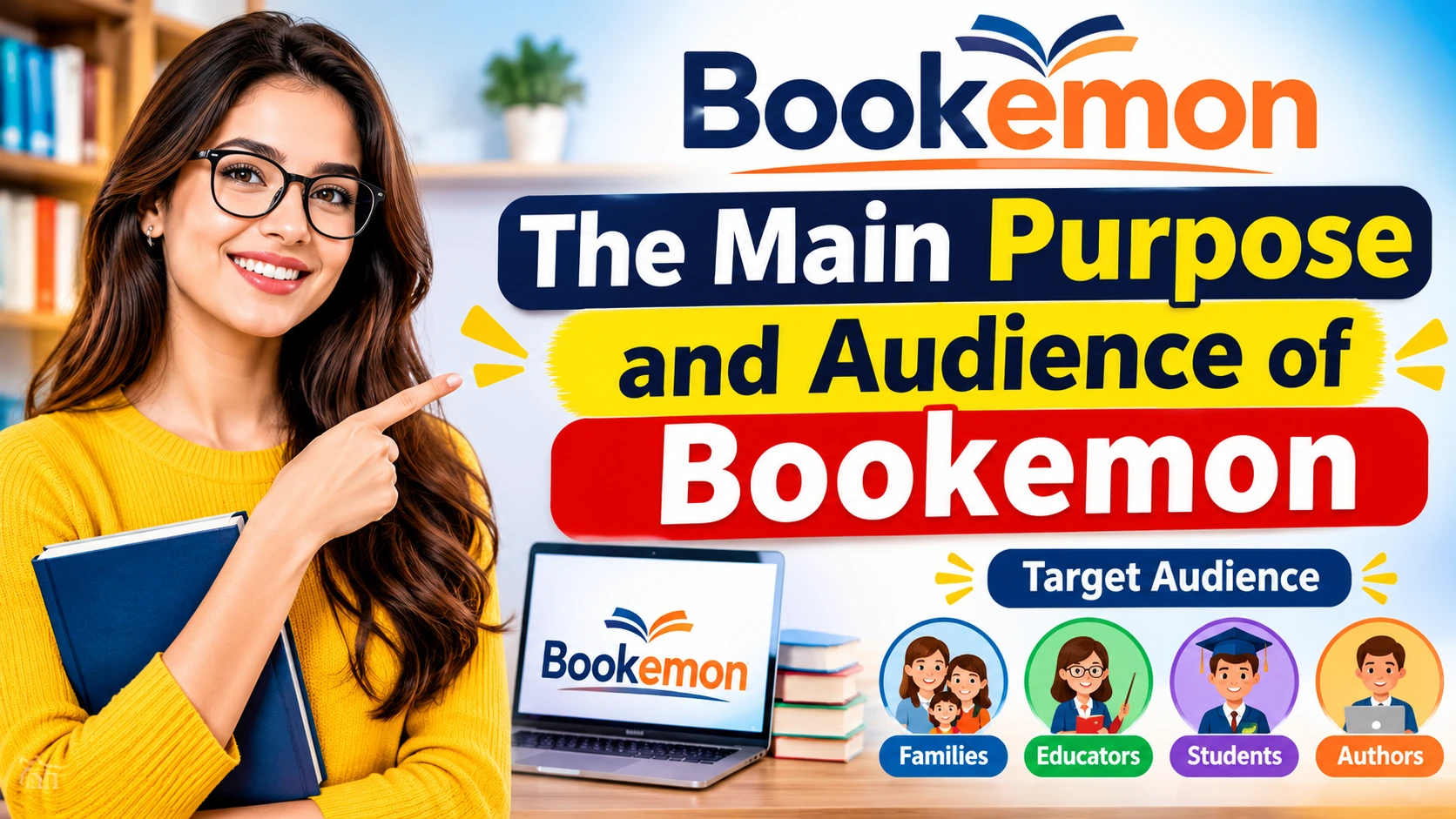
Bookemon serves a broad audience, but its platform has a particularly clear connection with families, educators, students, and young writers. Parents may use it to turn a child’s drawings and stories into a printed book. Teachers can create classroom publications, student portfolios, and educational projects. Students can use book creation as a practical way to present research, creative writing, or school activities. Independent writers may also explore the platform when they want to prepare a book without immediately entering a traditional publishing arrangement.
The platform’s Young Author Press program is another example of its interest in supporting younger creators. According to Bookemon’s FAQ, this program is intended to help aspiring young authors publish creative writing and illustrated books with ISBN identification and make eligible titles available through Bookemon and selected booksellers.
This gives children and teenagers an opportunity to experience the publishing process in a tangible way. Instead of leaving a story in a notebook or school folder, they can work toward producing a finished book that can be shared with other readers. For families and educators, that experience can make writing more exciting and help young creators develop confidence in their ideas.
How Bookemon Supports Independent Authors
Independent publishing gives writers greater control over how their work is developed and presented. Rather than depending entirely on a publishing house to decide whether a manuscript deserves attention, authors can explore tools that help them prepare their own books. Bookemon contributes to this environment by offering book creation features and options for producing physical copies. Writers can use the platform to organize their content, select a format, prepare the design, and decide whether they want to order copies for personal use or make a title available through the platform’s store. This approach can be especially appealing to first-time authors who want to understand the practical stages of publishing before investing in a more complex publishing arrangement.
The platform can also support creators whose projects do not fit neatly into traditional book categories. For example, a photographer might want to produce a collection of images, a teacher could compile student work, and a family might create a book documenting important events. These projects still require thoughtful organization, attractive presentation, and reliable printing. By providing a place to bring text and images together, Bookemon helps users transform scattered digital materials into a structured publication. However, authors should remember that a publishing platform does not automatically guarantee editorial quality, commercial success, or a large readership. The creator remains responsible for preparing a strong book and deciding how it will reach its intended audience.
Book Creation Tools and Customization Options
A major part of the Bookemon experience is the ability to build a book around the creator’s own material. Users can work with documents and images, arrange pages, and combine uploaded content with pages designed through the platform. Bookemon’s current website describes options for uploading up to eight documents, including common file formats, and mixing uploaded pages with newly designed pages.
This flexibility can save time when a project already exists in digital form. Rather than copying every paragraph or image into a new design manually, users may be able to bring their existing materials into the book creation process and make adjustments where necessary.
Customization matters because books communicate through more than words. Page order, image placement, font size, spacing, color choices, and cover design all influence how readers experience a publication. A children’s picture book, for instance, may need large illustrations and short sections of text, while a professional guide may require a consistent layout and clear headings. A family memory book might benefit from photographs, captions, and a chronological structure. Bookemon’s creation tools can help users bring these different kinds of projects together, although the quality of the final result depends on how carefully the creator uses the available design options. It is wise to plan the book’s structure before starting, particularly when it contains many photographs or a large amount of written material.
Print Books, Photo Books, and Digital Formats
Digital self-publishing does not mean that every finished project has to remain on a screen. Many creators still value physical books because printed pages can be shared, displayed, gifted, and kept for years. Bookemon offers printed book formats, including softcover and hardcover options, as well as photo-book products and ebooks.
This combination gives users the opportunity to choose a format that suits the purpose of their project. Someone preparing a family album may prefer a photo-focused printed book, while a writer sharing a short story might be more interested in an ebook or a conventional printed edition.
Each format serves a different purpose. A printed book offers a physical reading experience and can be useful for gifts, classrooms, portfolios, and personal collections. An ebook can be easier to distribute digitally, especially when readers are located in different places. Photo books place greater emphasis on image presentation, making them suitable for travel memories, celebrations, creative portfolios, and family histories. Before selecting a format, creators should consider how readers will use the book, whether images need to appear in color, how much text it contains, and whether the publication is intended for personal use or wider distribution. Choosing the right format early can prevent unnecessary redesign work later.
The Bookemon Publishing Process
The publishing process on Bookemon generally begins with an idea and the materials needed to develop it. A creator may start with a manuscript, a collection of photographs, a school project, or a set of documents. The next step is to organize those materials into a book structure and decide how the pages should look. Users can work with the platform’s online creation environment or upload documents and combine them with designed pages, depending on the project. Once the content and layout are ready, the creator can review the book and prepare it for publication or printing. This process makes it possible to move from a digital collection of files to a finished book without managing every technical production task independently.
A useful way to approach the process is to treat it as a sequence of separate stages rather than trying to complete everything at once. First, prepare the writing and images. Next, organize chapters or sections. Then choose a suitable format and create the page layout. After that, check the cover, page order, image quality, and text alignment. Finally, review the proof and make any necessary corrections before approving the printed version. Taking time at each stage can reduce mistakes and help the finished publication look more professional. It also encourages creators to think like editors and designers, not just writers.
Uploading Documents and Creating Book Layouts
For many users, the ability to upload existing documents is one of the most practical aspects of Bookemon. People often begin a book project with content already stored in Word files, PDFs, presentations, or image folders. Recreating all of that material from scratch can be frustrating, especially when a document contains carefully arranged text and illustrations. Bookemon’s document-upload options are intended to make this transition easier by allowing users to bring supported files into the book creation process. The platform also describes the option of combining uploaded pages with pages designed in its online creator.
Even when uploading is straightforward, creators should not assume that every document will appear perfectly in the final layout. Page dimensions, margins, fonts, image resolution, and formatting can behave differently when content is prepared for print. A presentation designed for a widescreen display, for example, may not translate naturally into a portrait-oriented book. Similarly, a document with small text may become difficult to read when placed on a printed page. Before uploading, it is helpful to check whether the source material uses a consistent page size and whether images are large enough for the intended print dimensions. After importing the files, inspect every page instead of relying on the original document as proof that the book is ready.
Reviewing, Publishing, and Ordering Books
Reviewing a book before printing is one of the most important parts of the process. A small mistake on a computer screen can become a noticeable problem when it appears on a physical page. Bookemon‘s FAQ explains that users should download and inspect a proof file before approving the print version. It also makes clear that the platform’s self-service process places responsibility on the creator to check spelling, grammar, image resolution, alignment, text-box sizing, and page design.
This is an important distinction: having access to a publishing tool does not mean that the platform has professionally edited or proofread the manuscript for the author.
Once the creator is satisfied with the proof, the book can be prepared for printing or made available according to the selected publishing options. Bookemon explains that printed books are custom-produced after an order is placed, rather than being mass-produced in advance. Its FAQ gives indicative production periods of around three to eight business days for photo books and five to fifteen business days for trade books, with additional time needed for shipping. These are production estimates, not guaranteed delivery dates, and users should check current information before ordering.
For projects connected to a birthday, school event, holiday, or other fixed date, ordering early is a sensible precaution.
Benefits of Using Bookemon
One of the biggest advantages of Bookemon is that it gives people a practical way to create books without first securing a traditional publishing contract. This can make the platform useful for projects that are meaningful even if they are not intended to become commercial bestsellers. A parent can preserve a child’s artwork, a teacher can create a record of classroom activities, and an aspiring author can produce a first printed copy of an original story. The ability to begin creating without a membership fee may also lower the initial barrier for people who want to explore the process before deciding whether to purchase printed copies. Bookemon’s FAQ states that joining and using the site to create books is free, while charges apply when users purchase printed books or choose paid services.
Another benefit is the combination of digital creation and physical production. Users can prepare their projects online and then order copies when they are ready. This can be convenient for people who do not want to manage printing equipment, binding, or the technical details of producing a finished book themselves. The platform also provides an option to make eligible books available through its store, which may give creators a basic way to share their work beyond their immediate circle. Still, the advantages should be viewed realistically. A simple creation process does not remove the need for careful writing, design, proofreading, and promotion. Bookemon can help with production, but the creator’s preparation is what gives the finished book its quality and purpose.
Opportunities for Teachers, Students, and Young Authors
Education is an area where Bookemon‘s approach can be especially valuable. Teachers regularly ask students to write stories, complete research projects, collect photographs, and present information in organized formats. Turning those activities into a book can make the work feel more meaningful because students see a finished result rather than a temporary classroom assignment. A class might create a collection of short stories, a local-history book, a science project publication, or a record of school events. Students can also learn about the relationship between writing, editing, design, and publishing. These experiences introduce practical communication skills while giving learners a chance to take pride in their work.
Young authors may find the publishing experience motivating as well. Bookemon’s Young Author Press program is described as a route for aspiring young people to publish creative writing and illustrated books with ISBN designation, with eligible titles offered through Bookemon, Amazon, and selected booksellers.
For a young writer, seeing a story presented as a real book can be an encouraging milestone. It can also create an opportunity for families and educators to discuss authorship, copyright, editing, and responsible sharing. Adults should remain involved when children publish online, particularly when projects contain personal photographs, names, or other identifying information. The appropriate privacy settings and the platform’s content policies should be reviewed before making a young author’s work publicly accessible.
Bookemon and the Changing Self-Publishing Industry
Bookemon operates within a publishing environment that has become increasingly open to independent creators. Digital tools have changed the economics and practical steps of producing books. Authors can now prepare manuscripts, design covers, distribute ebooks, and arrange print-on-demand copies through services that were not widely accessible to ordinary individuals in earlier publishing eras. This does not mean traditional publishing has disappeared. Established publishers continue to provide editorial development, professional production, marketing, and distribution opportunities. However, self-publishing has become a significant alternative for people who want greater control over their work or whose projects may not fit the priorities of conventional publishing companies.
Recent industry figures illustrate the scale of this change. A 2026 publishing data overview reports that more than 3.5 million self-published ISBN-registered titles were produced in the United States during 2025, representing substantial growth from the previous year. It also reports that self-published output exceeded traditionally published output by more than five to one in that market.
These figures relate to the United States and should not be treated as a direct measure of Bookemon’s own activity or global publishing volume. They do, however, demonstrate how much the independent publishing environment has expanded. Platforms such as Bookemon contribute to this broader shift by making book creation and printing more accessible to people who might otherwise never produce a finished publication.
The growing number of publishing options also means that authors need to be more deliberate when selecting a platform. Some services focus primarily on ebook distribution, while others specialize in print-on-demand, design, educational publishing, or direct sales. Bookemon’s combination of document-based creation, photo books, printed formats, and projects for young authors gives it a particular place in this landscape. It may be a useful choice for creators who value a straightforward route from existing digital materials to a printed book. Authors seeking broad international distribution, advanced royalty management, audiobook production, or extensive marketing support should compare its current services with other providers before making a decision.
Costs, Pricing, and Potential Earnings
Cost is an important consideration for anyone planning to publish independently. One attractive feature of Bookemon is that its FAQ states there is no charge to join or use the site to create a book. Users generally pay when they order printed copies, and the price depends on factors such as book format, cover type, page count, and quantity.
This model allows creators to work on a project before committing to the expense of printing. It may be helpful for people who want to prepare a book for personal use, test the layout, or decide later how many copies they actually need.
However, free creation should not be confused with free physical publishing. Printing, shipping, and any optional professional services can add to the overall budget. A hardcover book with many color pages will generally have different production costs from a short black-and-white paperback. Creators should review the current pricing information for their chosen specifications before making financial decisions. It is also sensible to calculate the total cost per copy, especially when ordering several books for a school, family, or event. If the project is intended for sale, the author should consider whether the final selling price leaves enough room for production expenses and any applicable platform fees or earnings arrangements.
Potential earnings require equally careful thinking. Publishing a book does not automatically create a reliable source of income. Sales depend on the subject, writing quality, cover design, price, audience interest, discoverability, and the author’s ability to reach potential readers. A personal photo book may be valuable because it preserves memories, even if it generates no commercial revenue. A professional guide or illustrated story may have a more clearly defined audience, but it will still need effective promotion. Authors should therefore establish whether their main goal is income, creative expression, education, gifting, or personal preservation before choosing a publishing plan.
Distribution and Book Discoverability
Publishing a book is only one part of reaching readers. Once a project is complete, the creator must consider how people will discover it, where they can purchase it, and why they might be interested in reading it. Bookemon provides a store where members can offer eligible books for sale, and its Young Author Press program describes opportunities for selected publications to reach Amazon and other booksellers.
These options can help creators make their work accessible beyond their personal networks, but authors should understand the exact distribution arrangements for their particular book before assuming it will appear everywhere.
Book discoverability is a challenge across the self-publishing industry. Thousands of new titles compete for attention, and simply making a book available online does not guarantee that readers will find it. Authors need to explain what their books offer through clear titles, useful descriptions, relevant categories, and appropriate keywords. They can also build interest through websites, newsletters, social media, reading groups, and professional communities. A teacher creating a classroom book may promote it through a school community, while a writer publishing a specialist guide might connect with readers who already follow that subject. The most effective approach depends on the audience and the reason the book exists.
Creators should also distinguish between having a book listed in a store and having a complete distribution and marketing strategy. A listing makes a title available through a particular sales channel, but it does not necessarily provide advertising, publicity, reviews, or guaranteed sales. Authors planning a commercial release should check where their chosen format will be distributed, how earnings are calculated, what rights they retain, and whether they can update the book later. These details are important because distribution conditions can vary between services and publishing programs.
Important Things to Consider Before Using Bookemon
Bookemon can make book creation more approachable, but it is still important to understand its limitations before beginning a project. The first consideration is the purpose of the book. Someone creating a personal photo album may have very different needs from an author hoping to sell a novel internationally. A classroom project may prioritize affordability and ease of use, while a professional publication may require detailed formatting control, editorial assistance, and broad distribution. Choosing a platform without defining the intended outcome can lead to disappointment later. Before starting, decide whether the main objective is to print a few copies, create an ebook, share a creative project, or develop a book for commercial readers.
Another consideration is the amount of work the creator must complete independently. Bookemon’s FAQ explains that its self-service publishing process does not automatically include proofreading, editing, or corrections to the creator’s book. Users are responsible for checking the manuscript and layout before approving the print version.
This means that people who are unfamiliar with editing or design may need help from a teacher, experienced writer, proofreader, or professional designer. It is also important to check the current privacy settings, content guidelines, rights information, and purchasing policies. A little research before publishing can prevent problems involving mistakes, unexpected costs, or unwanted public access.
Editing, Proofreading, and Print Quality
A well-designed book begins with carefully prepared content. Spelling errors, inconsistent punctuation, unfinished paragraphs, and confusing sentence structures can make even an attractive publication feel unprofessional. Before uploading a manuscript, read it from beginning to end and check whether the ideas flow naturally. If possible, ask someone else to review it because a fresh reader may notice mistakes that the author has overlooked. For educational books, factual accuracy is especially important. For children’s stories, the language should be suitable for the intended age group, and illustrations should support rather than distract from the story.
Print quality deserves equal attention. Images that look sharp on a phone or laptop may appear blurry when enlarged on a printed page. Dark photographs may lose detail, while small text can become difficult to read. Bookemon specifically advises users to review image resolution, text alignment, text-box sizing, and page design before approving a printed book.
A practical approach is to inspect the proof file carefully, paying attention to the cover, page edges, margins, image placement, and the transition between pages. Creators should also consider how the book will look in the hands of an actual reader rather than judging it only on a computer display.
Bookemon Compared with Other Self-Publishing Options
Bookemon is one of several services available to independent creators. Other platforms may be more appropriate depending on whether an author wants ebook distribution, print-on-demand production, bookstore availability, or advanced publishing support. For example, Amazon Kindle Direct Publishing (KDP) is widely associated with ebook and paperback self-publishing through Amazon. Lulu offers book creation and print-on-demand services, while Blurb is known for photo books and visually focused publications. Each service has its own pricing structure, distribution arrangements, file requirements, and publishing features.
Platform | Main focus | Potentially suitable for |
Bookemon | Book creation, photo books, printed books, and ebooks | Families, educators, students, and independent creators |
Amazon KDP | Kindle ebooks and print-on-demand books | Authors targeting Amazon readers |
Lulu | Print-on-demand books and publishing services | Independent authors and organizations |
Blurb | Photo books and visually rich publications | Photographers, designers, and creative professionals |
The table provides a general comparison rather than a complete list of features or current prices. Publishing services change their offerings over time, so authors should review each provider’s official information before choosing one. The most suitable platform is not necessarily the one with the largest audience or the most features. It is the one that matches the project’s format, budget, distribution requirements, and level of creative control. For someone creating a personalized family book or classroom publication, Bookemon’s creation-focused approach may be appealing. An author seeking a larger commercial distribution network may prefer to investigate other services alongside it.
Tips for Getting Better Results with Bookemon
Getting a good result from Bookemon begins with preparation. Before opening the book creator, gather the manuscript, photographs, illustrations, captions, and other materials you plan to use. Organize them into folders and decide the order in which they should appear. If the project contains chapters, prepare a simple outline so that the content follows a logical structure. This planning stage can save considerable time once you begin arranging pages. It also makes it easier to identify missing content before the book is close to completion.
Pay close attention to the relationship between text and images. A page should feel balanced, with enough space around important elements to make the content comfortable to read. Use consistent typography and avoid introducing too many different font styles. For a photo book, choose images that are clear and relevant to the story being told. For a children’s book, make sure illustrations are easy to understand and that text remains readable. If the book is educational, use headings and page layouts that help readers locate information quickly. Good design does not need to be complicated; it needs to make the content easier to enjoy.
Finally, take advantage of the proofing stage. Do not rush to approve the first version simply because the pages appear complete. Read the book again, inspect images at their intended print size, and ask another person to review the layout. If the platform offers different formats or printing options, compare them before ordering. Keep a copy of the original files so you can make changes to your source material if necessary. Careful preparation is often the difference between a book that looks like a collection of uploaded pages and one that feels like a finished publication.
Is Bookemon the Right Choice for Your Publishing Goals?
Whether Bookemon is the right choice depends on what you want to achieve. It may be a useful option for people who want to turn documents, photographs, stories, and educational projects into printed books or ebooks. Its free creation model can make it easier to explore a project before paying for printed copies, while its combination of online design and document uploads provides flexibility for different types of users. Families may appreciate the opportunity to preserve memories in book form, and educators can use the platform to give student work a more permanent presentation. Young creators may also find the publishing process rewarding when supported by parents or teachers.
However, authors with ambitious commercial goals should examine the details before committing. They may need more extensive editing, advanced formatting, wider distribution, marketing tools, or greater control over publishing rights than a basic creation platform provides. It is also important to understand that a book’s availability does not guarantee sales. Authors need to identify their audience, prepare a strong product, and develop a realistic plan for reaching readers. Comparing Bookemon with other publishing services can help clarify whether its tools and pricing match the project.
Ultimately, Bookemon is best understood as one option within a much larger self-publishing landscape. Its value comes from helping people turn ideas and digital materials into tangible books, including projects that may never have been considered for traditional publication. For personal, educational, and creative projects, that accessibility can be meaningful. For authors seeking a commercial publishing career, it can be a starting point to evaluate alongside more specialized services. The right decision comes from matching the platform to the book rather than expecting one service to meet every publishing need.

Conclusion
The growing world of digital self-publishing has created new opportunities for people who want to share stories, preserve memories, and communicate knowledge through books. Bookemon contributes to this changing environment by offering tools for creating books from documents, photographs, and original content, with options for printed formats and ebooks. Its focus on families, educators, students, and independent creators makes it relevant to a wide range of projects. The ability to begin creating without a membership fee may also make the platform approachable for people who are exploring publishing for the first time.
At the same time, successful publishing requires more than choosing a convenient platform. Authors must prepare strong content, check their layouts, review proofs, understand costs, and consider how readers will discover their work. Bookemon can help with the process of turning digital materials into a finished book, but creators remain responsible for quality and promotion. By understanding its features and limitations, users can make a more informed decision about whether it supports their goals. Whether the aim is to publish a first story, create a classroom keepsake, or produce a personal photo book, Bookemon offers one possible route from an idea to a finished publication.
Frequently Asked Questions
Q. What is Bookemon used for?
Bookemon is an online platform for creating books using documents, photographs, illustrations, and written content. Users can prepare projects such as photo books, educational publications, personal stories, and other creative works. The platform offers options for printed books and ebooks, depending on the project and available services.
Q. Is Bookemon free to use?
According to Bookemon’s FAQ, membership and basic book creation are free. Users generally pay when they order printed copies or purchase additional services. The final printing cost depends on factors such as the book’s format, cover type, page count, and quantity.
Q. Can I sell books created with Bookemon?
Bookemon allows members to offer eligible books for sale through its store. Its Young Author Press program also describes opportunities for selected titles to receive ISBN identification and reach additional booksellers. Authors should review the current terms, eligibility requirements, distribution arrangements, and earnings information before relying on book sales as an income source.
Q. Can teachers and students use Bookemon?
Yes. Bookemon is designed to support educational and creative projects, making it relevant to teachers, students, families, and young authors. It can be used to prepare classroom books, student stories, illustrated projects, and collections of school activities. Educators should review privacy settings and content guidelines before sharing student work publicly.
Q. What should I check before printing a book on Bookemon?
Before approving a book for printing, review the complete proof file. Check spelling, grammar, page order, image resolution, text alignment, margins, and overall design. Bookemon places responsibility for reviewing these details on the creator, so a careful final inspection is essential.
Table of Contents
You May Also Like

How PatPat Is Changing the Way Parents Shop for Affordable Kids’ Clothing
official.times.software
November 23, 2026
Read More »

The Ultimate Guide to Using ActivTrak for Better Workforce Productivity
official.times.software
November 23, 2026
Read More »

Exploring Audiobooks.com: What Makes This Platform Popular Among Book Lovers?
official.times.software
November 22, 2026
Read More »

Finding the Right Skincare Routine: Exploring the Products Offered by Sunday Riley
official.times.software
November 22, 2026
Read More »

A Detailed Review of Maxaroma: Product Quality, Variety, and Customer Experience
official.times.software
November 22, 2026
Read More »