
Holden Models: Exploring the Best Cars, Features, and Buying Options
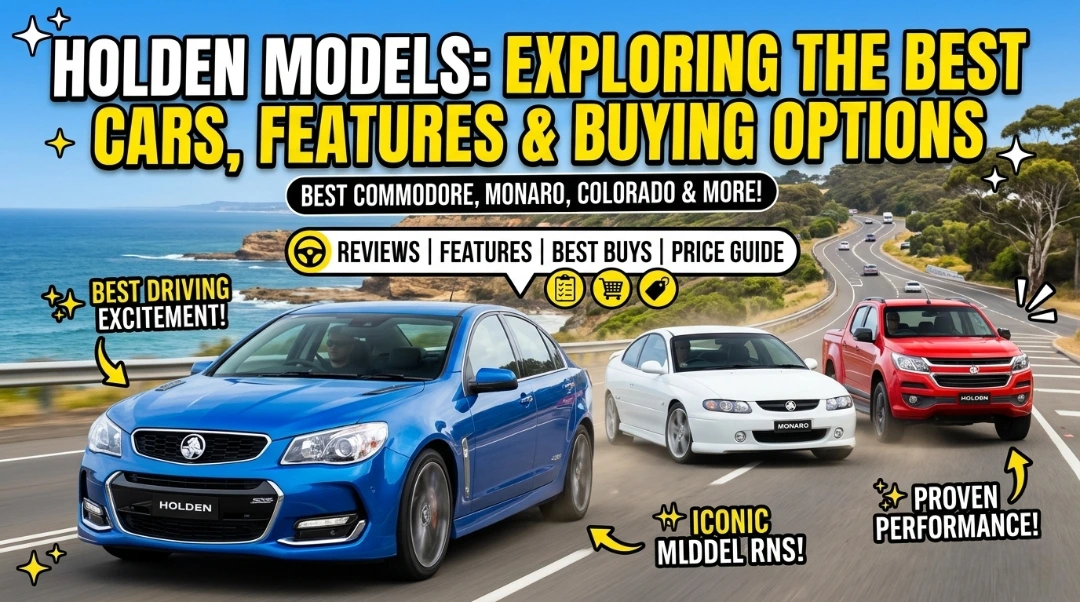
Discover everything you need to know about Holden models in this comprehensive guide to the best cars, features, and buying options. Explore Holden’s rich automotive history and learn about some of its most popular vehicles, including the Holden Commodore, Astra, Barina, Colorado, Captiva, Trax, Equinox, Monaro, and Torana. Whether you’re searching for a practical everyday car, a comfortable family vehicle, a versatile SUV, a hardworking ute, or a classic performance car, this guide will help you understand the different Holden models and their unique features. Learn about engine options, performance, fuel efficiency, interior comfort, safety features, technology, and overall practicality to help you identify the vehicle that best suits your lifestyle. This article also explores the advantages and disadvantages of buying a used Holden, along with important factors such as vehicle condition, maintenance history, spare parts availability, insurance, servicing, and long-term ownership costs. Discover useful tips for comparing used Holden cars, checking vehicle history, inspecting mechanical components, evaluating prices, and avoiding common buying mistakes. You’ll also learn why certain Holden models remain popular among Australian motorists and car enthusiasts, even though the brand has discontinued its vehicle sales. Whether you’re a first-time buyer, a family looking for a reliable used vehicle, a car enthusiast interested in classic Australian automobiles, or someone researching Holden’s automotive legacy, this detailed guide provides valuable insights to support your decision. Explore the best Holden models for different driving needs, understand what to look for before making a purchase, and discover how to choose a vehicle that balances performance, comfort, practicality, and affordability.
Table of Contents
Understanding Holden and Its Automotive Legacy
Holden‘s story is closely connected to Australia’s development of its own automotive industry. The company began producing Australia’s first mass-produced Holden car, the 48-215, in 1948, marking the beginning of a relationship between the brand and Australian motorists that lasted for decades. Its vehicles became known for serving a wide range of needs, from family transport and long-distance touring to farming, commercial work, and motorsport. The brand’s reputation grew through models that were designed or adapted for local roads and driving conditions, helping Holden become a familiar part of everyday Australian life. According to the National Museum of Australia, the last Holden built in Australia rolled off the production line in 2017, ending a significant chapter in the country’s manufacturing history.
The end of local manufacturing did not immediately mean the end of Holden vehicles. The company continued selling imported models for a period, including SUVs, small cars, and later versions of the Commodore. In February 2020, parent company General Motors announced that it would retire the Holden brand in Australia and New Zealand, with sales and other operations winding down by the end of that year. However, existing vehicles remained on the road, and owners continued to need servicing, replacement parts, and repairs.
For today’s buyers, this history matters because Holden is now primarily a used-car choice rather than a new-car brand. You won’t find a current production Holden range comparable to those offered by active manufacturers, but you can still find a variety of used models through dealers, private sellers, and vehicle marketplaces. Some buyers are attracted by the affordability of older everyday cars, while others want a V8-powered performance model or a classic vehicle to restore. The key is to look beyond the badge and judge each car according to its age, condition, maintenance history, and suitability for your needs.
Popular Holden Models Worth Exploring
Holden produced or sold vehicles in several categories, so it helps to understand the main model families before you start shopping. Some vehicles were developed around Australian preferences, while others were sourced from General Motors’ international operations and adapted for the local market. That means two Holden models from similar years can differ considerably in size, engine options, handling, equipment, and running costs. A large rear-wheel-drive sedan, for example, serves a different purpose from a compact hatchback or a diesel-powered utility vehicle.
The Commodore is among the best-known names, especially for drivers who appreciate spacious interiors, long-distance comfort, and the availability of performance-oriented variants. The Astra and Barina appeal to buyers looking for smaller vehicles, while the Colorado is worth considering if you need a ute for equipment, towing, or outdoor activities. SUVs such as the Trax, Captiva, Equinox, Acadia, and Trailblazer offer alternatives for drivers who prefer a higher seating position or more flexible cargo space. Automotive guides such as CarsGuide’s Holden model guide provide an overview of the brand’s extensive model history.
The best approach is to narrow your choices according to your everyday requirements. Think about how many passengers you regularly carry, how much luggage you need to fit, whether you drive mainly in city traffic or on highways, and whether you need towing capability. Then consider fuel consumption, insurance, tyre costs, and the availability of suitable replacement parts. The best Holden model is not necessarily the most powerful or expensive one; it’s the one that fits your lifestyle without stretching your budget.
Holden Commodore: The Iconic Australian Sedan
The Holden Commodore is one of the brand’s most recognisable vehicles and remains an important part of Australia’s motoring culture. Earlier generations offered roomy cabins, substantial boots, and a range of engines suited to everyday driving and highway travel. Depending on the generation and specification, buyers could find sedans, wagons, and utility versions, along with models designed for greater comfort or performance. The Commodore became popular with families, company-car drivers, touring enthusiasts, and motorists who wanted a larger vehicle that felt at home on Australian roads. Its long history also means the name covers several generations with very different mechanical designs and equipment levels.
For used-car buyers, the Commodore’s variety is both an advantage and a challenge. A well-maintained V6 model may suit someone looking for comfortable transport, while an SS or Redline variant may appeal to an enthusiast seeking stronger performance and a sportier driving experience. Luxury-oriented versions, including Calais variants, often focus more on interior comfort and equipment. However, an older performance model can be expensive to maintain if it has been driven hard, modified poorly, or neglected by previous owners. Before buying, check the service history, engine operation, transmission behaviour, suspension, brakes, tyres, cooling system, and signs of accident damage.
It is also important to distinguish between Australian-built Commodores and the final imported generation. The ZB Commodore, introduced toward the end of the brand’s life, differed substantially from the traditional rear-wheel-drive cars that had defined the name for years. It was based on an overseas-developed platform and offered a different driving character, body configuration, and selection of engines. Buyers should therefore research the exact year and variant rather than assuming every Commodore has the same layout or performance. A model-specific inspection and test drive are especially valuable when comparing different generations.
If you’re shopping for a Commodore, begin by deciding whether comfort, affordability, performance, or collectability matters most. A standard model with complete maintenance records may be a better everyday purchase than a more powerful variant with questionable history. On the other hand, enthusiasts who value original specification and long-term preservation may prioritise condition and documented authenticity. Whichever version catches your eye, remember that maintenance history and overall condition are usually more important than a low odometer reading alone.
Holden Astra and Barina: Compact Cars for Everyday Driving
The Holden Astra and Barina were designed for drivers who wanted smaller vehicles that were easier to park and manoeuvre than a large sedan. They can be appealing choices for commuting, student transport, smaller households, and drivers who spend much of their time in urban areas. Depending on the generation, these cars were available with different petrol engines, transmissions, and body styles. Later examples may include useful convenience features such as touchscreen infotainment, smartphone connectivity, reversing cameras, and driver-assistance equipment, although the exact features depend on the year and trim level.
The Barina generally sits toward the smaller and more budget-oriented end of the range, making it worth considering if your priority is straightforward everyday transportation. The Astra offers a different balance of size, refinement, and driving character, particularly in later generations. Neither model should automatically be assumed to be cheaper to own simply because it is smaller. A vehicle with poor maintenance, worn tyres, transmission problems, or overdue repairs can quickly become more expensive than a larger car in better condition. Buyers should also compare the fuel requirements and maintenance schedules of the exact engine and transmission combination.
When inspecting a used Astra or Barina, check how smoothly the engine starts, whether the transmission shifts consistently, and whether warning lights remain illuminated after startup. Test the air conditioning, windows, infotainment system, lights, parking sensors, and other electrical features. Look for uneven tyre wear, which can indicate alignment issues or suspension problems, and check the service records for evidence of regular oil changes and scheduled maintenance. If you plan to use the car every day, a pre-purchase inspection by an independent mechanic is a sensible investment.
These compact Holden models are particularly worth exploring when you want an affordable used car without the size and fuel demands of a large sedan or ute. However, compare the car’s total ownership cost with other used vehicles in the same price range before committing. A low purchase price is attractive, but reliability, safety equipment, and repair affordability are what make a used car a practical choice over time.
Holden Colorado: A Practical Ute for Work and Adventure
The Holden Colorado became a significant part of the brand’s later range, particularly for drivers who needed a utility vehicle rather than a conventional passenger car. Depending on the version, the Colorado was offered with different cab configurations, tray or tub arrangements, and drivetrain options. Many variants used diesel engines, making them attractive to buyers who needed useful torque for carrying loads or towing within the vehicle’s rated limits. The model’s appeal extended to tradespeople, rural motorists, recreational travellers, and families who wanted a vehicle that could handle work during the week and outdoor activities on weekends.
When comparing Colorado models, think carefully about how you intend to use the vehicle. A single-cab or space-cab version may be practical for work equipment, while a dual-cab model can accommodate passengers in the rear. Two-wheel-drive versions may suit ordinary road use, while four-wheel-drive variants can offer additional capability on suitable rough terrain when equipped and driven correctly. Yet not every Colorado has the same towing capacity, payload, or equipment, so verify the specifications for the exact year and variant. Never assume that two vehicles bearing the same model name are rated identically.
A used Colorado deserves a particularly thorough mechanical inspection if it has spent years towing trailers, carrying heavy loads, or travelling on rough tracks. Examine the chassis, suspension, underbody, tray, towbar, tyres, and signs of corrosion or impact damage. Check the engine for abnormal noises or smoke, assess transmission operation, and look for evidence of leaks. On diesel versions, ask a qualified mechanic to assess the relevant emissions equipment, turbocharging system, fuel system, and service history. Previous commercial use is not necessarily a reason to reject a ute, but hard work without proper maintenance can create expensive problems.
The Colorado can make sense for buyers who genuinely need a ute’s capabilities. However, if you mostly drive through congested city streets and rarely carry bulky items, a smaller SUV or hatchback may be easier to park and more comfortable for daily commuting. Fuel consumption, tyre replacement, insurance, and servicing should all be included in your budget. The smartest purchase is one that provides the capabilities you need without making you pay for features you rarely use.
Holden Captiva, Trax, and Equinox: Exploring SUV Options
Holden‘s SUV range changed over time, giving buyers several alternatives to traditional sedans and hatchbacks. The Captiva was offered in configurations that included smaller five-seat and larger seven-seat versions, while the Trax targeted drivers seeking a compact crossover. The Equinox arrived later as a medium-sized SUV with a different platform and engine lineup. These vehicles illustrate how Holden expanded beyond its traditional passenger-car identity as Australian buyers increasingly considered SUVs for family transport and general everyday use. Their features and capabilities differ, so choosing between them requires more than comparing the exterior size.
The Holden Trax may appeal to drivers who want a compact vehicle with a higher seating position and a relatively manageable footprint. It can be useful for urban commuting and small households, although rear-seat space and luggage capacity should be checked against your needs. The Holden Captiva may attract families looking for additional passenger capacity, especially in seven-seat versions. However, the condition of the specific vehicle is critical, and buyers should investigate its service history and known issues rather than assuming that every Captiva will provide trouble-free ownership. The Holden Equinox offers a more modern alternative in the medium-SUV category, with some versions featuring turbocharged engines, touchscreen systems, smartphone connectivity, and advanced convenience or safety equipment. Features vary according to trim and model year.
Another option worth considering is the Holden Acadia, a larger SUV designed to accommodate families who need more interior space. Drivers who frequently travel with children, luggage, or several passengers may appreciate its larger body and seating flexibility. The Holden Trailblazer, meanwhile, is related to the Colorado ute and can suit buyers seeking a more rugged SUV format. It is important to understand the difference between a road-focused crossover and a vehicle designed with more demanding conditions in mind. A vehicle’s appearance alone does not establish its off-road ability, towing suitability, or load capacity.
Before choosing any Holden SUV, assess the cabin layout, third-row access if fitted, luggage space with all seats in use, fuel consumption, and visibility. Inspect the suspension and tyres, test the air conditioning and infotainment features, and make sure all seat mechanisms and safety systems function correctly. If the vehicle will regularly carry your family, prioritise the availability of appropriate safety equipment and check the vehicle’s safety information for its particular model year. A spacious SUV is only a good choice if it meets your real requirements and is in sound mechanical condition.

Holden Performance Cars: Monaro, Torana, and HSV Models
Physical businesses need payment hardware that customers can use without friction. Helcim offers card readers and smart-terminal options, while also supporting contactless payments and other card-present methods. Its current U.S. fee disclosure lists the Helcim Card Reader at $199 and the Helcim Smart Terminal at $349, subject to applicable taxes. The company also supports Tap to Pay on iPhone, although its current fee disclosure lists a separate charge for approved transactions using that method. The bigger advantage for merchants is not necessarily the hardware itself but the connection between the physical payment device and the wider merchant platform. A restaurant, salon, retail shop, professional office, or service business can use card-present transactions while also having access to online and remote payment tools. Businesses should evaluate hardware based on their environment, transaction volume, connectivity needs, receipt requirements, and employee workflow. A sophisticated terminal does not automatically make a payment operation better; the best hardware is the one that customers and employees can use quickly and reliably.
Important Features to Compare Across Holden Models
Comparing Holden vehicles becomes easier when you separate essential features from optional extras. A car may have an attractive interior and an impressive engine, but it still needs to meet your practical requirements. Start with the engine and transmission, because these affect how the car drives, its fuel requirements, and its potential maintenance costs. Then consider cabin space, luggage capacity, safety equipment, comfort, and technology. Finally, assess the vehicle’s condition and service history, since even a well-equipped model can become a poor purchase if it has been neglected.
The following table provides a general comparison of popular Holden model families. It is intended as a starting point rather than a specification sheet, because features and capabilities vary by generation, year, and trim.
Holden model | Main vehicle type | Potential advantages | Important considerations |
Commodore | Sedan, wagon, and related body styles | Space, highway comfort, varied engine choices | Fuel use, age, maintenance, and variant differences |
Astra | Small car | Practical size, useful everyday features | Engine and transmission condition, parts costs |
Barina | Small hatchback | Compact dimensions, convenient city driving | Space limitations and condition of older examples |
Colorado | Utility pickup or ute | Load-carrying capability, work and recreational use | Payload, towing ratings, diesel maintenance, previous workload |
Trax | Compact SUV | Higher seating position, manageable size | Rear-seat space, luggage room, condition |
Captiva | SUV, including seven-seat versions | Flexible passenger and cargo layouts | Service history, drivetrain condition, equipment |
Equinox | Medium SUV | Modern cabin features on later models, family practicality | Engine variant, electronics, maintenance history |
Trailblazer | Larger SUV | Passenger space and a more rugged format | Size, running costs, specific drivetrain capability |
Monaro | Performance coupe | Distinctive styling and enthusiast appeal | Condition, originality, specialist maintenance |
HSV models | Performance vehicles | Upgraded performance and unique specifications | Insurance, modifications, parts costs, authenticity |
Engine and Transmission
Engine choice can significantly affect the experience of owning a Holden. Smaller petrol engines may suit commuting and shorter journeys, while larger petrol engines can offer stronger acceleration and smoother performance in bigger vehicles. Diesel engines in utility vehicles may appeal to drivers who need useful torque for towing or carrying loads, but they require appropriate maintenance and should be assessed for age-related or usage-related issues. Automatic and manual transmissions also provide different driving experiences, and their condition matters more than the preference of the previous owner.
When test-driving a car, pay attention to how the engine starts, idles, accelerates, and responds to throttle inputs. The transmission should operate consistently without unexpected slipping, harsh engagement, or unusual noises. These observations are not a substitute for a mechanical inspection, but they can help identify reasons to investigate further. If you notice warning lights, fluid leaks, smoke, or unusual mechanical behaviour, ask a qualified mechanic to examine the vehicle before you buy it.
Safety and Technology
Safety equipment varies considerably across Holden‘s long model history. Older vehicles may lack technologies that are common in newer cars, while later examples may offer features such as electronic stability control, reversing cameras, parking sensors, touchscreen infotainment, smartphone integration, and selected driver-assistance systems. The presence of a feature should always be verified on the exact car you’re considering rather than assumed from its model name. Where available, consult reliable vehicle safety information and check whether any applicable recalls remain outstanding.
Technology should support your driving needs rather than distract you from more important buying considerations. A modern touchscreen may be convenient, but it does not compensate for worn tyres, poorly maintained brakes, or missing service records. If you regularly drive at night, on highways, or with family members, pay particular attention to lighting, seatbelts, airbags, braking performance, and the overall condition of the vehicle. Choose the safest suitable example your budget allows.
Comfort and Practicality
Comfort is about more than soft seats or an attractive dashboard. Consider how easily you can enter and exit the vehicle, whether the driving position feels natural, how much legroom passengers have, and whether the boot or cargo area meets your everyday needs. If you’re buying an SUV, check whether its seating arrangement is practical when all seats are occupied. If you’re considering a ute, assess whether its tray, payload, and cabin configuration suit the work you actually do.
A test drive should include the kinds of roads you use regularly, where practical and safe. Listen for suspension noises, assess steering behaviour, and see how the vehicle responds to bumps and braking. Try the air conditioning, ventilation, windows, mirrors, lights, and entertainment system. Small faults can add up, so create a list of anything that needs attention before negotiating the price.
Which Holden Model Is Best for Your Lifestyle?
The best Holden for you depends on how you intend to use it. Someone who drives to work, shops locally, and parks in crowded areas will have different needs from a tradesperson carrying equipment or an enthusiast maintaining a weekend performance car. Instead of starting with the most popular model, begin with a clear picture of your routine, passenger requirements, driving environment, and available budget. This helps you avoid paying for power, space, or equipment that you may rarely use.
If you need a daily commuter, start by comparing the Barina and Astra. Their smaller dimensions can make them convenient for city driving, and some versions may offer useful comfort and infotainment features. If you regularly travel long distances with passengers, a suitable Commodore may provide more cabin and luggage space. Buyers who need to carry work equipment or tow a trailer should investigate the Colorado, but only after confirming the precise payload and towing ratings of the vehicle. Those wanting a higher seating position can compare SUVs such as the Trax and Equinox, while larger households may want to assess the Captiva, Acadia, or Trailblazer.
Your budget should influence the decision from the beginning. A low-cost vehicle can be appealing, but if it requires tyres, brake repairs, suspension work, or major mechanical attention immediately after purchase, the initial savings may disappear. Similarly, an enthusiast car may be enjoyable to own but can involve higher insurance, specialist servicing, and more expensive replacement components. Make room in your budget for unexpected repairs rather than treating the advertised price as the complete cost.
Think about the future, too. If you need a car that will be easy to maintain for many years, check the availability and cost of common service parts before deciding on a particular model. If you’re purchasing a classic Holden, make sure you have somewhere appropriate to store it and enough time to care for it. Choosing a vehicle based on your real needs, rather than appearance or nostalgia alone, is one of the simplest ways to improve your buying decision.
Buying a Used Holden: What to Check
Buying a used Holden can be rewarding, but it requires careful research because every vehicle has its own history. Two cars of the same model and year may be in very different condition depending on how they were driven, serviced, stored, and repaired. An attractive advertisement is only the beginning of the process. Before making a commitment, check the seller’s claims, examine the documentation, inspect the vehicle in person, and arrange a professional mechanical assessment.
Start by confirming the vehicle’s identity, registration details, odometer reading, service records, and ownership history where those records are available. If you’re buying in Australia, use the relevant official vehicle-history and registration-check services to investigate written-off status, stolen-vehicle records, and financial encumbrances where applicable. Procedures and available information differ between states and territories, so make sure you’re using the correct service for the vehicle’s jurisdiction. A seller who refuses reasonable checks or pressures you to pay immediately should be treated with caution.
The physical inspection should cover both visible and less obvious areas. Look for uneven body gaps, mismatched paint, rust, water damage, tyre wear, fluid leaks, and signs of poor repairs. Check that the engine starts properly and that warning lights behave as expected. During a test drive, assess the steering, brakes, suspension, engine response, transmission, and general comfort. Do not ignore noises or behaviour you cannot explain simply because the vehicle appears clean.
A qualified independent mechanic can identify problems that an ordinary buyer might miss. This is especially important for older vehicles, performance models, diesel utes, and cars with uncertain maintenance histories. Ask for a written report outlining urgent repairs, potential future expenses, and any safety-related concerns. If the inspection reveals significant problems, you can negotiate a lower price, request that repairs be completed before purchase, or walk away.
A Simple Used-Holden Inspection Checklist
Inspection area | What to examine | Why it matters |
Documentation | Registration, ownership information, service records | Helps verify the vehicle’s identity and maintenance history |
Engine | Starting, idling, leaks, unusual noises or smoke | May reveal maintenance or mechanical problems |
Transmission | Smooth and consistent operation | Repairs can be expensive |
Brakes and tyres | Wear, vibration, braking response | Important for safety and potential immediate costs |
Body and chassis | Rust, damage, uneven panels, poor repairs | May indicate structural or accident-related concerns |
Electrical equipment | Lights, windows, air conditioning, infotainment | Faults may require diagnosis or replacement parts |
Safety equipment | Seatbelts, airbags, warning lights, applicable recalls | Helps assess the vehicle’s safety condition |
Road test | Steering, suspension, acceleration, braking | Reveals how the car behaves in everyday conditions |
Maintenance, Repairs, and Spare Parts Availability
One of the most important questions to ask before buying a discontinued-brand vehicle is whether it can be maintained affordably. Holden‘s retirement did not mean that every car became impossible to service. General Motors announced that it would continue providing aftersales support, including servicing and spare parts, for at least ten years from its 2020 announcement. Holden’s current Australian service information also describes a network of Holden Certified Service Outlets and access to genuine parts.
However, the availability of particular parts can depend on the model, production year, engine, and component involved. Routine service items may be relatively easy to source, while rare trim pieces, model-specific electronic modules, or components for older performance vehicles may require more searching. Some vehicles share components with other General Motors models, but you should never assume that a part from another car will fit simply because the vehicles look similar. Confirm compatibility through a qualified parts supplier or mechanic using the exact vehicle details.
Before purchasing a Holden, ask local repair shops whether they regularly work on your chosen model. Find out whether common replacement parts are available, whether specialised diagnostic equipment is required, and whether the workshop has experience with the vehicle’s engine and transmission. This is particularly useful if you’re considering an older car that uses technology unfamiliar to a general repairer. For unusual or collectible models, a specialist may be better equipped to assess authenticity and source appropriate components.
Preventive maintenance can make a major difference to ownership costs. Follow the correct service schedule, use suitable fluids and replacement parts, investigate warning lights promptly, and keep records of all repairs. If you’re buying a vehicle with incomplete history, ask a mechanic to establish a sensible maintenance baseline rather than assuming everything is up to date. A discontinued badge is not automatically a reason to avoid a car, but parts availability and repair support should be part of your decision before you buy.
Understanding Holden Prices and Ownership Costs
There is no single price for a Holden because the range includes inexpensive older commuter cars, relatively modern family vehicles, utility models, performance cars, and collectible classics. The price depends on factors such as age, kilometres travelled, condition, specification, location, service history, and current demand. A common older model may be affordable to purchase, while a rare, original, or historically significant vehicle can command a substantial premium. For this reason, comparing vehicles by model name alone can be misleading.
To estimate fair value, compare several listings for the same or similar year and variant. Pay attention to mileage, condition, registration, service documentation, modifications, and whether the advertised price includes a warranty or other dealer benefits. A vehicle priced well below similar examples deserves careful investigation, but a high asking price does not guarantee quality either. If you’re looking at a classic or performance model, seek valuation guidance from specialists familiar with that specific market rather than relying exclusively on ordinary used-car listings.
Your total ownership budget should include more than the purchase price. Registration, compulsory insurance requirements, comprehensive insurance where chosen, fuel, servicing, tyres, repairs, and roadside assistance can all affect affordability. Larger petrol engines may consume more fuel than smaller engines, while heavy utes and performance cars can have different tyre and maintenance needs from compact hatchbacks. Insurance premiums also vary according to your circumstances, location, vehicle, and chosen coverage, so obtain quotes before finalising the purchase.
A practical strategy is to reserve money for repairs and scheduled maintenance immediately after buying the car. Even a well-maintained older vehicle may need new tyres, a battery, fluids, or age-related rubber components. If you are comparing two vehicles, estimate their likely expenses over the next year rather than choosing solely on the lower advertised price. That approach gives you a more realistic picture of which Holden represents the best value for your circumstances.

Where to Find Holden Cars for Sale
Because Holden no longer sells new vehicles under its own brand in Australia, buyers generally search the used-car market. Options include established used-car dealerships, online vehicle marketplaces, private sellers, specialist classic-car dealers, and enthusiast communities. Each route has advantages and risks, so it pays to understand the differences before arranging a viewing. A dealer may offer a more structured purchase process, while a private seller may have detailed personal knowledge of the car’s history, but neither option guarantees that the vehicle is in good condition.
Online listings are useful for narrowing down your choices by model, year, price, body style, location, and odometer reading. Look for advertisements with clear photographs, detailed descriptions, and information about service history and known faults. Be cautious when a listing uses stock images, avoids answering basic questions, or asks for money before you have verified the car and seller. If you’re considering a rare Holden, a specialist dealer or owners’ club may help you learn which features and identification details are appropriate for the particular model.
Whenever possible, inspect the vehicle in person and arrange a test drive before making a final decision. If you cannot attend yourself, consider having an independent professional inspect it on your behalf. Never assume that a vehicle is mechanically sound just because it has a current registration or appears clean in photographs. Those details do not replace a proper inspection and vehicle-history check.
Classic and performance Holden buyers should also investigate the seller’s documentation. Receipts for restoration work, service records, original specifications, and evidence supporting the car’s identity may help you assess the vehicle more confidently. For a standard commuter car, complete documentation is useful; for a rare collector model, it may be particularly important to its desirability and value. Whatever type of Holden you’re searching for, take your time, compare alternatives, and never let excitement replace sensible checks.
Common Mistakes to Avoid When Buying a Holden
One common mistake is buying a vehicle based only on its appearance or reputation. A famous nameplate may have a loyal following, but not every example has been maintained properly. A shiny exterior can conceal mechanical wear, corrosion, accident damage, or incomplete repairs. Instead of assuming that a popular model is automatically a good purchase, investigate the exact car and compare its condition with other examples.
Another mistake is overlooking the difference between model generations. Holden used familiar names across different years and vehicle designs, and some later models had very different platforms, engines, and driving characteristics from earlier versions. Research the specific year and variant before deciding that a car has the features or capabilities you expect. This is especially important when comparing Commodores, SUVs, and utility vehicles with multiple drivetrain options.
Some buyers also underestimate ongoing costs. Fuel, tyres, repairs, insurance, and servicing can make an inexpensive car costly to own, particularly if it has a large engine or requires specialised parts. Before committing, obtain insurance estimates and ask a mechanic to identify likely maintenance needs. Keep a financial buffer for unexpected repairs instead of spending your entire budget on the vehicle itself.
Finally, avoid skipping the independent inspection. Even if the seller appears trustworthy, a mechanic can provide an objective assessment of the car’s condition and identify issues that could affect safety or future expenses. Be cautious about unexplained warning lights, inconsistent documentation, pressure to pay immediately, or refusal to allow reasonable checks. If something does not add up, pause the transaction and investigate further. There will always be another vehicle to consider, and walking away from a questionable purchase can save considerable money and stress.
Conclusion
Holden remains an important name in Australian automotive history, and its vehicles continue to attract buyers who value practicality, performance, affordability, and classic styling. From the familiar Commodore to compact models such as the Astra and Barina, hardworking utes such as the Colorado, and versatile SUVs such as the Trax and Equinox, the brand’s range offers plenty of options for different driving needs. Enthusiasts can also explore iconic vehicles such as the Monaro and Torana, along with performance-focused HSV models that have earned a special place among Australian car fans.
However, choosing the right Holden requires careful research because the brand is no longer producing new vehicles. The condition of each used car, its service history, availability of replacement parts, and likely maintenance expenses should all influence your decision. A well-maintained vehicle with clear documentation may provide years of useful service, while a neglected example can become expensive regardless of its original reputation. Always compare similar vehicles, check the exact model specifications, and arrange an independent mechanical inspection before buying.
Ultimately, the best Holden model for you is the one that fits your budget, lifestyle, and expectations. Whether you need an everyday commuter, a comfortable family car, a capable ute, or a classic performance vehicle, take time to assess your options before committing. By balancing your enthusiasm for the brand with practical research and a realistic ownership budget, you can make a more confident decision and enjoy your Holden for the right reasons.
Frequently Asked Questions
Q. What are the most popular Holden models?
Some of the best-known Holden models include the Commodore, Barina, Astra, Colorado, Captiva, Trax, Monaro, and Torana. The Commodore is particularly associated with Australian motoring culture, while the Colorado appeals to buyers seeking a utility vehicle. The best model depends on whether you prioritise everyday practicality, family space, work capability, or performance.
Q. Can you still buy a new Holden car?
Holden retired its brand in Australia and New Zealand, with its sales operations winding down in 2020. As a result, buyers generally shop for used Holden vehicles rather than current production models. You may occasionally encounter an unused older-stock vehicle, but its availability, warranty status, and registration requirements should be verified with the seller.
Q. Are Holden cars expensive to maintain?
Holden maintenance costs vary by model, age, condition, and parts availability. Routine servicing may be manageable for some vehicles, but major repairs, specialist components, and performance-car maintenance can be expensive. Before purchasing, research the model’s common maintenance requirements, check its service history, and obtain an independent mechanical inspection.
Q. Which Holden model is best for everyday driving?
For everyday driving, the Holden Barina and Astra are worth considering because of their compact dimensions. A Commodore may suit drivers who need more cabin space and regularly travel longer distances, while the Trax or Equinox may appeal to those who prefer an SUV. Compare the exact vehicles’ condition, fuel requirements, safety features, and ownership costs before deciding.
Q. What should I check before buying a used Holden?
Check the service history, vehicle identification, registration details, ownership records where available, and any relevant vehicle-history information. Inspect the engine, transmission, brakes, tyres, suspension, bodywork, and electrical systems, and take a proper test drive. It’s also wise to have an independent mechanic inspect the car and confirm that replacement parts and suitable repair services are available.
Table of Contents
You May Also Like

How PatPat Is Changing the Way Parents Shop for Affordable Kids’ Clothing
official.times.software
November 23, 2026
Read More »

The Ultimate Guide to Using ActivTrak for Better Workforce Productivity
official.times.software
November 23, 2026
Read More »

Exploring Audiobooks.com: What Makes This Platform Popular Among Book Lovers?
official.times.software
November 22, 2026
Read More »

Finding the Right Skincare Routine: Exploring the Products Offered by Sunday Riley
official.times.software
November 22, 2026
Read More »

A Detailed Review of Maxaroma: Product Quality, Variety, and Customer Experience
official.times.software
November 22, 2026
Read More »