

A Complete Guide to Uniplaces for Students Finding Accommodation
Finding a place to live is one of the biggest challenges students face when preparing to study in another city or country. Between university applications, visa paperwork, travel arrangements, and budgeting, searching for a suitable room can quickly become overwhelming. The problem becomes even more complicated when you cannot visit properties in person or when you are unfamiliar with the local rental market. This is where Uniplaces for students finding accommodation can make the process more manageable by bringing rental listings, property information, and online booking tools together in one place.
Uniplaces is an online accommodation marketplace that connects students, international exchange participants, interns, and young professionals with landlords offering medium-term rentals. According to its current help centre, the platform lists more than 90,000 properties across over 30 European cities, including destinations such as Lisbon, Madrid, Barcelona, Milan, Rome, and Berlin. The platform focuses on helping people arrange accommodation before arriving at their destination, making it particularly useful for students relocating for university.
However, finding a property online involves more than choosing a room with attractive photographs. You also need to understand rental costs, booking fees, cancellation conditions, tenancy agreements, and the practical differences between student residences, shared apartments, and private studios. This guide explains how Uniplaces works, how to search for accommodation, what to check before paying, and how to decide whether the platform suits your circumstances.
Table of Contents
Introduction to Uniplaces
Moving away for university is exciting, but accommodation problems can take some of the enjoyment out of the experience. Imagine arriving in a new country with two suitcases, unfamiliar public transport, and classes beginning in a few days, only to discover that affordable rooms are difficult to find. Searching through countless advertisements, contacting landlords individually, and arranging property viewings can consume valuable time that you could otherwise spend preparing for your studies. Uniplaces offers a more organised way to approach this challenge by allowing students to search for available accommodation online and submit booking requests before travelling.
The platform is particularly relevant to international students who need a place for a semester, an academic year, an internship, or another medium-term stay. Instead of relying entirely on local advertisements or arriving without somewhere to live, you can explore different properties, compare their conditions, and identify options that fit your preferred dates. This can make the preparation process feel less like solving a puzzle with missing pieces. Nevertheless, online convenience should never replace careful research. Students should still investigate neighbourhoods, calculate their full living expenses, understand the rental agreement, and confirm exactly what their accommodation includes before making a commitment.
The most effective way to use Uniplaces is to treat it as a practical housing search and booking service rather than a guarantee that every property will perfectly match your expectations. When you combine its search tools with a realistic budget and a careful review of each listing, you can make a more informed decision about where to live during your studies.
What Is Uniplaces and How Does It Work?
Uniplaces is an online marketplace for medium-term accommodation, with a minimum stay of 28 days according to its current help centre. It allows accommodation providers to advertise rooms, studios, and apartments that students and other eligible tenants can book online. The company facilitates the booking process, but it does not own or directly rent out the properties. Your tenancy agreement is made with the landlord or accommodation provider, which is an important distinction to understand before reserving a room.
The process usually begins with a search for accommodation in your destination city. You can narrow your options by considering your move-in date, intended departure date, preferred neighbourhood, budget, and accommodation type. After finding a suitable property, you review the listing and submit a booking request with your dates and the requested information. For standard booking requests, the landlord has 48 hours to respond; listings offering Instant Booking can be accepted automatically. Your payment details are provided during the booking process, but your card is charged only when the landlord accepts a standard request.
Once your booking is confirmed, you receive the relevant booking information and the landlord’s contact details. You can then arrange practical matters such as check-in, arrival time, and access to the property. Your first rental payment is held by Uniplaces until after the move-in date, subject to its applicable safety procedures. This arrangement provides a useful layer of protection compared with sending money directly to an unknown person before confirming a rental. Even so, you should read the property’s conditions carefully because the platform’s protections have specific limits.
Who Can Use Uniplaces?
Uniplaces is designed for people who need accommodation for study, work placements, and other medium-term stays. University students are an obvious audience, but the platform also caters to international exchange students, Erasmus participants, interns, and young professionals. Some listings are restricted to students, while others may accept a broader range of tenants. Individual landlords can also request supporting information, such as references or guarantor details, depending on the property and their requirements.
For international students, the platform can be particularly useful because the accommodation search can begin before the journey starts. You may be able to compare rooms in several neighbourhoods without needing to attend every viewing in person. Students attending a short course or internship can also benefit from the medium-term rental model, especially when a conventional residential lease would be unsuitable. However, eligibility should never be assumed. Before submitting a booking request, check the listing’s restrictions, the legal age required to enter into a tenancy agreement in the destination country, and any documentation the landlord expects you to provide.
Types of Student Accommodation Available
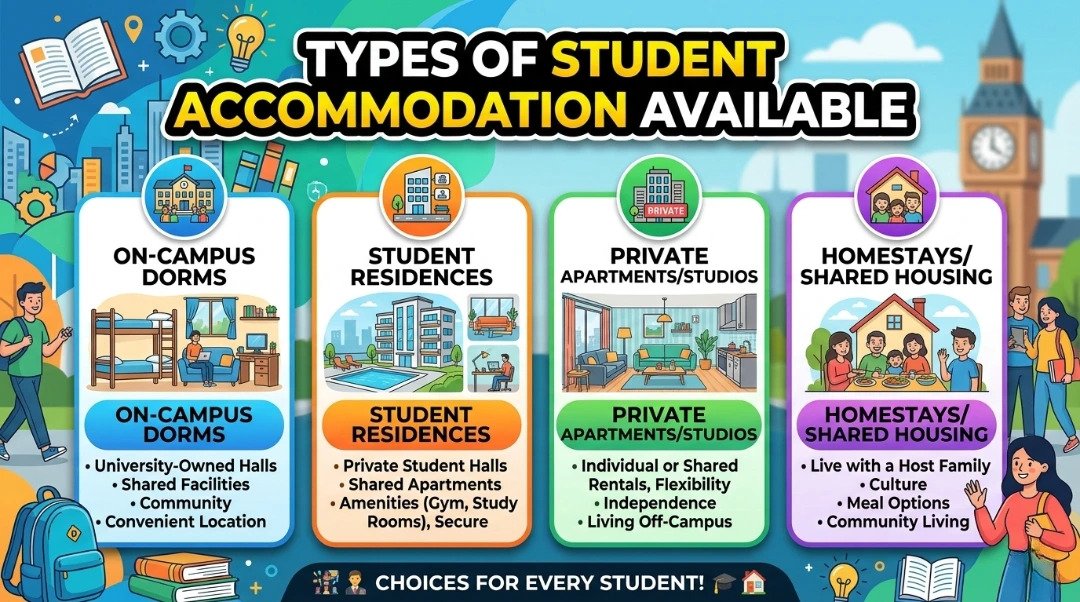
Choosing the right type of accommodation is just as important as choosing the right city. A private studio might offer independence, while a shared apartment could provide a more affordable way to live close to your university. Student residences can offer a more structured living environment, and individual rooms in shared houses may suit students who want a balance between privacy and social interaction. Uniplaces listings can include rooms, private apartments, shared accommodation, and student residences, although the available options depend on the city and dates you select.
The right choice depends on your finances, study habits, personality, and daily routine. If you prefer quiet evenings and need a private space for online classes, a studio or single room may be worth considering. If your priority is reducing expenses, sharing a kitchen and common areas with other tenants might make better financial sense. Before deciding, look beyond the headline rent and consider whether utilities, internet, laundry facilities, furniture, and other essentials are included. A property with a slightly higher monthly price can sometimes offer better overall value if it reduces your additional expenses.
How to Choose the Right Accommodation
Start by identifying what matters most to you rather than browsing listings without a clear plan. Think about how long you will stay, how often you will travel to campus, whether you need a furnished room, and how much privacy you want. Then compare these priorities with your available budget. A beautiful apartment across the city may look appealing, but expensive commuting and long travel times could make it less practical than a simpler room near your university.
Location deserves particular attention because it affects both your finances and your quality of life. Check the distance to campus, nearby supermarkets, public transport connections, medical services, and other facilities you expect to use regularly. Look at the neighbourhood on a map and investigate typical journey times rather than relying on an advertised distance alone. A property described as being near a university might still require multiple transport connections. Before booking, read the house rules, review the contract duration, and confirm whether the accommodation matches your daily needs.
How to Find Student Accommodation on Uniplaces
The simplest way to begin is to visit the official Uniplaces website and search for your destination city. Enter the dates you expect to arrive and leave, then explore the available listings. If your university has provided an arrival date or orientation schedule, use that information to plan your search. It is sensible to begin looking early enough to compare several properties, especially when you are moving to a popular university destination or arriving during the beginning of an academic term.
Once the results appear, narrow them down using your actual requirements. Set a realistic maximum budget, focus on neighbourhoods that suit your commute, and compare the types of accommodation available. Read the descriptions rather than judging listings solely by photographs. Pay attention to the rental period, included services, household rules, deposit requirements, and any additional charges mentioned by the accommodation provider. If a listing has a Verified badge, it has completed Uniplaces’ verification steps, but that does not mean you should ignore the description or assume every detail is guaranteed to match your expectations.
Create a shortlist of suitable properties and compare them side by side. One room might have a lower rent but require higher utility payments, while another may be slightly more expensive but closer to campus. Comparing the full picture helps you avoid making a rushed decision based on an attractive price or a photograph. If anything is unclear, seek clarification before committing to the booking.
Creating an Account and Setting Your Preferences
Creating a Uniplaces account is straightforward. The platform’s official guidance says users can register with an email address or a Google account, verify their email, and complete their profile. Registration and browsing are free, and payment details are not required until you submit a booking request. Keeping your profile complete and your contact information accurate can make it easier to manage enquiries and receive booking updates.
When setting your preferences, think about the practical details that will influence your stay. Your maximum budget should account for more than rent alone, while your preferred location should reflect your university’s campus and transport connections. You may also want to prioritise furnished rooms, private bathrooms, internet access, or accommodation that allows cooking. If you have specific requirements, such as accessibility features or permission to keep a pet, check whether the listing explicitly addresses them instead of assuming they are available.
Your profile and booking request should present accurate information. If the landlord asks about your studies, arrival date, or intended rental period, provide clear answers. Some providers may request additional documents or a guarantor, so prepare relevant information where appropriate. Most importantly, never submit a booking request until you understand the property’s rental conditions and the amount you could be charged if the booking is accepted.
Understanding Uniplaces Booking Fees and Rental Costs
One of the biggest mistakes students make when arranging accommodation is focusing exclusively on the advertised monthly rent. The actual cost of moving into a property can be considerably higher because the first payment may be accompanied by a platform service fee, a holding deposit, a security deposit, or an administrative charge. The exact combination depends on the individual listing, so there is no single universal booking price that applies to every Uniplaces property.
Uniplaces states that its one-time service fee is calculated as a percentage of the first rental payment and is shown during the booking process. If the landlord accepts your request, the first rental payment, the service fee, and any applicable holding deposit are charged through the platform. Other amounts, such as the security deposit, administrative fees, rent paid in advance, and subsequent monthly rent, are paid directly to the landlord after confirmation when specified in the listing. The platform does not hold your security deposit.
Here is a simplified example of how you might calculate your initial budget. These figures are illustrative only, not actual Uniplaces prices or fee rates.
Expense | Illustrative amount |
First month’s rent | €700 |
Example platform service fee | €140 |
Example security deposit | €700 |
Example administrative fee | €50 |
Illustrative initial cash requirement | €1,590 |
In this example, the service fee is assumed to be 20% of the first month’s rent purely to demonstrate the calculation. The actual fee shown on a listing may be different. The table also assumes the deposit and administrative fee are payable at the start, with no additional holding deposit or advance rent. Before booking, check the payment breakdown, confirm which amounts are refundable, and calculate your likely monthly expenses. Remember to budget for food, transport, study materials, mobile service, and emergency costs as well.
Is Uniplaces Safe and Legitimate?
Uniplaces is an established accommodation booking platform, but using a legitimate platform does not mean every possible rental outcome is risk-free. The company provides online booking facilities, listing verification steps, payment handling for the first rental payment, and a process for reporting certain problems after move-in. These features can help students arrange accommodation remotely, particularly when they cannot visit the property before travelling.
Independent customer feedback can provide additional context. At the time of checking, Trustpilot displayed a rating of 4.1 out of 5 based on more than 12,000 reviews. Its review summary highlighted positive experiences with staff and customer support, while some reviewers reported communication difficulties, frustrating cancellation processes, and delays in resolving problems. Reviews represent individual experiences rather than a guarantee of future service quality, so it is better to consider both positive and negative feedback when assessing a platform.
Students should also understand the limits of the platform’s protection. Uniplaces holds the first rental payment until after the move-in date, and its current guidance describes a 24-hour safety period during which tenants can report certain serious discrepancies. However, payments made directly to landlords, including security deposits and subsequent rent, are not handled by Uniplaces and do not receive the same payment protection. This is why reading the listing, saving your booking confirmation, and following the official payment process are essential parts of booking safely.
How to Verify a Property Before Booking
Before reserving accommodation, read the complete listing and look for information that would affect your decision. Check the address or location information, property description, photographs, included facilities, available dates, house rules, and rental conditions. If the listing has a Verified badge, understand that it indicates completion of the platform’s verification steps rather than a guarantee that the property will be identical to every photograph. Uniplaces itself advises users to treat photos as a guide and review the full description before booking.
It is also sensible to research the surrounding area independently. Check public transport routes, local amenities, and realistic travel times to your university. If you can contact the landlord before booking, ask specific questions about heating, internet access, shared facilities, utility bills, check-in arrangements, and any unclear conditions. Save written responses so you can refer to them later.
Be especially careful if anyone asks you to pay before the booking is confirmed or requests that you move the first rental payment and service fee outside the platform. Uniplaces warns users against paying these amounts through bank transfer, cash, or another method outside its checkout process. If a landlord requests an additional payment that is not listed or demands a higher amount than advertised, contact official support before proceeding.
Understanding Booking Policies and Refunds
Cancellation conditions deserve careful attention because a student’s plans can change unexpectedly. A visa delay, a change in university admission, a revised course schedule, or a personal emergency could affect your move-in date. Uniplaces listings use different cancellation policies, including Flexible, Moderate, Strict, and Non-refundable. These policies determine whether any part of the first rental payment can be refunded when you cancel before the contract start date.
The platform’s current guidance gives the following refund windows for the first rental payment:
Policy | Full refund window | Partial refund window | No refund under the stated schedule |
Flexible | More than 30 days before the start date | Between 15 and 30 days before | Fewer than 15 days before |
Moderate | More than 60 days before the start date | Between 30 and 60 days before | Fewer than 30 days before |
Strict | More than 90 days before the start date | Between 30 and 90 days before | Fewer than 30 days before |
Non-refundable | Not available | Not available | Regardless of how early you cancel |
For the Flexible, Moderate, and Strict policies, the partial refund is generally 50% of the first rental payment within the specified window. The service fee is not refunded when a tenant cancels under these policies, and payments made directly to the landlord may be governed by separate contractual terms. Once you have signed the tenancy agreement or moved in, the listing’s pre-move-in cancellation policy no longer governs your departure; the tenancy agreement becomes relevant. Always confirm the terms displayed on your specific listing before booking.
If a landlord cancels a confirmed booking, Uniplaces states that the tenant receives a full refund of the first rental payment, service fee, and any holding deposit, with support to help find alternative accommodation. If you arrive and discover that the property is inaccessible, the advertisement was invalid, or the accommodation materially differs from the listing, report the problem in writing within 24 hours of your move-in date and provide the requested evidence. Do not assume that every minor difference qualifies for a refund; the platform’s rules distinguish serious discrepancies from ordinary variations.
Advantages of Using Uniplaces
The main advantage of Uniplaces is convenience. Students can search for medium-term accommodation online, compare different properties, and make booking requests without travelling to every location for a viewing. This is especially helpful when moving internationally, because arranging housing before arrival can reduce the uncertainty associated with starting university in an unfamiliar city. A centralised search process can also make it easier to compare different room types and rental conditions.
Another benefit is access to a booking process with defined payment procedures. The first rental payment is held by Uniplaces until after move-in, and the platform provides a 24-hour safety period for reporting certain qualifying issues. Listings with the Verified badge have completed the platform’s verification steps, giving users an additional detail to consider when comparing properties. These features do not eliminate all risks, but they offer a structured alternative to arranging every aspect of a rental privately.
The platform can also help students compare accommodation across multiple neighbourhoods and European destinations. Instead of relying on a single property advertisement, you can explore different options and choose according to your budget, travel requirements, and lifestyle. For students with limited time, this can be a valuable starting point. The strongest results usually come when you combine the platform’s convenience with independent research, realistic financial planning, and a thorough review of the contract.
Potential Disadvantages and Limitations

Uniplaces is not automatically the cheapest option for every student. Its service fee adds to the initial booking cost, and a property’s advertised rent may not include every expense you will pay during your stay. Security deposits, administrative fees, utilities, and other charges can increase the amount of money required before you settle in. Students with limited savings should calculate the full initial cost rather than assuming they need only one month’s rent.
Another limitation is that online photographs cannot tell you everything about a property. A room might look spacious in a wide-angle photograph but feel smaller in person, while noise levels, shared-house routines, and the surrounding environment may be difficult to assess remotely. Although the platform provides verification steps and a process for reporting qualifying problems, these measures do not guarantee a perfect match between your expectations and the actual accommodation. You should therefore read the listing carefully and ask questions whenever important details are missing.
Cancellation rules can also be restrictive, especially if you select a Strict or Non-refundable listing. The service fee is generally not returned when the tenant cancels, and the landlord may have separate terms governing deposits and other direct payments. Customer reviews also show that some users have experienced communication or resolution difficulties. These limitations do not necessarily make the platform unsuitable, but they underline the importance of understanding the terms before making a financial commitment.
Uniplaces vs. Other Student Accommodation Options
Students usually compare online rental platforms with university housing, private student residences, conventional rental websites, and direct arrangements with landlords. Each option has strengths and weaknesses, so the best choice depends on your circumstances. University accommodation may provide convenient access to campus, while private rentals can offer greater flexibility in location and living arrangements. Online marketplaces such as Uniplaces occupy a middle ground by helping students discover and book accommodation remotely.
Accommodation option | Main advantage | Potential limitation | Best suited for |
Uniplaces | Online search and booking for medium-term stays | Service fees and listing-specific conditions | Students arranging housing before arrival |
University accommodation | May be close to campus and designed for students | Availability and eligibility restrictions | Students who prefer university-linked housing |
Private student residence | Student-focused facilities and organised management | Pricing may be higher for some room types | Students seeking a dedicated student environment |
General rental websites | Broad range of properties and rental arrangements | More independent checking may be necessary | Students comparing different rental markets |
Direct landlord rental | Direct communication with the property owner | Fewer platform-specific booking safeguards | Students comfortable managing the process independently |
Uniplaces can be a sensible starting point if you need to book before arriving in a European city and want a defined online process. However, you should compare it with your university’s housing office and other reputable providers before making a final decision. In some cities, university residences or shared accommodation may offer better value. In others, availability or your preferred contract length may make an online booking platform more practical. Comparing total costs, contract terms, location, and protection measures is more useful than assuming one option is always best.
Tips for Finding Affordable Student Housing
Finding affordable accommodation begins with setting a realistic budget. Work out how much you can spend on housing each month after accounting for tuition, food, transport, insurance, and other living costs. Then set a maximum rental price that leaves enough money for unexpected expenses. It is risky to spend nearly all your available funds on a room, even if the location seems ideal, because moving to a new city often involves additional costs that are easy to overlook.
Consider looking beyond the most popular neighbourhoods. A room slightly farther from campus might cost less while still offering convenient public transport connections. Compare the total commute time and transport expenses before deciding whether the lower rent is worthwhile. Shared apartments may also provide a more economical alternative to private studios, particularly when common areas and utility costs are shared among tenants.
Flexibility can improve your chances of finding a suitable option. If your university schedule permits it, compare different move-in dates and contract lengths, while ensuring that the rental period still meets your actual needs. Do not select a cheaper property simply because it has an attractive headline price. Review the deposit, service fee, utility arrangements, administrative charges, cancellation policy, and other expenses before deciding which listing offers the best overall value.
Booking Accommodation Before Moving Abroad
If you are moving to another country for university, try to arrange your accommodation well before your departure date. Starting early gives you more time to compare listings, check the neighbourhood, prepare documents, and understand the payment conditions. It also reduces the likelihood of making a rushed decision because your arrival date is approaching. Begin with your university’s recommended arrival period and work backwards to establish a practical housing search schedule.
Before booking, confirm that your intended rental dates match your academic timetable. If your course begins in September but orientation starts earlier, you may need accommodation before your first lecture. Similarly, if your tenancy ends before your final examinations or departure date, you could face an inconvenient gap. Check the actual contract dates rather than assuming that the accommodation will automatically cover the entire academic year.
International students should also keep their university admission documents, travel information, identification, and relevant financial records organised. A landlord may request certain supporting documents, depending on the property. Once your booking is confirmed, save the confirmation, payment information, tenancy agreement, and messages about check-in arrangements. Having these documents readily available can make it easier to resolve questions before you travel and when you arrive.
What to Do After Your Booking Is Confirmed
A confirmed booking is an important milestone, but it is not the end of your accommodation preparation. Review the confirmation carefully and make sure the property, rental dates, agreed price, and other conditions match what you expected. Check the tenancy agreement for details about deposits, rent payments, notice periods, maintenance responsibilities, and the circumstances under which the agreement can be terminated. If something appears inconsistent, seek clarification before your move-in date.
Contact the landlord using the details provided after confirmation and arrange your arrival time. Ask how you will receive the keys, whether someone will meet you, and whether there are any building entry procedures you need to understand. If you expect to arrive late, confirm that your check-in arrangements accommodate that schedule. It is also useful to ask whether you need to bring bedding, kitchen supplies, or other household essentials.
After arriving, inspect the accommodation promptly. Check whether you can access the property and whether the main features match the listing. Take photographs of any existing damage, save relevant messages, and report qualifying discrepancies through the official process within the required time limit. Uniplaces currently specifies a 24-hour period after the move-in date for certain complaints involving inaccessible accommodation, invalid advertisements, or material differences from the listing. Following the stated procedure quickly is important if you encounter a serious problem.
Common Mistakes Students Should Avoid
One common mistake is choosing accommodation based entirely on rent. A low monthly price can be attractive, but the actual cost may rise after you include utilities, transport, deposits, platform fees, and administrative charges. Another mistake is ignoring the cancellation policy until after a booking has been confirmed. If your travel plans change, the refund conditions may have a significant financial impact, particularly when a listing is non-refundable.
Students should also avoid assuming that a Verified badge means they can skip reading the property description. Verification is a useful consideration, but you still need to check the advertised facilities, location, contract dates, and house rules. Similarly, do not rely on a landlord’s verbal promise when an important detail can be confirmed in writing. Keep your booking information and communications organised so that you can refer to the agreed conditions if a dispute arises.
Finally, never transfer money outside the required booking process simply because someone claims it will make the reservation quicker or cheaper. Uniplaces specifically advises users to keep the first rental payment and service fee within its checkout system. If an additional payment is requested, check whether it appears in the confirmed listing and contact support if you are unsure. A little caution before booking can prevent considerable stress later.
Conclusion
Finding suitable accommodation is one of the most important steps in preparing for university, especially when you are moving to a new city or country. Uniplaces provides students with a convenient way to search for rooms, studios, and apartments, compare rental options, and submit booking requests online. Its focus on medium-term accommodation makes it particularly relevant to international students, exchange students, and young professionals who need somewhere to live before arriving at their destination. With listings across more than 30 European cities, the platform offers a useful starting point for exploring different housing options.
The key to a successful experience is knowing what to check before making a commitment. Compare the total cost rather than looking only at the monthly rent, read the property’s description carefully, understand the cancellation policy, and confirm which expenses are included. Pay attention to the distinction between payments processed through Uniplaces and amounts paid directly to the landlord. Although the platform provides certain booking protections, those protections have specific conditions, and you should understand them before sending a request.
Most importantly, choose accommodation that supports your student lifestyle rather than simply selecting the most attractive listing. Consider your university commute, personal safety, available facilities, privacy requirements, and monthly budget. Take the time to compare alternatives and ask questions whenever important information is unclear.
Is Uniplaces worth considering for students finding accommodation? For students who need to arrange medium-term housing online, particularly before moving to Europe, it can be a practical option. The best results come from combining the platform’s booking facilities with careful research, realistic budgeting, and a clear understanding of your rental agreement. With the right preparation, you can spend less time worrying about housing and more time preparing for the academic experience ahead.
Frequently Asked Questions
Q. Is Uniplaces a legitimate website for finding student accommodation?
Yes. Uniplaces is an established online accommodation marketplace that connects tenants with landlords offering medium-term rentals. It provides online booking facilities, listing verification steps, customer support, and a process for reporting certain problems after move-in. However, students should still review each listing, check the contract conditions, and understand the limits of the platform’s protections before booking. You can explore available properties and current booking information on the official .
Q. Is Uniplaces free for students to use?
Browsing listings and creating an account are free. However, a booking generally involves a one-time Uniplaces service fee, which is calculated as a percentage of the first rental payment. Depending on the listing, you may also need to pay a holding deposit, security deposit, administrative fee, or other rental expenses. The service fee is displayed during the booking process and is generally not refunded if you cancel, so check the complete payment breakdown before submitting your request.
Q. Can international students book accommodation through Uniplaces before arriving in Europe?
The platform supports online accommodation searches and bookings, allowing students to arrange housing before travelling to their destination. You can compare properties, review their conditions, and submit a booking request remotely. Before confirming, make sure the accommodation accepts your intended rental dates and that you meet any requirements specified by the landlord. You should also verify the check-in arrangements and save your booking confirmation so that you have the necessary information when you arrive.
Q. What happens if I cancel my Uniplaces booking?
The refund you receive depends on the cancellation policy associated with your listing and how far in advance you cancel. The available policies include Flexible, Moderate, Strict, and Non-refundable. Under the first three policies, the first rental payment may qualify for a full or partial refund within specified time windows, while the service fee is generally not refundable when you cancel. Non-refundable bookings offer no refund of the first rental payment under the stated cancellation schedule. Read the individual listing’s cancellation conditions before booking, especially if your university admission or travel dates could change.
Q. How can students find affordable accommodation on Uniplaces?
Start by setting a realistic monthly budget and comparing several properties rather than booking the first attractive room you find. Consider shared accommodation, explore neighbourhoods with convenient public transport, and compare the total cost of rent, utilities, deposits, service fees, and other charges. Check whether the contract covers your entire intended stay and whether the cancellation policy suits your circumstances. A slightly more expensive room can offer better overall value if it reduces commuting expenses or includes essential services. The goal is to find accommodation that fits your budget and supports your studies without creating unnecessary financial pressure.
Table of Contents
You May Also Like

How PatPat Is Changing the Way Parents Shop for Affordable Kids’ Clothing
official.times.software
November 23, 2026
Read More »

The Ultimate Guide to Using ActivTrak for Better Workforce Productivity
official.times.software
November 23, 2026
Read More »

Exploring Audiobooks.com: What Makes This Platform Popular Among Book Lovers?
official.times.software
November 22, 2026
Read More »

Finding the Right Skincare Routine: Exploring the Products Offered by Sunday Riley
official.times.software
November 22, 2026
Read More »

A Detailed Review of Maxaroma: Product Quality, Variety, and Customer Experience
official.times.software
November 22, 2026
Read More »