

How Maxiscoot Helps Riders Find Quality Scooter Parts and Accessories
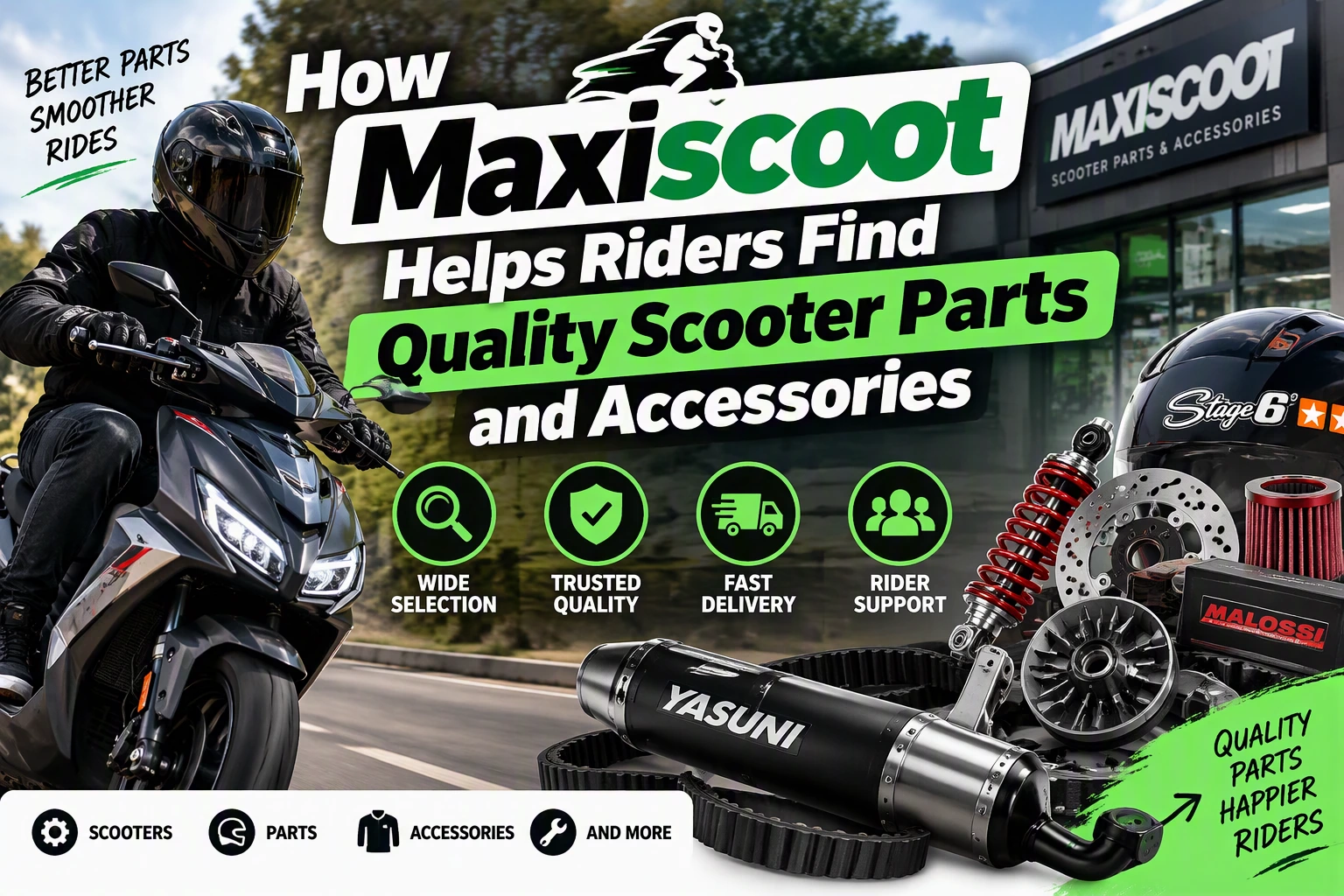
Keeping a scooter in excellent condition involves more than filling the fuel tank and checking the tyres occasionally. Over time, components wear out, routine servicing becomes necessary, and riders may want to upgrade their vehicles for improved comfort, appearance, or performance. Finding the right replacement part can be challenging, particularly when different scooter models use different components and specifications. A specialist store can facilitate the process in this situation. Maxiscoot is an online retailer focused on scooter parts, moped components, tuning products, rider equipment, and workshop supplies. Its catalogue covers a broad range of two-wheelers and includes products from established names in the scooter industry.
For riders, the main advantage of shopping through a specialist website is the ability to explore related products in one place instead of searching across numerous general marketplaces. Whether you need a replacement belt, an electrical component, a brake part, a mirror, or equipment for a personal customization project, an organized catalogue can help narrow the options. However, finding a suitable product still requires careful attention to vehicle compatibility, product descriptions, and installation requirements. This guide explains how Maxiscoot can help riders navigate the parts-buying process, what its product range offers, and which checks are worth completing before placing an order.
Table of Contents
Introduction to Maxiscoot
Maxiscoot focuses on parts and accessories for scooters, mopeds, 50cc geared bikes, maxi-scooters, and certain other two-wheelers. Its website features a range of categories designed for both routine maintenance and more specialized projects. These include engine components, exhaust systems, carburettors, transmission parts, ignition systems, brakes, wheels, lighting, customization accessories, and workshop equipment. The retailer also lists products for different manufacturers, including Yamaha, Peugeot, Piaggio, Aprilia, Gilera, Kymco, Derbi, and Vespa. This variety makes the website relevant to riders who want to maintain an existing scooter as well as enthusiasts who enjoy modifying their machines.
A specialist catalogue is particularly helpful when a rider already knows which system needs attention but is unsure where to begin searching. For example, someone experiencing a transmission issue can explore drive belts, variators, clutch components, and related parts rather than browsing unrelated motorcycle accessories. Likewise, a rider repairing an electrical problem can investigate batteries, switches, relays, ignition components, and lighting products. The important point is that Maxiscoot brings many related product types together in one online destination. Buyers should still confirm that the retailer serves their location and that a particular item fits their vehicle, but its specialized focus gives scooter owners a useful starting point for research and purchasing.
A Wide Selection of Scooter Parts
One of the most practical benefits of Maxiscoot is the breadth of its catalogue. A scooter contains several interconnected systems, and a repair may require more than one component. A worn transmission belt, for instance, may prompt a rider to inspect associated drive components, while an engine repair could require compatible gaskets, bearings, or other small parts. Having these categories available through one specialist retailer can make it easier to research the complete repair rather than treating every component as a separate shopping project. Maxiscoot offers a variety of accessories and replacement and tuning goods for various two-wheeler models.
The selection also supports different levels of ownership experience. A commuter might primarily need maintenance items and replacement parts, while an experienced enthusiast could be searching for components for a restoration or performance build. Riders who enjoy changing the appearance of their scooters can explore mirrors, handlebars, grips, fairings, lighting, and other customization products. Meanwhile, people who prefer to perform basic servicing themselves may benefit from browsing workshop supplies and maintenance tools. A broad selection does not guarantee that every product is suitable for every scooter, so buyers should use vehicle specifications and product details to narrow the choices. When used carefully, the catalogue can turn an overwhelming search into a more structured shopping process.
Engine, Transmission, and Performance Components
Engine and transmission components are essential to the operation of many scooters, making correct selection especially important. Maxiscoot lists products such as cylinder kits, pistons, crankshafts, bearings, exhausts, carburettors, intake components, variators, drive belts, clutches, and ignition parts. Each component performs a specific role, and its suitability depends on the scooter’s design, engine configuration, and intended use. A component designed for one engine family may not fit another, even when the two scooters look similar. Riders should therefore verify model information and technical specifications before purchasing anything related to the engine or drivetrain.
Reliable operation and suitable replacement components are typically the top priorities for regular riders. Performance enthusiasts may instead be interested in upgrades that alter engine response, transmission behaviour, or other characteristics. A deeper comprehension of component interaction is necessary for these initiatives. Changing one part can affect heat, reliability, fuel requirements, noise, or the wear experienced by other components. A product that appears attractive because of its specifications or price may not be the best choice for a particular setup. Consulting a qualified mechanic or experienced technician is sensible when an upgrade involves internal engine work, braking systems, or other safety-critical areas. The goal should be a compatible and well-maintained scooter, not simply a collection of high-performance parts.

Accessories for Comfort, Safety, and Style
Scooter ownership is not only about engine performance. Comfort, visibility, convenience, and rider protection all contribute to the overall experience. Maxiscoot‘s catalogue includes accessories such as mirrors, grips, handlebars, indicators, lights, rims, fairings, and other customization components. It also lists rider equipment, including helmets, jackets, gloves, trousers, boots, and related gear. This range gives riders an opportunity to explore both vehicle accessories and personal equipment through the same specialist website.
When selecting accessories, think about how you actually use your scooter. A daily commuter may value comfortable grips, reliable lighting, practical storage, and weather-appropriate protective clothing. Someone who rides longer distances may prioritize well-fitting protective gear and accessories that improve convenience without interfering with control of the vehicle. Appearance matters too, and a carefully chosen mirror, fairing, or handlebar accessory can personalize a scooter. Nevertheless, style should never take priority over safety. Check that an accessory is compatible with the scooter, does not obstruct visibility or steering, and meets applicable safety requirements. For helmets and protective equipment, pay close attention to the relevant safety certification, correct sizing, and the manufacturer’s fitting guidance.
Finding Parts for Different Scooter Brands
Parts compatibility is one of the biggest challenges when buying scooter components online. Two scooters from the same manufacturer may have different engines, model years, brake assemblies, electrical connectors, or transmission systems. Even a part that looks almost identical to the original may differ in dimensions or mounting points. Maxiscoot serves a broad range of two-wheelers and lists products associated with manufacturers such as Yamaha, MBK, Peugeot, Piaggio, Kymco, Gilera, Aprilia, Derbi, Beta, Rieju, and Vespa. That range can help riders begin their search around the make and type of vehicle they own.
Before ordering, gather the exact details of your scooter, including its make, model, year, engine size, and engine code where available. If the original component has a part number, compare it with the listing rather than relying only on a photograph. Measurements and connector types can also be important for components such as belts, bearings, brake parts, and electrical equipment. If the product page does not clearly establish compatibility, ask the retailer for clarification before purchasing. This extra step can prevent avoidable returns, delays, and installation problems. It is also wise to avoid assuming that every product shown on a specialist website is road-legal for every scooter or jurisdiction. Compatibility and legal approval are separate questions, and both deserve attention.
Exploring Trusted Brands and Product Options
Choosing a scooter part becomes easier when you can compare products from recognizable manufacturers and specialist brands. Maxiscoot lists products from brands such as Stage6, Malossi, Polini, Dell’Orto, Yasuni, Bidalot, Doppler, Airsal, and MXS Racing. These names cover different areas of the scooter market, from engine and transmission components to exhausts, intake systems, and tuning equipment. The website also offers products from other manufacturers, giving buyers options for different budgets and repair requirements.
However, a familiar brand name should be only one part of your buying decision. A quality product must also match your scooter, suit your intended use, and meet the technical requirements of the repair. For example, an enthusiast building a modified scooter may need different components from someone restoring an everyday commuter to its original condition. Read product descriptions carefully, examine dimensions and specifications, and check whether the item is an original replacement, an aftermarket alternative, or a performance upgrade. If you are uncertain about the difference, ask a qualified mechanic for guidance. Comparing the product’s purpose, compatibility, expected durability, and total cost can help you make a more informed decision than choosing solely on brand reputation or price.
How Online Product Categories Simplify Shopping
A large online catalogue is most useful when its products are organized into meaningful categories. Maxiscoot groups many of its products by component type, allowing riders to investigate specific areas such as brakes, electrical equipment, ignition, exhausts, transmission, wheels, and workshop supplies. This structure helps users move from a general problem to a more focused search. Someone looking for a replacement headlight, for instance, can start with lighting products instead of searching through hundreds of unrelated listings. Similarly, someone planning transmission maintenance can explore belts, variators, clutches, and associated components.
To make the most of this approach, begin with the problem you want to solve. Identify the system involved, note the original component’s details, and then narrow the results by scooter compatibility and technical specifications. Once you have a shortlist, compare product descriptions, prices, stock information, and any installation requirements. Avoid adding products to your cart simply because they appear in the same category; related parts are not automatically compatible with one another. A little preparation can save time and make the buying process more efficient. If you are carrying out a larger repair, prepare a parts checklist before ordering so you can identify everything required for the job and reduce the risk of leaving an essential component out.
Understanding Compatibility Before Buying
Compatibility deserves special attention because an incorrectly selected scooter part can cause wasted money, delays, or mechanical problems. Product images alone are rarely enough to confirm a match. Different versions of a scooter can use different component dimensions, electrical connections, mounting arrangements, or engine specifications. Even when a listing names your scooter’s manufacturer, you should confirm the exact model and version supported by the product. This is especially important for parts connected to braking, steering, suspension, ignition, and engine operation.
A useful method is to check the original part number against the listing whenever possible. You can also consult the vehicle manual, manufacturer documentation, an authorized dealer, or a mechanic who knows your model. If a product description lists measurements, compare them with the original component’s specifications. For electrical parts, check voltage, connector type, and other relevant requirements. For performance components, confirm that the rest of the setup supports the intended modification. If the information is unclear, contact the retailer before placing the order instead of relying on assumptions. The best scooter part is not simply the one with the best advertised features; it is the one that fits correctly and performs its intended job safely.
Maintenance Parts for Everyday Riding
Routine maintenance helps a scooter remain dependable, particularly when it is used for commuting or frequent short trips. Items such as brake pads, tyres, batteries, spark plugs, belts, filters, oils, and other service components may need inspection or replacement as part of the manufacturer’s recommended maintenance schedule. Maxiscoot lists a variety of maintenance-related products alongside its wider range of spare parts and workshop supplies.
The right maintenance schedule depends on the scooter model, mileage, age, operating conditions, and manufacturer’s instructions. Rather than waiting for a problem to become obvious, inspect your scooter regularly and keep a record of completed maintenance. A worn tyre, for example, can affect grip and handling, while neglected brake components can compromise stopping performance. Using the correct replacement part and installing it properly are both essential. Riders who perform their own servicing should use the correct tools and follow the vehicle’s service manual. When a repair involves safety-critical components or requires specialist knowledge, professional assistance is the sensible choice. Keeping maintenance records also makes it easier to identify recurring issues and plan future servicing expenses.
Performance Upgrades and Customization
For some riders, scooter ownership is a hobby as well as a practical way to travel. They may enjoy changing the vehicle’s appearance, improving its response, or building a personalized setup. Maxiscoot offers customization and tuning products that include exhaust systems, engine components, intake parts, transmission components, handlebars, grips, mirrors, fairings, and other accessories. Its related MXS Racing brand focuses on performance-oriented products for scooters and mopeds, including components developed for specialized builds.
Before starting a modification project, decide what you want to achieve and set a realistic budget. Visual changes, routine replacement work, and engine tuning involve different costs and technical requirements. Performance upgrades can also affect reliability, fuel consumption, heat management, noise, emissions, and the lifespan of other components. A collection of individually compatible parts does not necessarily create a balanced or reliable setup when combined. Research the complete system and seek professional advice if the work involves major mechanical changes. You should also check local road regulations and the vehicle’s approval requirements before purchasing tuning parts. Some components may be intended for competition or off-road use rather than public-road riding, so never assume that an advertised upgrade is legal for everyday transport.
Workshop Tools and Maintenance Supplies
Having the correct tools can make scooter maintenance more organized and help prevent damage during repairs. Depending on the job, a workshop may need suitable spanners, sockets, torque tools, pullers, measuring equipment, cleaning supplies, lubricants, and other specialist equipment. Maxiscoot lists workshop products and maintenance supplies alongside its replacement parts, making it possible to investigate tools and components in the same shopping session.
Buying a tool should begin with an understanding of the work you intend to perform. Basic inspections may require only a small selection of standard tools, while transmission or engine repairs can call for model-specific equipment. Using an unsuitable tool may damage fasteners, bearings, threads, or surrounding components. Torque specifications are particularly important when tightening critical fasteners, and a suitable torque wrench can help prevent under-tightening or over-tightening. Keep tools clean, store them properly, and follow the instructions supplied with any specialist equipment. If a repair requires experience you do not have, compare the cost and risk of attempting it yourself with the price of professional servicing. Sometimes the most economical choice is to let a qualified mechanic complete the job.
Comparing Prices and Product Value
Price is naturally an important consideration when buying scooter parts, but the lowest advertised figure does not always represent the best overall value. A replacement component should be assessed according to its compatibility, quality, expected service life, warranty or return conditions, and total purchase cost. Maxiscoot displays a range of products at different price points, and its website may feature promotional pricing on selected items. Prices, discounts, stock status, and delivery charges can change, so shoppers should check the current product page and checkout details before deciding.
The following table provides a practical way to compare options without assuming that a particular brand or price is automatically best.
Buying factor | What to check | Why it matters |
Compatibility | Model, year, engine code, dimensions, part number | Reduces the risk of ordering the wrong component |
Product quality | Manufacturer, materials, specifications, intended use | Helps you assess suitability and durability |
Total price | Item cost, delivery, taxes, and other applicable fees | Shows the likely overall expense |
Availability | Current stock and estimated dispatch or delivery | Helps you plan repairs realistically |
Returns | Eligibility, time limits, condition requirements, and costs | Clarifies your options if a product is unsuitable |
Installation | Tools, skill level, and workshop charges | Helps you estimate the complete repair cost |
It is also worth comparing the cost of a complete repair rather than the price of one item. A cheaper component may require additional parts, special tools, or more frequent replacement, while a more expensive option might offer features better suited to your needs. Neither outcome should be assumed without evidence. Compare the specifications of genuinely compatible alternatives and consider the consequences of component failure. For brakes, steering, tyres, and other safety-related parts, prioritize correct specifications and reliable installation over minor savings. For less critical cosmetic accessories, price and appearance may reasonably carry more weight.
Technical Guidance and Helpful Resources
Technical information can be just as important as the product itself. Maxiscoot highlights technical advice and provides a range of website resources, including product categories, brand information, frequently asked questions, and technical tips or tutorials. These resources can help riders learn more about parts, investigate maintenance tasks, and understand the products they are considering. The usefulness of any guide depends on the specific repair, so readers should check whether the information applies to their scooter and its configuration.
If you are new to scooter maintenance, use technical resources to build your understanding before buying components. Learn the names of the relevant parts, identify the symptoms you have noticed, and consult your scooter’s official service documentation. If a tutorial covers a different engine or model, do not assume that its instructions transfer directly to your vehicle. Product descriptions and general online guides may not provide all the information needed for a complicated repair. For unclear specifications, contact the retailer or a qualified mechanic. Good technical guidance helps you ask better questions, make more informed purchases, and recognize when a task is beyond your current skill level. It should support safe decision-making rather than replace professional training where that is necessary.

Ordering, Payment, and Delivery Considerations
Online shopping can save time by allowing riders to compare products without visiting multiple physical stores. Maxiscoot provides an online ordering process and lists payment methods and delivery information on its website. Its homepage describes options that include card payments, bank transfers, and PayPal, while available delivery services and shipping choices may depend on the order and destination. Buyers should verify the current options on the official website before checking out because payment methods, carriers, and delivery conditions can change.
Before placing an order, review the product description, selected quantity, delivery address, total price, estimated delivery time, and return conditions. If the repair is urgent, do not rely on an unverified assumption about dispatch or arrival. Check whether the part is in stock and whether the shipping service covers your location. Once the order is placed, keep the confirmation and any tracking information available. When the parcel arrives, inspect the packaging and compare the received product with your order before installation. If something appears incorrect or damaged, document the issue and contact customer support promptly. These simple steps make it easier to resolve order problems and reduce the chance of discovering a mismatch only after the scooter has been dismantled.
Safety, Legal Compliance, and Responsible Tuning
A scooter upgrade should never come at the expense of rider safety. Some components directly affect braking, steering, suspension, tyre performance, lighting, or engine operation, meaning that incorrect selection or installation can have serious consequences. Use parts that meet the scooter’s technical requirements, follow the manufacturer’s installation instructions, and have safety-critical work completed or inspected by a qualified professional when needed. Riders should also verify that replacement components and modifications comply with the laws applicable to their vehicle and location.
This is particularly important for tuning products. Maxiscoot notes that items listed on its website are generally supplied without homologation unless otherwise specified. That qualification means buyers should check the approval status of each relevant product rather than assuming that everything in the catalogue is authorized for public-road use.
Before buying a modified exhaust, engine upgrade, lighting component, or other regulated item, check the product documentation and local requirements. Depending on the jurisdiction, modifications may affect noise limits, emissions, insurance, vehicle registration, or roadworthiness. A part advertised for racing may be appropriate for a closed-course build but unsuitable for a road-going scooter. Keep safety equipment in good condition and do not test an unverified modification in traffic. Responsible customization means understanding not only whether a component fits but also whether it is appropriate for the intended riding environment.
Common Shopping Mistakes to Avoid
Even an organized specialist website cannot eliminate every shopping mistake. One common error is ordering a component based on appearance alone. A belt, mirror, electrical connector, or brake component can look similar to another item while differing in dimensions or technical specifications. Another mistake is overlooking the model year or engine version, particularly when a manufacturer has released several variations under a similar name. Taking a few minutes to verify these details can prevent avoidable returns and repair delays.
Buyers should also avoid choosing parts solely because they are discounted. A promotional price is useful only when the item is suitable for the job. Read the product description, check the current stock information, and confirm whether the component includes the fittings or accessories required for installation. Review the return policy before opening or fitting a part, especially if compatibility remains uncertain. For tuning projects, avoid purchasing multiple upgrades before understanding how they work together. Finally, do not attempt complicated repairs without the correct equipment or experience. A careful approach to compatibility, quality, budgeting, and installation helps riders get more value from Maxiscoot and other specialist retailers.
Who Can Benefit From Maxiscoot?
Maxiscoot may be useful to a variety of two-wheeler owners because its catalogue covers both routine replacement parts and more specialized equipment. Everyday commuters can investigate maintenance items and accessories intended to keep their scooters practical and dependable. Home mechanics may appreciate being able to browse spare parts, tools, and workshop supplies in one place. Enthusiasts who enjoy customization can explore appearance-related accessories and tuning components, while restorers may use the catalogue to research replacement parts for particular scooter or moped models. Its range also extends to other categories of two-wheelers, including certain geared mopeds, motocross bikes, and maxi-scooters.
The retailer will not necessarily be the right choice for every rider or every purchase. Someone who needs a component immediately may prefer a local supplier with confirmed same-day availability. A rider with a rare or unusual model may need to contact a specialist dealer to verify compatibility. Others may prioritize a local warranty provider or an authorized service centre. The best option depends on the part required, the urgency of the repair, the delivery destination, and the support available. Comparing these factors helps you decide whether an online specialist, a local shop, or an authorized dealer is the most appropriate source for your particular needs.
Maxiscoot Compared With General Online Marketplaces
General online marketplaces can offer a wide range of products, including inexpensive accessories and parts from many different sellers. Their broad selection can be useful when you want to compare several product types, but finding technically suitable scooter components may require careful filtering and closer inspection of individual listings. A specialist retailer such as Maxiscoot focuses on scooters and related two-wheelers, organizing products into categories that reflect the systems and components riders commonly need. It also features products from specialist brands and offers technical resources related to its catalogue.
Feature | Maxiscoot | General online marketplace |
Main focus | Specialist scooter and two-wheeler parts and equipment | Products across many categories |
Product discovery | Categories organized around vehicle components | Depends on the marketplace’s search and filtering tools |
Specialist brands | Lists several scooter and tuning brands | Brand availability varies by seller and platform |
Technical information | Product details and selected technical resources | Quality and depth vary between listings |
Seller options | Depends on the retailer’s catalogue | May include multiple independent sellers |
Best approach | Verify fitment, price, availability, and terms | Compare sellers, specifications, authenticity, and terms |
Neither option is automatically better for every purchase. The important difference is the shopping experience and the evidence available to support your decision. With any retailer, check whether the product is appropriate for your scooter, whether the seller provides clear specifications, and whether delivery and returns suit your needs. A specialist catalogue can make product discovery easier, while a wider marketplace may offer more alternatives for certain items. Comparing both can be sensible when a part is difficult to find or when price differences are significant. The final choice should be based on verified compatibility, product suitability, service terms, and total cost rather than the website’s size alone.
Conclusion
Finding quality scooter parts does not have to involve endless searching or guesswork. A specialist retailer like Maxiscoot gives riders a starting point for exploring replacement components, maintenance supplies, performance products, customization accessories, protective equipment, and workshop tools. Its catalogue covers a range of scooter and two-wheeler brands, while its organized product categories help shoppers focus on the systems and parts relevant to their needs. For commuters, home mechanics, restoration enthusiasts, and riders interested in customization, this variety can make researching possible solutions more convenient.
The key to a successful purchase, however, is choosing carefully. Check your scooter’s exact model and specifications, compare compatible products, calculate the full cost, and review delivery and return conditions before placing an order. Pay particular attention to safety-critical parts and confirm that any performance modification meets the legal requirements for your intended use. When technical details are unclear, use the available support resources or consult a qualified mechanic. Maxiscoot can help riders discover a wide range of scooter parts and accessories, but informed selection and correct installation are what turn a convenient purchase into a worthwhile one.
Frequently Asked Questions
Q. What is Maxiscoot used for?
Maxiscoot is an online retailer specializing in scooter and two-wheeler parts, accessories, tuning components, rider equipment, and workshop supplies. Riders can explore products for maintenance, repairs, customization, and certain performance projects. The exact products available depend on the catalogue and current stock. Visit the official website at Maxiscoot.com to check current listings and product information.
Q. Does Maxiscoot sell parts for different scooter brands?
Yes. Its catalogue covers a range of manufacturers, including Yamaha, Peugeot, Piaggio, Aprilia, Gilera, Kymco, Derbi, and Vespa, among others. However, the availability of a specific part depends on the scooter model and the current product selection. Always confirm compatibility using the exact model details, technical specifications, and part number where available.
Q. How can I make sure a Maxiscoot part fits my scooter?
Start by identifying your scooter’s manufacturer, model, year, engine version, and original part number if available. Compare these details with the product description and any measurements or compatibility information provided. Do not rely on photographs or general brand names alone. If the listing does not clearly confirm a match, ask the retailer or a qualified mechanic before ordering.
Q. Does Maxiscoot offer performance tuning parts?
Yes. Its catalogue includes tuning products such as exhausts, engine components, intake parts, and transmission upgrades. Suitability depends on the scooter’s configuration and the purpose of the modification. Check compatibility, installation requirements, and the legal status of the product before purchasing. Some parts may be intended for racing or other restricted uses rather than ordinary public-road riding.
Q. What should I check before ordering from Maxiscoot?
Confirm that the part matches your scooter, review its specifications and current price, and check stock status, delivery options, and return conditions. Include shipping and any applicable taxes or fees when comparing prices. For complex repairs, consider installation costs and whether specialist tools or professional assistance will be needed. Before installing the delivered part, inspect it and verify that it matches your order.
Table of Contents
You May Also Like

How PatPat Is Changing the Way Parents Shop for Affordable Kids’ Clothing
official.times.software
November 23, 2026
Read More »

The Ultimate Guide to Using ActivTrak for Better Workforce Productivity
official.times.software
November 23, 2026
Read More »

Exploring Audiobooks.com: What Makes This Platform Popular Among Book Lovers?
official.times.software
November 22, 2026
Read More »

Finding the Right Skincare Routine: Exploring the Products Offered by Sunday Riley
official.times.software
November 22, 2026
Read More »

A Detailed Review of Maxaroma: Product Quality, Variety, and Customer Experience
official.times.software
November 22, 2026
Read More »