

How Baby Logic DVD - The Smiwin Company Supports Early Childhood Learning
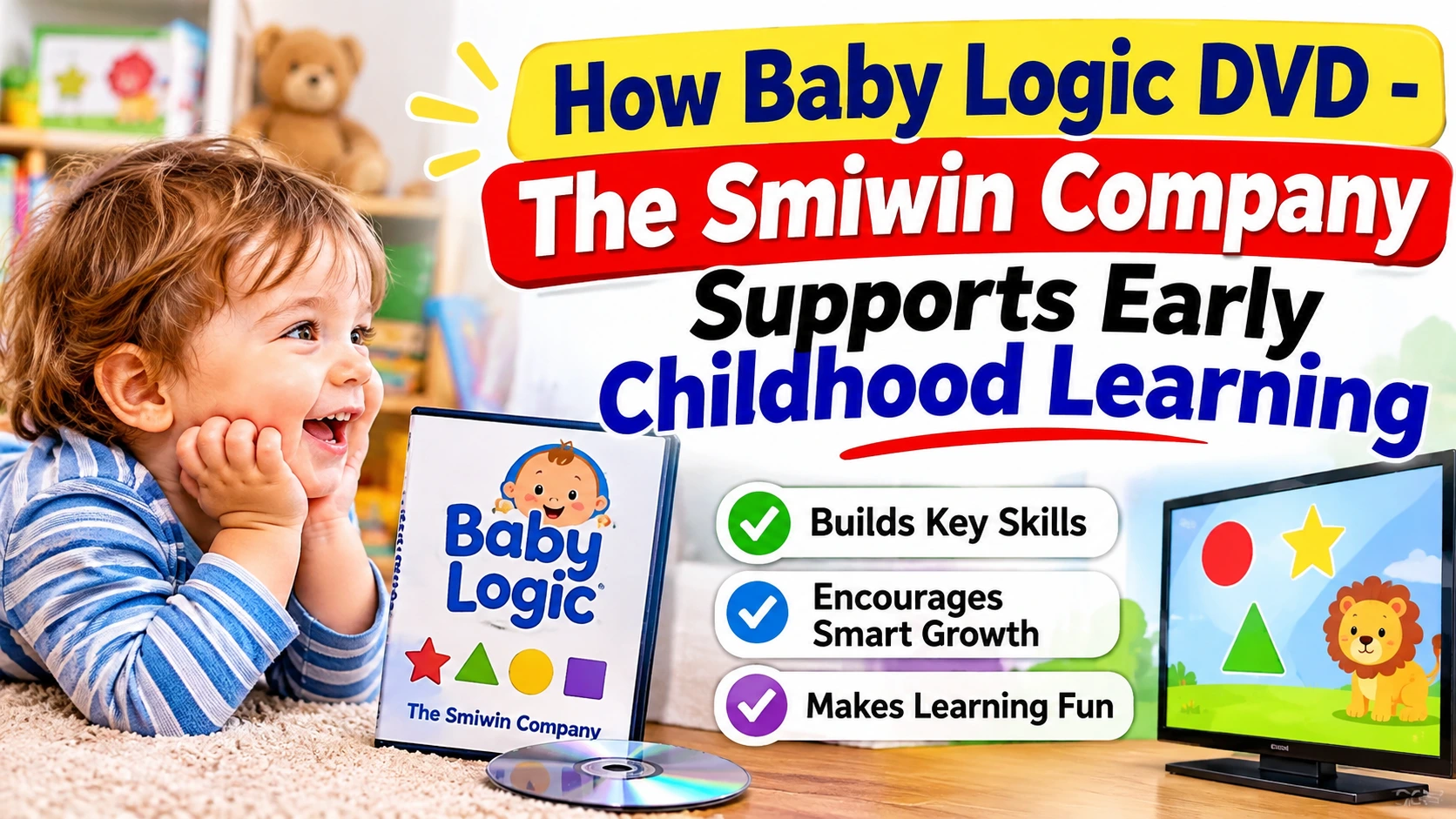
During the first few years, children begin discovering the world through sounds, colors, movement, familiar faces, and everyday experiences. A simple game of stacking blocks, listening to a parent’s voice, or identifying a favorite toy can become an important learning opportunity. For parents, finding suitable resources that encourage curiosity and support development is an important part of raising a young child.
Educational media is one category that has attracted attention from families looking for additional learning resources. Among the products associated with this category is Baby Logic DVD from The Smiwin Company. Online descriptions present Baby Logic as an early-learning video program focused on concepts such as patterns, shapes, visual recognition, basic logic, and sensory awareness. Its approach is described as using recognizable images, repetition, music, and simple presentation to introduce foundational ideas to young viewers.
But how should parents understand the role of a product like Baby Logic DVD? Can educational videos genuinely support early childhood learning, and how can families use media responsibly while prioritizing activities that children need most? These questions deserve thoughtful answers, particularly because screen-time recommendations for infants and toddlers are more cautious than many older educational-media advertisements suggest.
This article explores the learning concepts associated with Baby Logic DVD – The Smiwin Company, its potential educational uses, the importance of parent-child interaction, and practical ways to encourage healthy development. It also considers current screen-time guidance so parents can make informed decisions rather than relying on promotional claims alone.
Table of Contents
Understanding Baby Logic DVD - The Smiwin Company
Parents have access to countless educational resources, ranging from picture books and activity toys to mobile applications and children’s television programs. Each option offers a different way to introduce children to new ideas, but not every resource is appropriate for every age group. Baby Logic DVD – The Smiwin Company belongs to the category of educational media created for very young children. Online descriptions associate it with early concepts such as visual recognition, patterns, logical relationships, and sensory engagement.
The central idea behind this type of product is that young children can encounter basic learning concepts through carefully presented images and sounds. For example, a video might show familiar objects, introduce simple shapes, or repeat a sequence that encourages recognition. These concepts are also found in everyday play, which means parents can use them as starting points for activities away from the screen. A child who sees a circle in a video, for instance, can later explore circular objects in the home.
However, it is important to distinguish between a product’s educational intention and independently demonstrated learning outcomes. Publicly available descriptions provide an overview of Baby Logic’s intended themes, but detailed independent evidence establishing that this specific DVD improves intelligence, memory, or developmental performance is not readily available. Parents should therefore view it as a media product with described learning themes, not as a scientifically proven developmental program.
What Is Baby Logic DVD?
Baby Logic DVD – The Smiwin Company is described online as an early-learning video product associated with The Smiwin Company. Its content is presented as focusing on introductory concepts that may be relevant to infants and toddlers, including shapes, colors, patterns, sounds, and basic logical relationships. The descriptions also refer to visual repetition and simple sequences as ways of attracting children’s attention.
These ideas are familiar in early childhood education. Children gradually learn to notice similarities, recognize differences, remember familiar objects, and understand how everyday things relate to one another. A video that introduces a simple sequence may give parents an opportunity to discuss what appears on the screen and connect it with something the child can touch or explore. The educational value, however, depends on the child’s developmental stage and the way the content is used.
Parents considering the DVD should check the actual product description, intended age range, format compatibility, and available content before purchasing. They should also confirm whether the product is currently available through a reliable seller. Product information found on third-party websites should not automatically be treated as a complete or independently verified description from the manufacturer.

The Learning Philosophy Behind the Product
The educational approach associated with Baby Logic emphasizes introducing basic concepts through familiar visuals, repetition, and sound. This approach reflects a broader principle in early childhood learning: young children benefit from opportunities to encounter ideas repeatedly in different situations. A toddler who sees a familiar animal in a picture book, hears its name from a parent, and later encounters it in real life gradually builds connections between words, images, and experiences.
Repetition can make an experience more familiar, but repetition alone does not guarantee understanding. Children need opportunities to explore, respond, move, ask questions, and interact with people around them. A video can present a concept, while a parent can help the child understand how that concept relates to the real world. For instance, seeing a sequence of colors is only one part of learning; sorting colored blocks together provides a more active opportunity to practice recognition.
This is why educational media should be considered one possible resource rather than the foundation of a child’s education. Talking, reading, singing, playing, and exploring remain essential activities. When parents understand this distinction, they can evaluate products such as Baby Logic more realistically and avoid expecting a DVD to perform the work of everyday interaction.
Why Early Childhood Learning Matters
The first years of childhood involve rapid changes in how children communicate, move, think, and understand their surroundings. As they grow, they start recognizing objects, exploring cause and effect, imitating gestures, and experimenting with words. These experiences create the foundations for later communication, reasoning, social relationships, and independent learning.
Early learning does not need to look like a formal classroom lesson. In fact, many of the most valuable experiences happen during ordinary routines. Bath time can introduce concepts such as warm, cold, full, and empty. Mealtimes provide opportunities to identify colors, textures, and tastes. Walking outdoors can encourage children to notice birds, trees, vehicles, and different sounds. Parents who recognize these everyday opportunities can support learning without making childhood feel like a constant series of lessons.
Educational resources can complement this natural process when they are suitable for the child’s age and used thoughtfully. Baby Logic’s described themes, such as patterns and visual recognition, relate to concepts that parents can also explore through toys, books, and interactive games. The most important question is not how many educational products a child uses, but whether the child’s daily environment offers opportunities to explore and connect with others.
Cognitive Development and Curiosity
Cognitive development involves the gradual growth of skills such as attention, memory, recognition, reasoning, and problem-solving. Babies begin learning by observing their surroundings and responding to experiences. They may watch a moving object, reach toward a toy, or repeat an action that produces an interesting result. These small moments help children explore how the world works.
As children become toddlers, their curiosity often becomes more obvious. They may repeatedly open and close a container, stack blocks, place objects inside boxes, or try different ways to complete a simple task. Such activities encourage experimentation and help children discover relationships between actions and outcomes. Parents can support this curiosity by allowing children to explore safe objects and by responding positively to their attempts.
The concepts associated with Baby Logic DVD – The Smiwin Company can be connected to these experiences. For example, a video that introduces a pattern may inspire a parent to create a similar pattern using blocks or colored toys. A child can then touch, move, and rearrange the objects instead of simply watching them. This real-world follow-up is particularly important because children learn through active participation, not just exposure to information.
Language, Listening, and Communication
Language development begins long before children speak their first recognizable words. Babies listen to voices, notice changes in tone, respond to familiar sounds, and gradually begin experimenting with their own vocalizations. Parents play an essential role in this process because everyday conversations provide meaningful opportunities to hear words in context.
Narration and spoken language in educational media may expose children to additional sounds and vocabulary. However, hearing a word on a screen is not the same as participating in a conversation. Children benefit from responsive communication, where an adult notices their gestures, responds to their sounds, and gives them time to express themselves. These exchanges help make language meaningful.
Parents can turn an ordinary learning moment into a conversation by naming objects, describing actions, and responding to a child’s interest. If a child points toward a ball, an adult might say, “You found the ball. The ball is round.” If the child makes a sound, the parent can respond naturally rather than expecting a complete word. These small interactions help build communication skills in a warm and engaging environment.
Educational Concepts Associated With Baby Logic DVD
The available online descriptions of Baby Logic DVD – The Smiwin Company refer to several early-learning themes, including visual recognition, patterns, basic logic, and sensory engagement. These concepts are relevant to early childhood education because they encourage children to notice information and gradually make connections. They can also be explored through simple activities that do not require electronic devices.
For parents, the practical value of understanding these themes is that they can turn general ideas into everyday experiences. A discussion about shapes can become a game with household objects. A pattern shown in a learning resource can become a sorting activity with toys. A sound heard during a video can lead to a conversation about animals or familiar objects. In this way, an educational theme becomes a starting point for interaction.
It is important not to assume that every child will respond to the same content in the same way. Some children enjoy music, while others prefer physical exploration or picture books. Their interests and developmental abilities also change over time. Parents should observe their child’s responses and choose activities that encourage curiosity without creating pressure.
Recognizing Shapes, Colors, and Patterns
Shapes and colors are among the first concepts parents commonly introduce through everyday play. A young child may notice a bright red toy, recognize a familiar ball, or begin distinguishing between large and small objects. These observations help children build a basic understanding of how objects look and how they differ from one another.
Patterns introduce another layer of recognition. A simple sequence, such as a red block followed by a blue block and another red block, gives a child an opportunity to notice repetition. Older toddlers may begin copying simple arrangements with toys, while younger children may simply enjoy looking at familiar colors and objects. The activity can be adjusted according to the child’s abilities.
Baby Logic DVD – The Smiwin Company is described as including visual material related to shapes, colors, and patterns.
Parents can extend these concepts with hands-on activities. For example, they might place two large colored blocks on the floor and invite an older toddler to find another block with a matching color. They can also identify circular objects around the home, such as a plate or a ball.
The goal should be exploration rather than testing. A toddler does not need to identify every shape correctly or complete a sequence independently. Repeated opportunities to see, touch, compare, and name objects can gradually make these concepts more familiar.
Memory, Repetition, and Logical Thinking
Memory develops through experience, attention, and repeated opportunities to recognize familiar information. Babies may recognize a familiar voice or respond to a favorite song, while toddlers often remember where toys are kept or what happens during a daily routine. These everyday examples show how memory is connected to the child’s growing understanding of the environment.
Repetition is useful because it allows children to encounter the same idea more than once. A parent who reads the same picture book repeatedly may notice that the child begins anticipating a familiar page or sound. A simple stacking game can also be repeated with small variations, giving the child opportunities to remember previous experiences and try new approaches.
Logical thinking develops gradually through activities that encourage children to notice relationships. For example, placing a large object inside a small container may not work, while a smaller object may fit. A child can discover this through experimentation. These experiences introduce basic ideas about size, space, comparison, and cause and effect.
Online descriptions of Baby Logic associate the DVD with patterns, sequencing, and introductory logical concepts.
These themes can be useful conversation starters, but parents should not assume that watching a sequence automatically develops advanced reasoning. Real-world exploration and responsive interaction provide important opportunities to practice what children observe.
Music and Sensory Awareness
Sound and music are part of children’s everyday learning experiences. Babies may respond to familiar songs, gentle rhythms, and changes in a caregiver’s voice. As they grow, children may clap, sway, vocalize, or experiment with making sounds using safe objects. These activities encourage listening and provide opportunities for shared enjoyment.
Sensory awareness also involves noticing visual details, textures, movement, and differences between objects. Parents can support this development by introducing safe materials and allowing children to explore them under supervision. A soft toy feels different from a wooden block, while a large ball moves differently from a small one. Such experiences help children build a richer understanding of their surroundings.
Baby Logic’s online descriptions mention music, sound, and visual presentation as elements of its learning approach.
These features may attract attention, but parents should consider volume, pacing, and the child’s response to the content. A calm environment and opportunities for physical exploration are more important than keeping a child continuously occupied by audiovisual stimulation.
The Importance of Parent-Child Interaction
No educational DVD can replace the value of a caring adult who talks, listens, plays, and responds to a child’s needs. Early childhood learning is deeply connected to relationships. When a baby looks toward a parent and receives a smile, a gentle voice, or a comforting response, the child experiences communication as a two-way process. These everyday exchanges help build social connection and provide opportunities for language development.
Parent-child interaction also helps children connect new information with real experiences. Imagine a toddler encountering an image of a dog in an educational video. A parent can build on that moment by showing a picture book, talking about a familiar pet, or making a gentle animal sound. The child is no longer simply receiving an image; they are participating in an experience with another person.
This is one reason caregivers should avoid treating educational media as a substitute for active learning. The screen cannot notice a child’s expression, understand every gesture, or respond with the flexibility of a familiar adult. A parent can pause an activity, repeat an idea in simpler words, or change direction when the child loses interest. That responsiveness is an important part of meaningful early learning.
Shared activities do not need to be complicated. Singing a familiar song, looking through a picture book, naming objects during a walk, and building a tower together can all provide valuable learning opportunities. Parents who make these moments part of daily routines give children repeated chances to communicate and explore.
Screen-Time Recommendations for Babies and Toddlers
Screen time deserves particular attention when discussing educational DVDs designed for very young children. A product may be marketed as educational, but that description does not automatically make it appropriate for every age group. Parents should consider current pediatric and public-health recommendations before introducing video content into a child’s routine.
The World Health Organization advises that screen time is not recommended for infants under one year. For children aged one year, sedentary screen time is also not recommended. For two-year-olds, the WHO recommends no more than one hour per day, with less being better.
The American Academy of Pediatrics has also advised that children younger than 18 months should generally avoid screen media other than video chatting. For children aged 18 to 24 months whose families choose to introduce digital media, it recommends high-quality content and watching together rather than allowing independent use. For children aged two to five, its guidance has generally recommended limiting screen use to around one hour per day of high-quality programming.
Indian parents may also find the Indian Academy of Pediatrics guidance relevant. Its published recommendations advise avoiding screen exposure for children under two years and limiting supervised screen time to a maximum of one hour daily for children aged 24–59 months.
Child’s age | Guidance to consider |
Under 1 year | WHO does not recommend sedentary screen time |
1 year | WHO does not recommend sedentary screen time |
18–24 months | AAP advises choosing high-quality content and watching together if media is introduced |
2 years | WHO recommends no more than one hour daily; less is better |
2–5 years | AAP recommends around one hour or less of high-quality programming per day |
These recommendations make an important point: educational content does not remove the need for age-appropriate screen limits. Parents should not feel that they must introduce DVDs or digital learning products during infancy. Talking, reading, singing, floor play, and exploring the environment are valuable alternatives that support development without requiring screen exposure.
How to Use Educational Media Responsibly
If parents decide to introduce educational media when it is appropriate for their child’s age, the focus should be on quality, supervision, and balance. Choosing a video simply because it uses words such as “educational” or “brain development” is not enough. Parents should consider whether the content is calm, age-appropriate, understandable, and free from unnecessary distractions.
For a toddler, watching together can make media use more interactive. A caregiver can identify objects, explain simple ideas, and connect images with familiar experiences. If the video shows a ball, for example, the parent might later bring out a real ball and let the child explore it. This helps create a connection between what appears on the screen and the child’s everyday environment.
Parents should also pay attention to signs that a child is tired, uncomfortable, or no longer interested. If a child turns away, becomes upset, or wants to move, it is reasonable to stop the activity. Media should not interfere with sleep, meals, active play, or family interaction. The American Academy of Pediatrics also advises families to protect important screen-free routines, including mealtimes and bedtime.
A responsible approach means choosing media intentionally rather than allowing it to become a constant background activity. Parents can decide whether a particular resource genuinely adds something to the child’s experience. If it does not, there is no reason to use it simply because it is available.
Combining Baby Logic With Hands-On Learning
The concepts associated with Baby Logic DVD – The Smiwin Company can be explored through practical activities that encourage children to move, touch, listen, and communicate. Hands-on experiences allow children to interact directly with objects instead of only observing them. They can experiment, make mistakes, repeat actions, and discover results at their own pace.
For example, parents interested in introducing patterns can use large, safe blocks to create simple arrangements. A child can explore objects of different sizes and colors, while an adult names the features and encourages comparison. Parents can also use picture books to introduce familiar animals, everyday objects, and simple vocabulary. These activities are flexible and can be adjusted to suit different developmental stages.
Music provides another opportunity for active learning. Parents can sing familiar songs, clap gently to a rhythm, or encourage toddlers to move safely to music. Everyday household routines can also become learning moments. Sorting clean socks by color, identifying fruit during snack time, or naming objects while putting toys away can make learning feel natural rather than formal.
The most useful approach is to connect learning ideas with real life. If a child sees a shape in a book or video, find a similar object in the room. If a child hears an unfamiliar word, use it naturally during conversation. If a child shows interest in a particular object, give them time to explore it safely. These small experiences often provide richer opportunities for interaction than simply repeating information on a screen.
Benefits and Limitations Parents Should Consider
Baby Logic DVD – The Smiwin Company is associated online with concepts that are relevant to early childhood learning, including visual recognition, patterns, sequencing, and sensory engagement. These themes may help parents identify topics to explore with their children through books, toys, and conversations. The product’s video format may also appeal to families who prefer physical media rather than relying on an internet connection or an app.
However, the potential usefulness of a product should be considered alongside its limitations. Public descriptions of Baby Logic do not establish that the DVD produces measurable improvements in intelligence, language ability, attention span, or future academic performance. Claims of that kind require reliable independent evidence, and parents should be cautious about promotional language that promises unusually strong developmental results.
Another limitation is that a DVD is a one-way medium. Unlike a responsive person, it cannot adapt its explanations to a child’s questions, emotions, or developmental needs. Children also need physical movement, social interaction, sleep, and unstructured play. Excessive screen exposure can take time away from these essential experiences.
Potential advantage | Important limitation |
Introduces visual concepts | Viewing alone does not guarantee understanding |
Presents repeated images and sounds | Repetition does not prove developmental improvement |
May provide topics for parent-child discussion | Requires adult involvement to connect ideas with real life |
Offers a physical media format | Requires compatible playback equipment |
Covers introductory learning themes | Does not replace books, toys, conversation, or play |
Parents should also check practical details before buying. These include the product’s actual contents, age guidance, disc condition, playback compatibility, seller reliability, and return policy. It is better to make a decision based on verifiable product information than on broad claims about guaranteed developmental benefits.
Is Baby Logic DVD a Suitable Early Learning Resource?
Whether Baby Logic DVD – The Smiwin Company is suitable depends on the child’s age, family preferences, and the role parents expect the product to play. Its described themes may interest parents who want to explore introductory concepts such as colors, shapes, patterns, and logical relationships. Families who already use books, toys, and interactive activities may also find these themes useful as inspiration for additional play-based experiences.
However, the screen-time guidance for infants and toddlers should remain central to the decision. Parents of babies under two should not assume that an educational DVD is necessary or recommended simply because it is marketed for early learning. For older toddlers and preschool-aged children, any media use should be age-appropriate, limited, and balanced with active play and social interaction.
It is also sensible to compare the product with alternatives. Picture books, shape sorters, stacking toys, music activities, and simple household games can introduce many of the same concepts while encouraging physical participation. These resources may be more appropriate for families who want to minimize screen exposure.
Ultimately, Baby Logic DVD should be evaluated as one possible educational-media resource rather than a complete learning solution. Parents should check the available product details, understand its limitations, and prioritize the activities that support healthy development. The strongest early learning environment is not built around one DVD, toy, or app. It grows through everyday experiences, supportive relationships, and opportunities for children to explore the world.

Conclusion
Baby Logic DVD – The Smiwin Company is described in online product discussions as an early-learning video resource focused on introductory concepts such as visual recognition, patterns, basic logic, and sensory engagement. These themes connect with important areas of early childhood learning and can provide parents with ideas for activities involving shapes, colors, sounds, and simple sequences.
At the same time, parents should approach educational DVDs with realistic expectations. A video cannot replace responsive conversation, hands-on exploration, reading, movement, or meaningful relationships. Current guidance from organizations such as the WHO, the American Academy of Pediatrics, and the Indian Academy of Pediatrics emphasizes limiting or avoiding screen exposure for very young children. These recommendations should guide decisions about when and whether to introduce a product like Baby Logic.
The most effective early learning experiences often happen away from screens. Reading a story, singing together, playing with safe toys, and exploring everyday objects help children develop through active participation. If parents choose to use Baby Logic DVD – The Smiwin Company for an age-appropriate child, it should remain a limited and carefully selected supplement to these experiences.
Ultimately, supporting early childhood learning is about creating an environment where children feel safe, curious, supported, and free to explore. No single educational product can provide everything a growing child needs, but thoughtful parenting and everyday interaction can make a meaningful difference.
Frequently Asked Questions
Q. What is Baby Logic DVD - The Smiwin Company?
Baby Logic DVD is described online as an early-learning video product associated with The Smiwin Company. Its described themes include shapes, colors, visual recognition, patterns, sequencing, and basic logical concepts. Parents should check the actual product listing for verified information about its contents and intended age range.
Q. What learning concepts are associated with Baby Logic DVD?
Online descriptions associate the DVD with introductory concepts such as visual recognition, pattern awareness, memory, basic logic, and sensory engagement. These ideas can also be explored through picture books, building blocks, music, and everyday play. The product’s specific developmental effectiveness has not been independently established by the sources reviewed.
Q. Is Baby Logic DVD suitable for babies under two years old?
Parents should be cautious about introducing screen media to infants and young toddlers. The WHO does not recommend sedentary screen time for children under two, while the Indian Academy of Pediatrics recommends avoiding screen exposure below that age. Parents should prioritize talking, reading, singing, and interactive play.
Q. Can Baby Logic DVD replace traditional toys and books?
No. A DVD cannot replace the physical exploration, communication, and interaction children experience through toys, books, and play. Parents can use learning themes from educational media as inspiration for hands-on activities, but everyday interaction remains essential.
Q. How can parents support early childhood learning without relying on screens?
Parents can support learning through simple daily activities such as reading picture books, singing songs, naming objects, stacking blocks, sorting safe toys, and exploring the outdoors. Talking with children, responding to their gestures, and allowing them to experiment at their own pace are valuable ways to encourage development.
Table of Contents
You May Also Like

How PatPat Is Changing the Way Parents Shop for Affordable Kids’ Clothing
official.times.software
November 23, 2026
Read More »

The Ultimate Guide to Using ActivTrak for Better Workforce Productivity
official.times.software
November 23, 2026
Read More »

Exploring Audiobooks.com: What Makes This Platform Popular Among Book Lovers?
official.times.software
November 22, 2026
Read More »

Finding the Right Skincare Routine: Exploring the Products Offered by Sunday Riley
official.times.software
November 22, 2026
Read More »

A Detailed Review of Maxaroma: Product Quality, Variety, and Customer Experience
official.times.software
November 22, 2026
Read More »